Meaning뜻
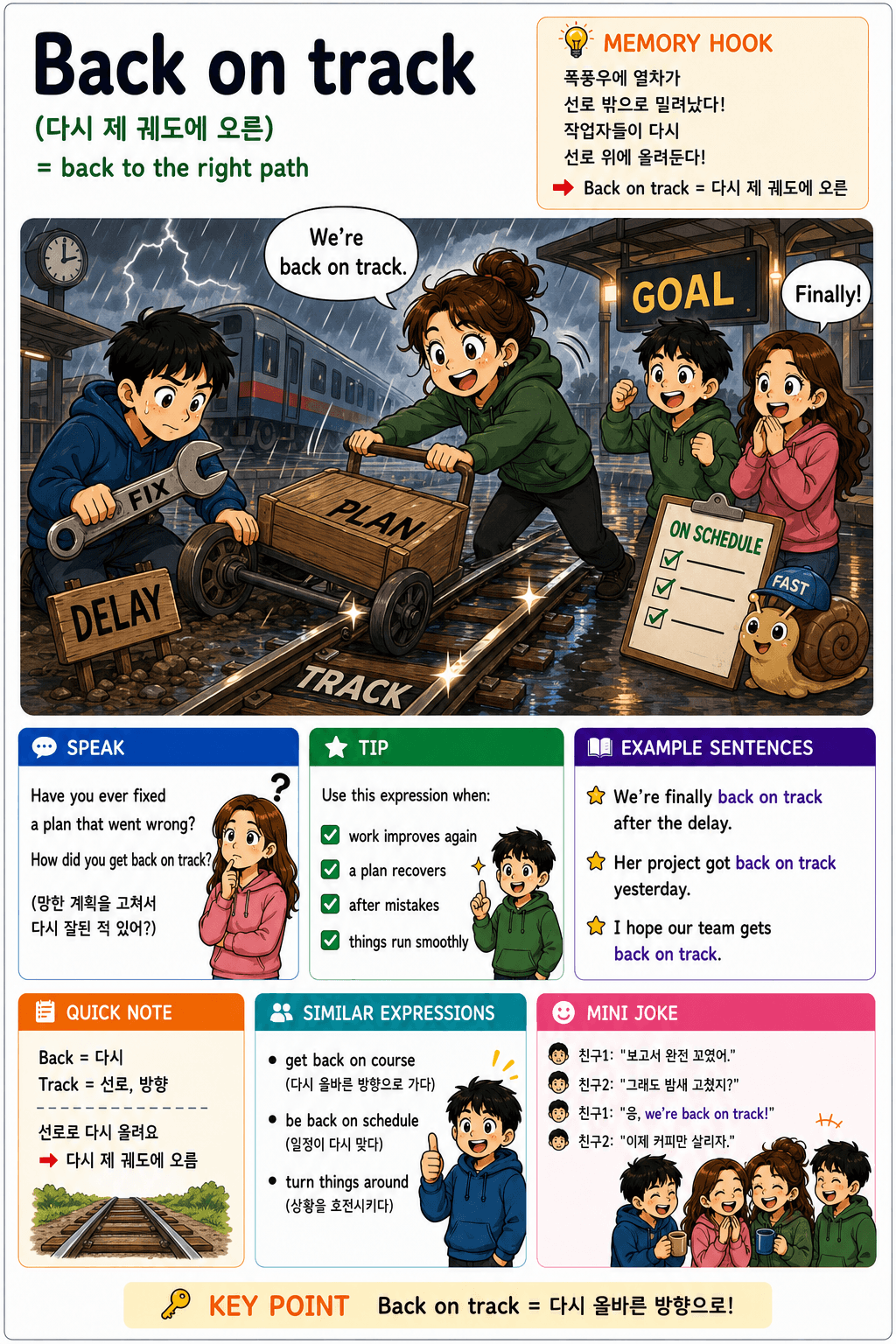
To return to the correct or planned path after difficulties or mistakes. Things are working well again after a period of problems.
어려움이나 실수 후에 다시 올바른 방향으로 돌아오는 거예요. 문제가 있던 시간이 지나고 다시 잘 진행되고 있다는 뜻이에요.
Memory hook기억법
Imagine a train that derailed during a storm, sitting uselessly in a ditch. Slowly, workers lift it back onto the rails. Now it rolls smoothly toward its destination again—that is 'back on track.'
폭풍우 때문에 열차가 선로를 벗어났다고 상상해 보세요. 작업자들이 열차를 다시 선로 위에 올려놓으면 열차는 다시 목적지를 향해 달려요. 그게 back on track, 다시 제 궤도로 돌아온 거예요.
How to use it이렇게 써요
Use it when things recover after a problem. Neutral; fine at work and in daily life. Example: "After we hired a new manager, our sales department got back on track." Often paired with 'finally' or 'slowly.'
문제가 있다가 다시 잘 풀릴 때 써요. 직장에서도 일상에서도 무난해요. 예: "After we hired a new manager, our sales department got back on track." (새 매니저가 온 뒤로 영업부가 다시 제 궤도에 올랐어요.) 'finally'(드디어), 'slowly'(조금씩) 같은 말과 자주 같이 써요.
Cultural note문화 노트
The Korean '궤도에 오르다' also uses a track image. It leans toward 'getting established', while 'back on track' means returning to the plan after a problem.
한국어 '궤도에 오르다'도 철길·궤도 이미지를 써서 느낌이 비슷해요. 다만 '궤도에 오르다'는 일이 자리 잡기 시작했다는 쪽에 가깝고, back on track은 문제가 있은 뒤 제자리로 돌아왔다는 쪽이에요.
Say it out loud말해 보기
Have you ever had a project or plan that went wrong, and then you fixed it? Tell me how you got back on track.
프로젝트나 계획이 잘못된 후에 다시 잘되도록 고친 경험이 있으세요? 어떻게 다시 궤도에 오르게 됐는지 말씀해 주세요.