뜻Meaning
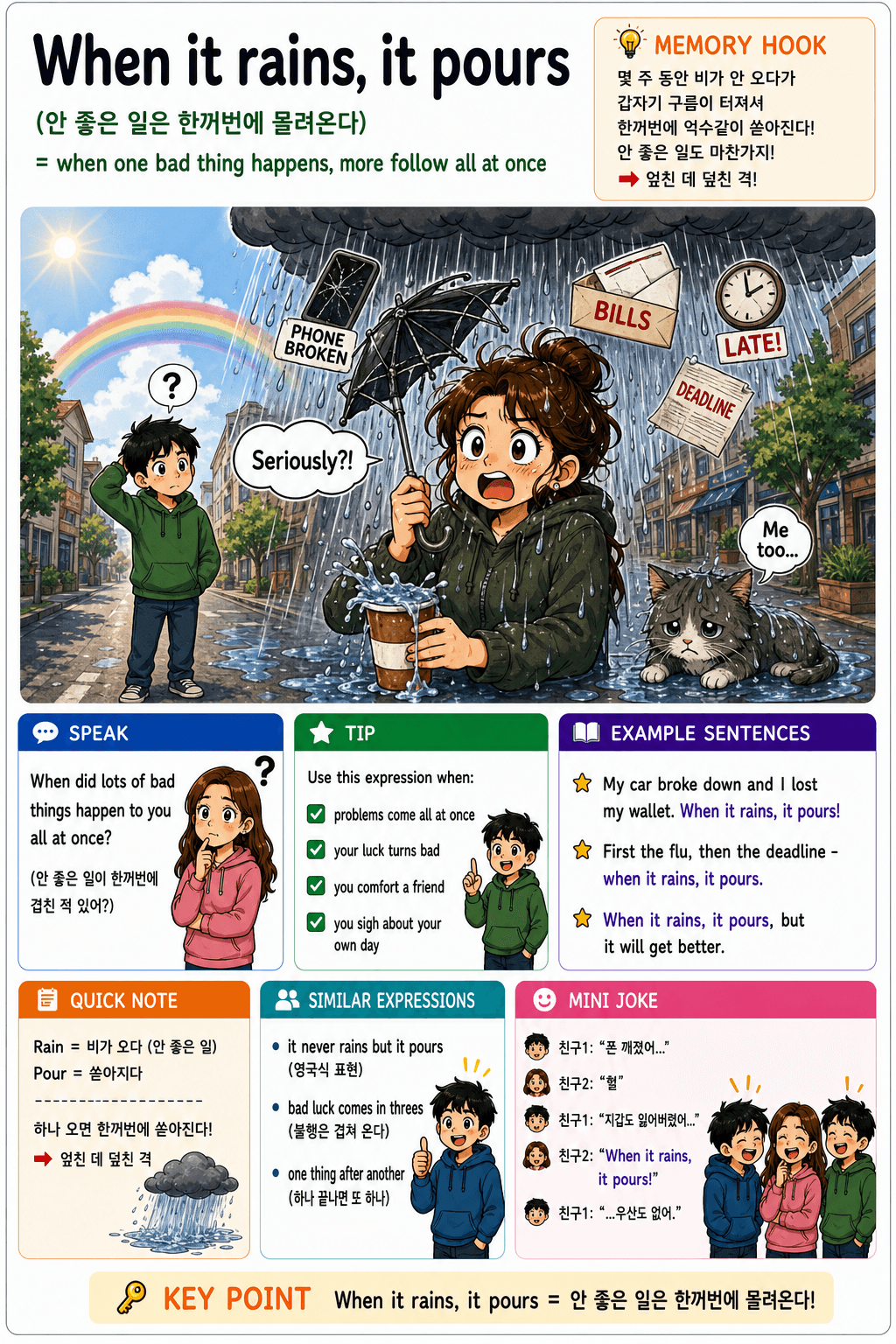
안 좋은 일이 하나만 일어나는 게 아니라 한꺼번에 여러 개 몰려온다는 뜻이에요. 재수가 없으면 정말 안 좋은 일이 겹쳐요.
When one bad thing happens, usually many more follow at once; problems come together, not one at a time.
기억법Memory hook
하늘을 생각해 보세요. 몇 주 동안 비가 안 오다가 갑자기 구름이 터져서 한꺼번에 억수같이 쏟아져요. 천천히 내리는 게 아니라 한 번에 확 내려요. 인생의 고생도 마찬가지예요.
Imagine the sky: no rain for weeks, then suddenly the clouds burst open and rain pours down so hard you can't see across the street. All that water comes at once, not gradually. Life's troubles work the same way.
이렇게 써요How to use it
좌절감과 운이 한꺼번에 안 좋아지는 느낌을 표현해요. 남한테 할 땐 공감하고, 자기 얘기할 땐 좀 한숨 섞여요. 예: "My car broke down, my mother got sick, and I lost a client—when it rains, it pours!" = 차도 고장 나고, 엄마도 아프고, 클라이언트도 잃고... 정말 한꺼번에 몰려오네요!
Expresses frustration and the feeling that luck turned against you all at once. Sympathetic when spoken to someone, often rueful when speaking of your own experience. Example: "My car broke down, my mother got sick, and I lost a client—when it rains, it pours!"
문화 노트Cultural note
한국어 '엎친 데 덮친 격'과 같은 느낌이에요. 안 좋은 일이 한꺼번에 겹칠 때 써요.
The Korean '엎친 데 덮친 격' (a blow on top of a blow) expresses the same feeling of troubles piling up at once.
말해 보기Say it out loud
Can you remember a time when several difficult things happened all at once? How did you manage that period?
어려운 일이 한꺼번에 여러 개 일어난 적이 있어요? 그때 어떻게 해결했어요?