Eureka! · No. 75
The Day the Pattern Clicks
모든 것이 문득 이어지는 날
Zhu Xi · 주희 (주자) — Song China, 1190
💡 The Idea
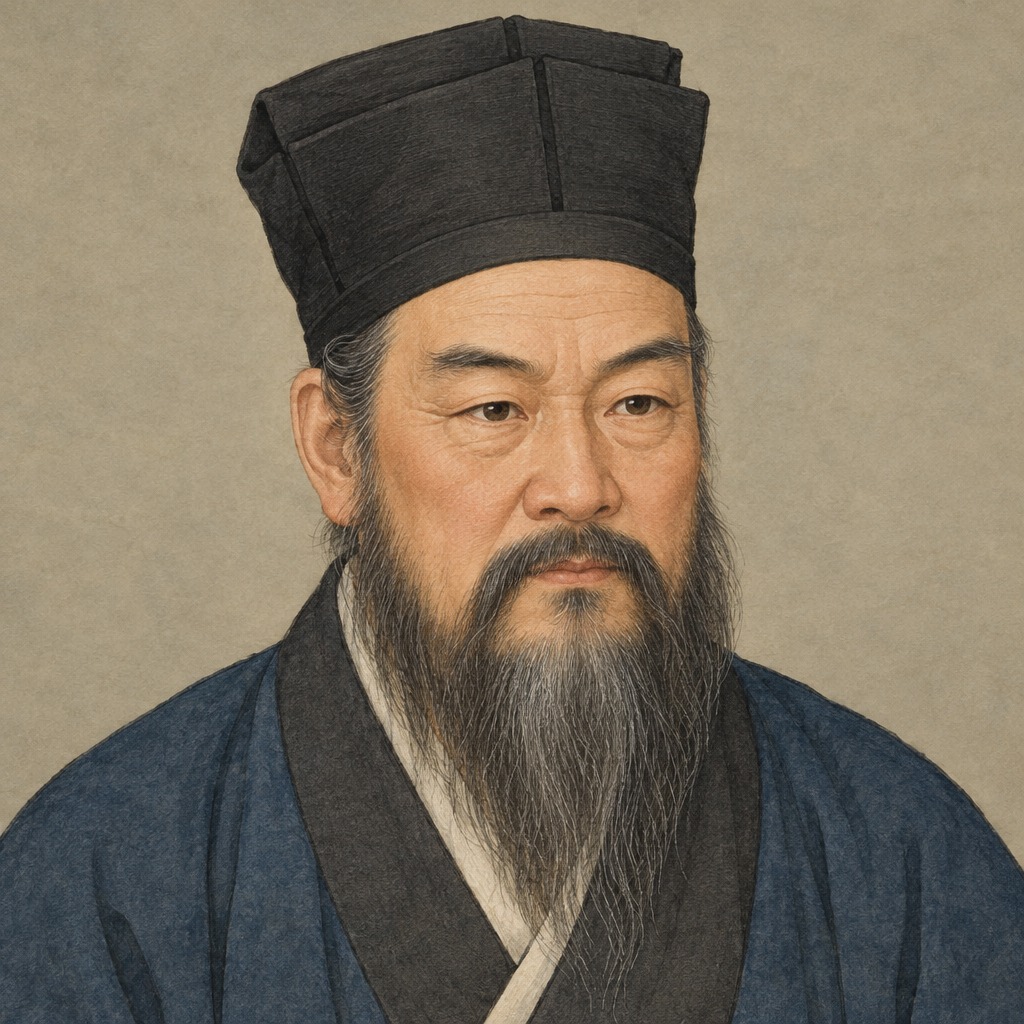
Zhu Xi (1130-1200) was a Chinese scholar of the Song dynasty. He is the most important thinker of Neo-Confucianism, a new way of reading Confucius and Mencius. He was born in Fujian. He taught hundreds of students, and his talks with them were collected in a book. His best-known method is "investigating things" (gewu). The phrase comes from the Great Learning, an old Confucian text. Zhu Xi said that every thing has a pattern (li). We learn the patterns by looking closely at real things, one by one, not only by thinking alone. In his comment on the Great Learning, he says we should start from what we already know and go further. After working hard for a long time, one day we may suddenly see how everything connects. This is the "aha" moment. It comes after long work, not before it. A modern scholar named Qian Mu (cited in the Stanford Encyclopedia of Philosophy) noted that Zhu's own bamboo watching was useful because he had a question to test: he checked a monk's claim about growth at night. In 1190, Zhu Xi published his edition of the Four Books: the Great Learning, the Analects, the Mencius, and the Doctrine of the Mean. Later, in the Yuan dynasty (from 1313), officials made his edition the basis of the imperial exams. This lasted until the exams ended in 1905. (Some sources give 1908, and they differ a little on the Yuan date.) A gentle contrast: Wang Yangming, who is also in this series, once tried this method on bamboo. He became ill and found nothing. Later he said the truth is in our own nature and he criticized Zhu's way as too much looking outside. But the Stanford Encyclopedia says Wang may have been reacting more to exam-style study than to Zhu himself. Both thinkers wanted people to become better humans. A note about Korea. In Joseon, the Neo-Confucianism of Zhu Xi grew very strong. Yi Hwang (Toegye, 1501-1570) read Zhu Xi's collected works from about age 49. He edited a book of Zhu Xi's letters (Jujaseojeolyo) and wrote "Ten Diagrams on Sage Learning" for King Seonjo, which includes writings of Zhu Xi. Scholars such as Yi I (Yulgok) also worked on his ideas about li and qi. (We have not checked every detail of Yulgok's reading of Zhu Xi.) About the sources: the facts come from the Stanford Encyclopedia of Philosophy, the Internet Encyclopedia of Philosophy, the translation of the Four Books at fourbooks.org, Wikipedia, and the Encyclopedia of Korean Culture. We could not confirm from a source we opened that the 1190 printing was in Zhangzhou, so we only say 1190. The conversation is invented to teach the idea. The student is not a real person, and the words of Zhu Xi in the scene are not real quotations. We do not know when he watched the bamboo sprouts.
주희(1130~1200)는 중국 송나라의 학자예요. 공자와 맹자를 새롭게 읽은 성리학(신유학)의 가장 중요한 사상가예요. 복건에서 태어났고 수백 명의 제자를 가르쳤어요. 제자들과 나눈 말은 책으로 묶여 전해져요. 그의 가장 유명한 방법은 "사물을 탐구한다"는 격물(格物)이에요. 이 말은 옛 유교 경전인 『대학』에서 왔어요. 주희는 모든 사물에 결(리, 理)이 있다고 했어요. 그 결은 생각만 해서는 알 수 없고, 실제 사물을 하나하나 자세히 살펴서 배운다고 했지요. 『대학』에 단 그의 풀이에는 이미 아는 것에서 출발해 더 나아가라고 적혀 있어요. 오랫동안 힘써 공부하면, 어느 날 모든 것이 어떻게 이어지는지 갑자기 보일 수 있다고 했어요. 바로 "아하!"의 순간이에요. 이 순간은 오랜 노력 뒤에 오지, 그 전에 오지 않아요. 스탠퍼드 철학 백과사전에는 학자 첸무(錢穆)의 말이 실려 있어요. 주희가 대나무를 지켜본 일이 쓸모 있었던 이유는, 그에게 확인할 질문이 있었기 때문이라는 것이에요. 밤에 죽순이 더 빨리 자란다는 스님의 말을 확인했거든요. 1190년에 주희는 사서, 곧 『대학』 『논어』 『맹자』 『중용』을 묶어 자신의 판본으로 펴냈어요. 훗날 원나라 때(1313년부터) 관리들은 그의 판본을 과거 시험의 바탕으로 삼았어요. 이 제도는 과거 시험이 폐지된 1905년까지 이어졌어요. (1908년이라고 쓰는 자료도 있고, 원나라 때의 연도도 자료마다 조금 달라요.) 부드러운 대비도 하나 있어요. 이 시리즈에 나오는 왕양명도 젊을 때 이 방법을 대나무로 해 보았어요. 그는 병이 났고 아무것도 찾지 못했지요. 훗날 그는 진리가 우리 자신의 본성 안에 있다고 했고, 주희의 방식이 바깥만 보는 데 치우쳤다고 비판했어요. 하지만 스탠퍼드 철학 백과사전은, 왕양명이 주희 자신보다는 시험 공부식 학문에 더 반응한 것일 수 있다고 해요. 두 사람 모두 사람이 더 나은 사람이 되기를 바랐어요. 한국과 관련된 이야기도 있어요. 조선에서 주희의 성리학은 아주 크게 자랐어요. 이황(퇴계, 1501~1570)은 49세 무렵부터 『주자대전』을 읽었어요. 그는 주희의 편지를 뽑아 엮은 『주자서절요』를 만들었고, 선조 임금께 올린 『성학십도』에도 주희의 글을 실었어요. 이이(율곡) 같은 학자들도 그의 이기(理氣) 이론을 연구했어요. (율곡이 주희를 어떻게 읽었는지 세세한 부분까지는 확인하지 못했어요.) 출처에 대해: 사실은 스탠퍼드 철학 백과사전, 인터넷 철학 백과사전, fourbooks.org의 사서 번역, 위키백과, 한국민족문화대백과사전에서 가져왔어요. 1190년 간행이 장주(漳州)에서 이루어졌다는 것은 우리가 열어 본 자료로 확인하지 못해서, 1190년이라고만 적었어요. 대화는 이 생각을 가르치려고 지어낸 장면이에요. 제자는 실제 인물이 아니고, 장면 속 주희의 말도 실제로 한 말이 아니에요. 주희가 죽순을 언제 지켜보았는지는 알 수 없어요.
📚 Grammar focus
Present perfect continuous (have / has been + -ing)
✏️ Try it
Choose the correct form. 1. You _______ (have been watching / are watching) these sprouts all morning. 2. She _______ (has been learning / have been learning) English for three years. 3. I have been reading _______ nine o'clock. (for / since) 4. They have been waiting _______ two hours. (for / since) 5. Fix the mistake: "He have been working here for a year." Bonus: Write two sentences about what you have been doing this week. Use "for" in one and "since" in the other.
전체 레슨을 보고 싶으세요?
Want the full lesson?
회화 연습, 역할극, 문법, 그리고 진짜 선생님이 안에 있어요.
Conversation practice, roleplay, grammar, and a real tutor are inside.