Eureka! · No. 38
The Cave and the Light of Reason
동굴과 이성의 빛
Zera Yacob · 제라 야코브 — Ethiopia, about 1600-1693 CE
💡 The Idea
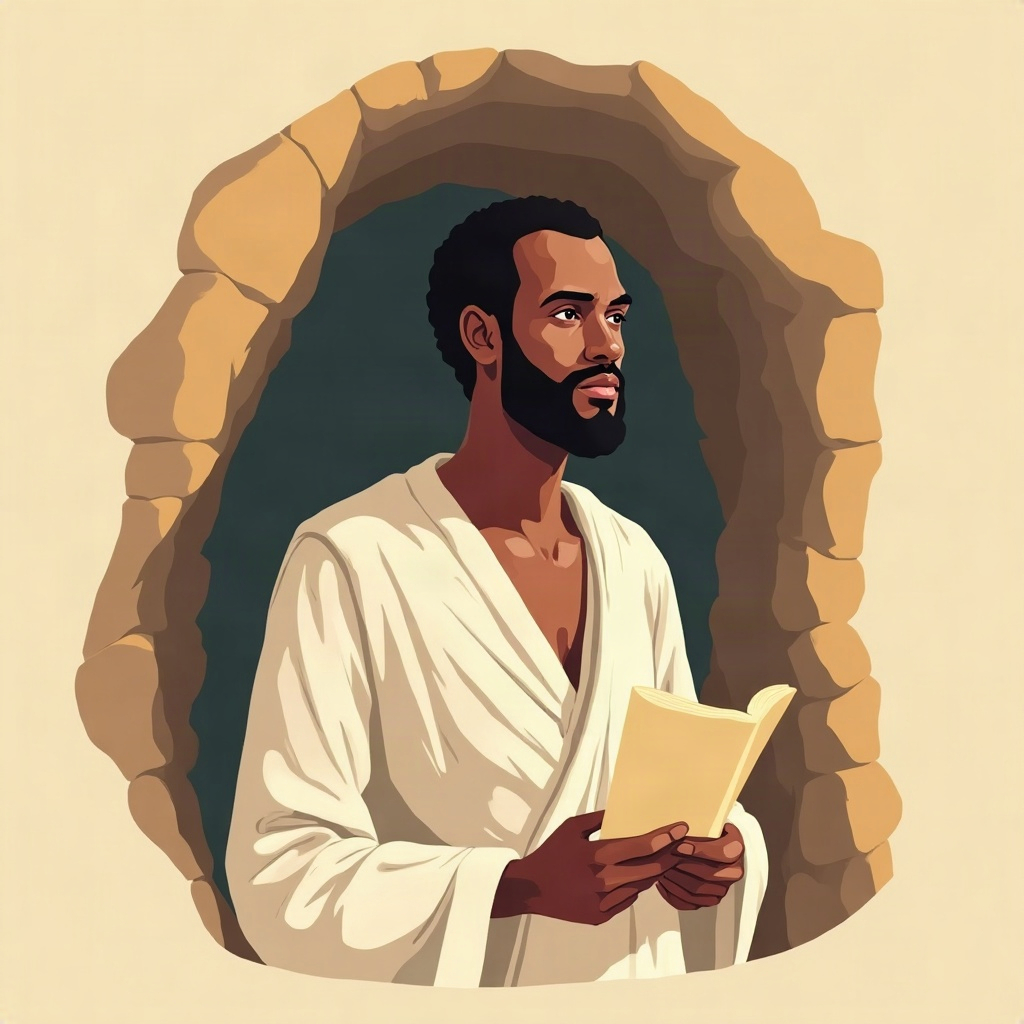
Zera Yacob is the name of the author of the Hatata, a treatise from Ethiopia written in the old language Ge'ez. Hatata means "inquiry". In the book, the author says he was born near the city of Aksum. He gives his birthday in the Ethiopian calendar: the 25th day of the month Nahase, in the year 1592. Claude Sumner's English edition (1976) changes this to 31 August 1599, but the new English translation of 2023 gives the year as 1600, so we say "about 1600". He says he studied in church schools, taught for some years, and then left because of a religious conflict. King Susenyos had accepted the Catholic faith of Europeans and persecuted people who did not. An enemy accused the author to the king, and he fled at night. He passed the Tekeze river (spelled Takkazi in the English translation), found a cave at the bottom of a deep valley, and lived there for two years, until the king died. He says he learned more in the cave than he did with scholars. The main idea of the book is simple and bold. God gave every person reason, the author says, so every person can and should test every teaching, even a teaching that comes from priests, kings, or holy books. Many teachers said that their religion was the only true one. They disagreed with each other, so they could not all be right. The author also says that rules that harm people cannot come from a good creator. He criticises the buying and selling of people, and he says that all people are equal and intelligent. He argues that marriage is one man and one woman, and in his own story he says that husband and wife are equal and should not be called master and servant. Now the hard part: who wrote the Hatata? The only copies we have came to Europe in the 1850s through an Italian missionary priest, Giusto d'Urbino. In 1920 the scholar Carlo Conti Rossini said that d'Urbino wrote it himself. In other words, he said the book was a forgery. In 1976 the philosopher Claude Sumner answered him. He compared the language of the book with d'Urbino's own writing and letters. Today scholars are still divided. Many, such as Getatchew Haile and the team that made the 2023 English translation (Ralph Lee, Mehari Worku and Wendy Belcher), accept Zera Yacob as the author. Others, such as the historian Anaïs Wion, argue again that d'Urbino probably wrote it. So the question is still open. In this unit, we tell what the book says about its author. About the sources: the life story, the ideas and the Ethiopian birth date are from the Hatata in Claude Sumner's English translation (1976), read in a scan on the Internet Archive. The authorship debate is from an essay by Jonathan Egid for the Oxford Centre for Intellectual History (2022), an article by Anaïs Wion and a co-author in the journal Afriques (2021), and the 2023 translation The Hatata Inquiries. The conversation with the Student is invented. We have no record of Zera Yacob saying these exact words. The dates of his birth and death differ between sources. The book says he wrote it at the age of 68, in the year King Fasiladas died (1667). A note at the end, added by his student, says he lived for 93 years. So he died in about 1692 or 1693.
제라 야코브는 에티오피아의 옛 언어인 게즈어로 쓰인 글 《하타타》 저자의 이름이에요. 하타타는 '탐구'라는 뜻이에요. 책에서 저자는 아크숨 근처에서 태어났다고 말해요. 그는 생일을 에티오피아 달력으로 적었어요. 1592년 나하세 달 25일이에요. 클로드 섬너의 영어판(1976)은 이것을 1599년 8월 31일로 바꾸었지만, 2023년에 나온 새 영어 번역은 1600년으로 적어요. 그래서 우리는 '1600년경'이라고 해요. 그는 교회 학교에서 공부했고 몇 해 동안 가르쳤지만, 종교 갈등 때문에 떠났다고 말해요. 수세뇨스 왕이 유럽인들의 가톨릭 신앙을 받아들이고 따르지 않는 사람들을 박해했어요. 한 적이 저자를 왕에게 고발했고, 그는 밤에 달아났어요. 그는 테케제강(영어 번역에서는 Takkazi라고 써요)을 지나 깊은 골짜기 아래에서 동굴을 찾았고, 왕이 죽을 때까지 2년 동안 그곳에서 살았어요. 그는 동굴에서 학자들과 함께 있을 때보다 더 많이 배웠다고 말해요. 이 책의 중심 생각은 단순하고 대담해요. 저자는 하느님이 모든 사람에게 이성을 주었으니, 누구나 모든 가르침을 시험할 수 있고 시험해야 한다고 말해요. 사제나 왕이나 거룩한 책에서 나온 가르침도 마찬가지예요. 많은 스승이 자기 종교만 참되다고 말했어요. 그들은 서로 의견이 달랐으니, 모두가 옳을 수는 없었어요. 저자는 또 사람을 해치는 규칙은 선한 창조주에게서 나올 수 없다고 말해요. 그는 사람을 사고파는 일을 비판하고, 모든 사람은 평등하고 지성이 있다고 말해요. 그는 결혼이 한 남자와 한 여자의 결합이라고 주장하고, 자기 이야기에서는 남편과 아내가 평등하며 주인과 하녀라고 불러서는 안 된다고 말해요. 이제 어려운 부분이에요. 《하타타》는 누가 썼을까요? 지금 남아 있는 사본은 1850년대에 이탈리아 선교사 신부 주스토 다 우르비노를 통해 유럽으로 왔어요. 1920년에 학자 카를로 콘티 로시니는 우르비노가 직접 썼다고, 즉 이 책이 위조품이라고 주장했어요. 1976년에 철학자 클로드 섬너는 책의 언어를 우르비노가 직접 쓴 글과 편지와 비교해 이에 반박했어요. 오늘날에도 학자들의 의견은 나뉘어 있어요. 게타추 하일레, 그리고 2023년 영어 번역을 만든 팀(랠프 리, 메하리 워르쿠, 웬디 벨처) 같은 많은 학자는 제라 야코브를 저자로 받아들여요. 역사학자 아나이스 위옹 같은 다른 학자들은 다시 우르비노가 썼을 가능성이 크다고 주장해요. 그래서 이 질문은 아직 열려 있어요. 이 단원에서는 책이 저자에 대해 말하는 내용을 전해요. 출처에 대해: 삶의 이야기와 소개한 생각, 에티오피아 달력의 생일은 클로드 섬너의 영어 번역본(1976)에 실린 《하타타》에서 가져왔고, 인터넷 아카이브의 스캔본으로 읽었어요. 저자 논쟁은 옥스퍼드 지성사 센터에 실린 조너선 에기드의 글(2022), 아나이스 위옹과 공저자가 학술지 《아프리크》에 쓴 논문(2021), 2023년 번역서 《하타타 탐구》에서 가져왔어요. 학생과의 대화는 지어낸 것이에요. 제라 야코브가 이런 말을 했다는 기록은 없어요. 그의 출생과 사망 연도는 자료마다 달라요. 책에는 그가 68세에, 파실리다스 왕이 죽은 해(1667년)에 이 책을 썼다고 나와요. 제자가 덧붙인 마지막 글에는 그가 93년을 살았다고 나와요. 그래서 그는 1692년이나 1693년쯤 세상을 떠났어요.
📚 Grammar focus
Modals of obligation and advice (should / must / have to)
✏️ Try it
Choose the best answer: should / shouldn't / must / have to / don't have to. 1. A teaching _______ make sense before we accept it. (a strong rule) 2. We _______ test every teaching with our own reason. (advice) 3. Zera Yacob _______ hide in a cave because the king was angry. (he was forced) 4. People _______ follow a rule that harms others. (it is not necessary) 5. You _______ steal. (it is forbidden: use must not) Bonus: Write two sentences about school. Use "should" in one and "have to" in the other.
전체 레슨을 보고 싶으세요?
Want the full lesson?
회화 연습, 역할극, 문법, 그리고 진짜 선생님이 안에 있어요.
Conversation practice, roleplay, grammar, and a real tutor are inside.