Eureka! · No. 47
Few Ships, One Narrow Strait
적은 배, 좁은 바닷길 하나
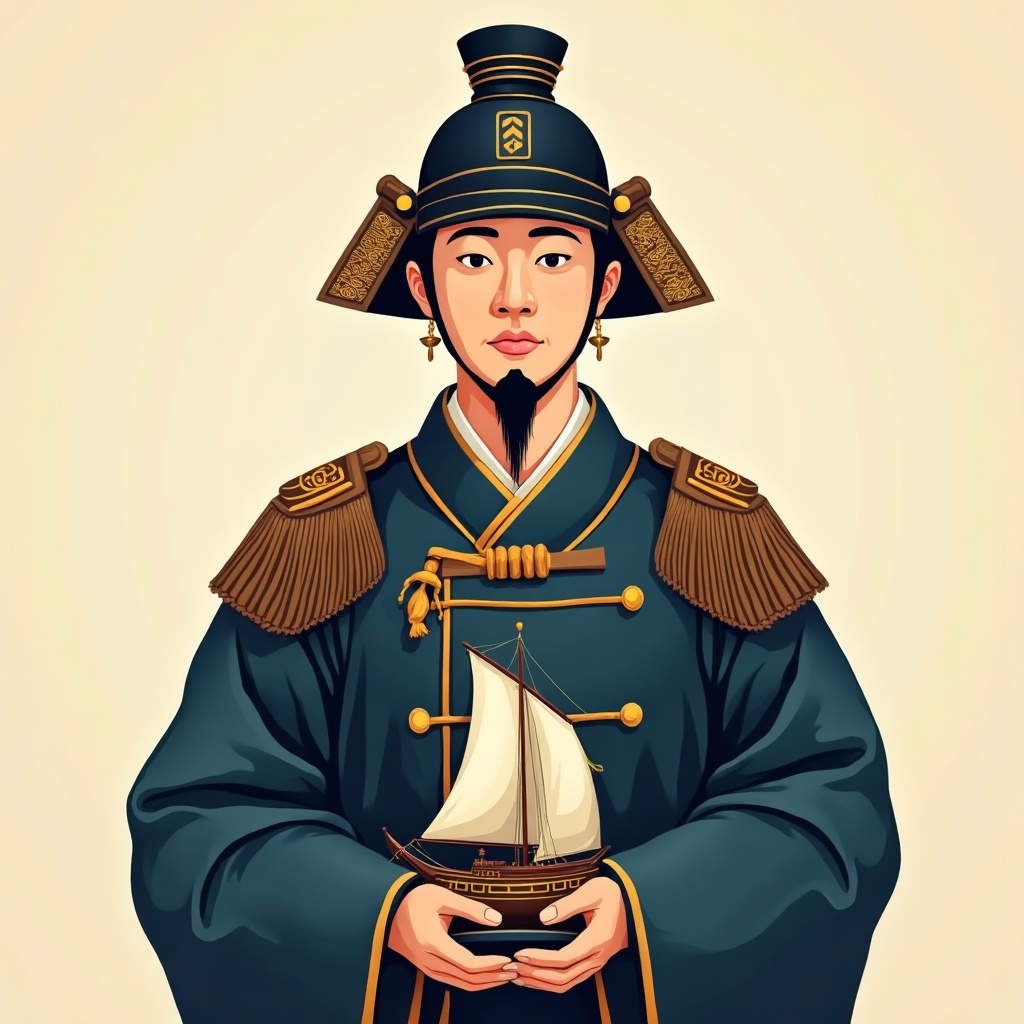
Admiral Yi Sun-sin · 이순신 — Myeongnyang Strait, 1597
💡 The Idea
Admiral Yi Sun-sin (1545-1598) commanded the Joseon navy in the Jeongyu War. The Battle of Myeongnyang was fought on the sixteenth day of the ninth lunar month, 1597 (in the Western calendar, late October 1597, usually given as 26 October), in the Myeongnyang Strait, also called Uldolmok, between Jindo island and the mainland. The numbers need care. Yi's own report to the king, copied in the Annals of King Seonjo (eleventh lunar month of 1597), says he gathered 13 warships and 32 small scout boats, that more than 130 enemy warships came, that his ships broke more than 20 enemy ships with cannon, and that two captains then broke 11 more. The Encyclopedia of Korean Culture says that only twelve ships escaped from the earlier defeat at Chilcheonryang, and that one more was later brought by ordinary people, making thirteen. Another article by the same encyclopedia says Yi fought with twelve ships. The Korea JoongAng Daily writes "13 ships". So the honest range is twelve to thirteen. For the Japanese side, Yi's report and his war diary say "more than 130" ships, and the encyclopedia gives 133. The encyclopedia and the diary say 31 of them were destroyed, which matches "more than 20" plus 11 in the report. Some modern books give other totals. We use only the numbers found in these Korean records. The idea is about using a place and a moment. A smaller force cannot win everywhere, but it can choose where to fight. The Myeongnyang Strait is narrow, only about 293 metres at its narrowest point, and its current is very strong. The encyclopedia explains the tide in two ways. One article says it was spring tide and that the current changed direction in the Korean side's favour. The other says the water was almost at slack tide, then slowly turned. Scholars discuss how much the tide itself decided the fight, and this unit does not decide it for them. The battle blocked the route that Japanese forces could have used to move toward the Han River area. It is a story about leadership under pressure. But it is also a story about war, and war caused suffering to many people on both sides. About the sources: we read Yi's report in the Annals of King Seonjo (30th year, 11th lunar month, 10th day) directly on the Annals of the Joseon Dynasty website. The diary numbers (more than 130 ships around us, 31 broken) come from a published Korean translation of the Nanjung Ilgi, Yi's war diary, quoted in the newspaper Newsis; we did not read the classical Chinese diary text itself. The strait measurements, the 133 ships and the tide come from two articles of the Encyclopedia of Korean Culture (Myeongnyang and Myeongnyangdaecheop) and the Korea JoongAng Daily. The conversation is dramatized. We use no invented quotations from Yi.
이순신 장군(1545~1598)은 정유재란 때 조선 수군을 이끌었어요. 명량 해전은 1597년 음력 9월 16일(양력으로는 1597년 10월 말, 보통 10월 26일로 봐요), 진도와 육지 사이의 명량 해협(울돌목)에서 벌어졌어요. 숫자는 조심해서 봐야 해요. 《선조실록》(1597년 음력 11월)에 옮겨 적힌 이순신 자신의 보고에는 전선 13척과 작은 정찰선 32척을 모았고, 적의 전선 130여 척이 들어왔으며, 대포로 적선 20여 척을 깨뜨렸고, 이어서 두 장수가 11척을 더 깨뜨렸다고 나와요. 한국민족문화대백과사전은 앞선 칠천량 해전에서 빠져나온 배가 열두 척뿐이었고, 나중에 백성들이 한 척을 더 가져와 열세 척이 되었다고 말해요. 같은 백과사전의 다른 항목은 열두 척으로 싸웠다고 써요. 코리아 중앙데일리는 '13척'이라고 써요. 그래서 정직한 범위는 열두 척에서 열세 척이에요. 일본 쪽은 이순신의 보고와 일기에 '130여 척'이라고 나오고, 백과사전은 133척이라고 해요. 백과사전과 일기는 그 가운데 31척이 부서졌다고 하는데, 이는 보고서의 '20여 척'과 11척을 더한 숫자와 맞아요. 현대의 다른 책들은 다른 숫자를 말하기도 해요. 이 단원은 이 한국 기록들에 나온 숫자만 써요. 이 생각은 장소와 순간을 이용하는 것에 대한 이야기예요. 작은 군대가 모든 곳에서 이길 수는 없지만, 어디서 싸울지는 고를 수 있어요. 명량 해협은 가장 좁은 곳이 약 293미터이고 물살이 아주 세요. 백과사전은 물때를 두 가지로 설명해요. 한 항목은 사리 때였고 물살의 방향이 조선 쪽에 유리하게 바뀌었다고 해요. 다른 항목은 물이 거의 멈춘 때였고 서서히 방향이 바뀌었다고 해요. 물때가 싸움을 얼마나 결정했는지는 학자들 사이에서 이야기가 나뉘고, 이 단원은 그것을 대신 결정하지 않아요. 이 전투로 일본군이 한강 유역으로 올라가던 길이 막혔어요. 압박 속의 리더십 이야기예요. 하지만 전쟁의 이야기이기도 하고, 전쟁은 양쪽의 많은 사람에게 고통을 주었어요. 출처에 대해: 《선조실록》 선조 30년 11월 10일 기사에 실린 이순신의 보고는 조선왕조실록 누리집에서 직접 읽었어요. 일기의 숫자(우리를 에워싼 적선 130여 척, 부서진 31척)는 뉴시스 기사에 인용된 《난중일기》 우리말 번역에서 가져왔고, 한문 원문은 직접 읽지 못했어요. 해협의 크기, 133척, 물때 이야기는 한국민족문화대백과사전의 두 항목('명량', '명량대첩')과 코리아 중앙데일리에서 가져왔어요. 대화는 극으로 꾸민 것이고, 이순신의 말을 지어내어 인용하지 않아요.
📚 Grammar focus
Comparatives and superlatives (-er / more / fewer / the most)
✏️ Try it
Complete each sentence with the correct form of the word in brackets. 1. The Japanese fleet was _______ (large) than the Korean fleet. 2. The strait is _______ (narrow) than the open sea. 3. The Korean side had _______ (few) ships than the other side. 4. The Japanese fleet had _______ (many) ships than the Korean fleet. 5. The Korean fleet was the _______ (small) fleet in the battle. (Use the superlative.) Bonus: Compare two places you know. Write two sentences, one with "than" and one with "the most".
전체 레슨을 보고 싶으세요?
Want the full lesson?
회화 연습, 역할극, 문법, 그리고 진짜 선생님이 안에 있어요.
Conversation practice, roleplay, grammar, and a real tutor are inside.