Eureka! · No. 40
Not a Smaller Mind, a Smaller Education
모자란 머리가 아니라, 모자란 교육이었어요
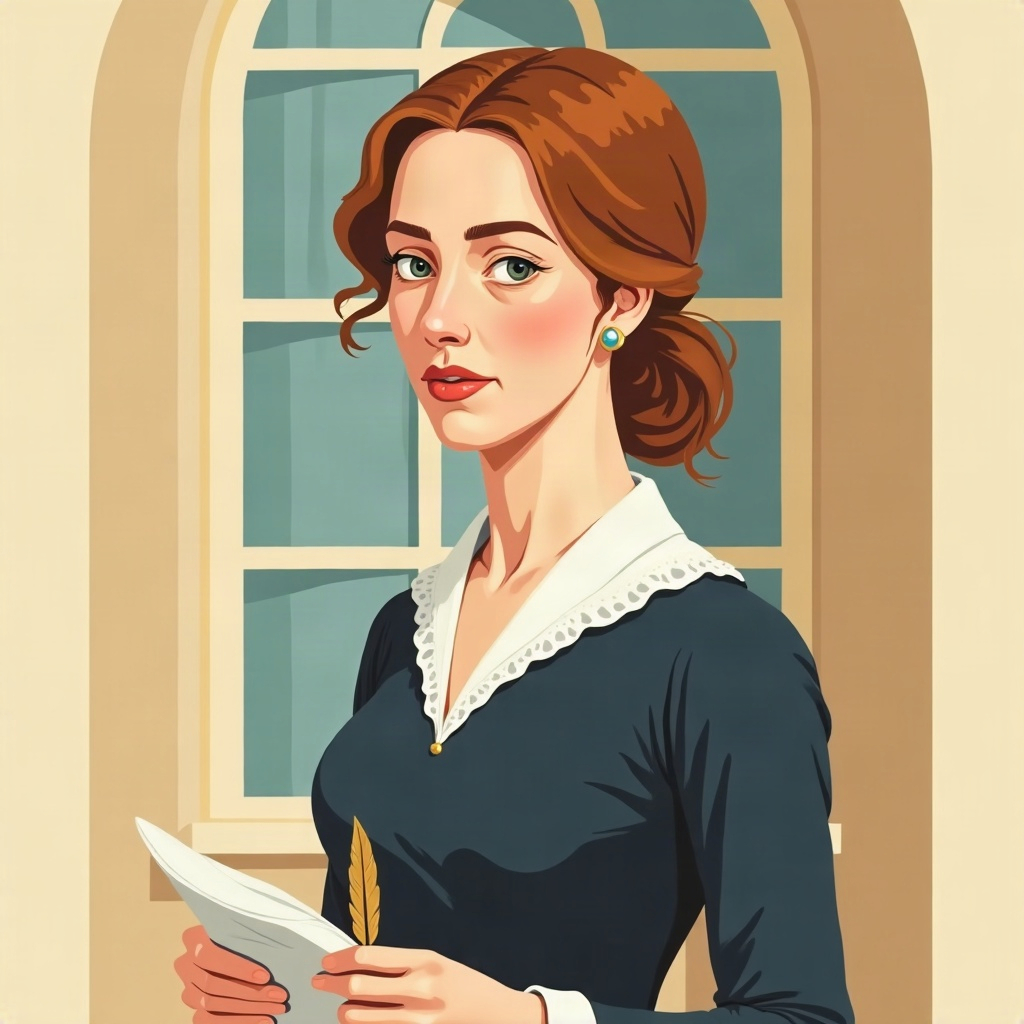
Mary Wollstonecraft · 메리 울스턴크래프트 — London, England, 1792 CE
💡 The Idea
Mary Wollstonecraft (1759-1797) was born in Spitalfields, London, and was one of seven children. In her family only her older brother Ned got a formal education. She worked as a lady's companion, a teacher and a governess. In 1784, with her sisters and her friend Fanny Blood, she started a school at Newington Green. Her first book was Thoughts on the Education of Daughters (1787). In 1792 she published A Vindication of the Rights of Woman. She dedicated it to the French politician Talleyrand, who had published a plan for national education in which girls had only a home education. Her idea: women's minds are not born smaller. She wrote that "the neglected education of my fellow creatures is the grand source of the misery I deplore", and that women "are rendered weak and wretched by a variety of concurring causes". In her view, girls were taught from childhood that beauty was their power, and this shaped their minds. She also wrote: "Strengthen the female mind by enlarging it, and there will be an end to blind obedience" and "I do not wish them to have power over men; but over themselves." She asked for the minds of girls to be educated as seriously as those of boys. She was honest about limits. She wrote that, in general, women are physically weaker than men. Her argument is about minds and education, not about muscles. She also hoped that boys and girls could one day be taught together in schools. About the sources: the dates, the books and the quotations come from the Stanford Encyclopedia of Philosophy and from the text of her book on Project Gutenberg. The classroom scene is invented to teach the idea. Hannah is not a real person, and we do not know what Mary said to any pupil. In the scene Mary speaks ideas that she wrote down only later, in 1792. One more fact: she died in 1797 after the birth of her daughter Mary, the future author of Frankenstein. Her time as a governess in Ireland (about one year) was short and difficult, and we do not use them in the story.
메리 울스턴크래프트(1759~1797)는 런던 스피탈필즈에서 태어났고 일곱 남매 중 한 명이었어요. 그녀의 집에서는 오빠 네드만 정식 교육을 받았어요. 그녀는 부인의 말동무, 교사, 가정교사로 일했어요. 1784년에는 자매들, 친구 패니 블러드와 함께 뉴잉턴 그린에 학교를 세웠어요. 그녀의 첫 책은 《딸들의 교육에 관한 생각》(1787)이에요. 1792년에 그녀는 《여성의 권리 옹호》를 펴냈어요. 이 책은 프랑스 정치가 탈레랑에게 바쳤는데, 탈레랑은 여자아이들에게 가정교육만 주는 국민 교육 계획을 발표한 사람이에요. 그녀의 핵심 생각: 여성의 마음은 더 작게 태어나지 않았어요. 그녀는 "내 동료 인간들이 교육을 받지 못한 것이 내가 안타까워하는 불행의 가장 큰 원천"이라고 썼고, 여성이 "여러 원인이 겹쳐서 약하고 비참해졌다"고 썼어요. 그녀가 보기에 여자아이들은 어릴 때부터 아름다움이 자기의 힘이라고 배웠고, 그것이 마음을 만들었어요. 그녀는 또 이렇게 썼어요. "여성의 마음을 넓혀서 튼튼하게 하라. 그러면 맹목적인 복종은 끝날 것이다." 그리고 "나는 여성이 남자들을 지배하길 바라지 않는다. 여성이 자기 자신을 다스리길 바란다." 그녀는 여자아이들의 마음을 남자아이들의 마음만큼 진지하게 교육하자고 요구했어요. 그녀는 한계도 솔직히 말했어요. 일반적으로 여성이 남성보다 신체적으로 약하다고 썼어요. 그녀의 주장은 근육이 아니라 마음과 교육에 관한 거예요. 또 언젠가 남자아이와 여자아이가 학교에서 함께 배울 수 있기를 바랐어요. 출처에 대해: 연도, 책, 인용문은 스탠퍼드 철학 백과사전과 프로젝트 구텐베르크에 있는 그녀의 책 본문에서 가져왔어요. 교실 장면은 이 생각을 가르치려고 지어낸 것이에요. 해나는 실제 인물이 아니고, 메리가 어떤 학생에게 무슨 말을 했는지는 알려져 있지 않아요. 장면 속 메리는 나중인 1792년에야 글로 쓴 생각을 말하고 있어요. 한 가지 더: 그녀는 1797년 딸 메리를 낳은 뒤 세상을 떠났고, 그 딸이 나중에 《프랑켄슈타인》의 작가가 되었어요. 아일랜드에서 가정교사로 지낸 시간(1년쯤)은 짧고 힘들었다고 해서 이 이야기에서는 쓰지 않았어요.
📚 Grammar focus
Past passive (was / were + past participle)
✏️ Try it
Complete each sentence with the past passive form of the verb in brackets. 1. Mary's book _______ (publish) in 1792. 2. In Mary's family, her brother _______ (give) a formal education, but Mary _______ not _______ (give) one. 3. I _______ (teach) to sew when I was a child. 4. Hannah and her friends _______ (give) books in Mary's school. 5. What _______ you _______ (teach) at home? Bonus: Write two sentences about your own life. Use "I was taught..." and "I was given...".
전체 레슨을 보고 싶으세요?
Want the full lesson?
회화 연습, 역할극, 문법, 그리고 진짜 선생님이 안에 있어요.
Conversation practice, roleplay, grammar, and a real tutor are inside.