Eureka! · No. 55
Plant a Tree, Change a Village
나무 한 그루가 마을을 바꿔요
Wangari Maathai · 왕가리 마타이 — Kenya, 1977 CE
💡 The Idea
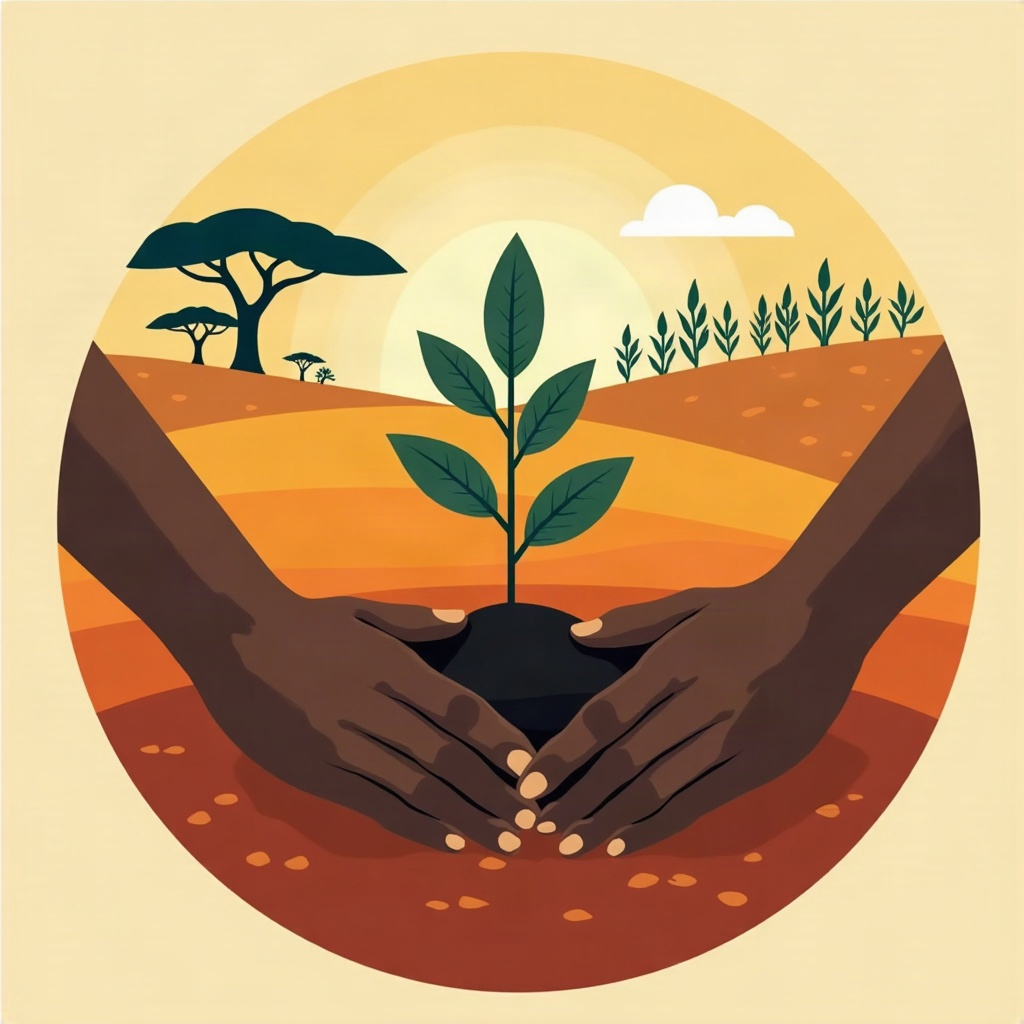
Wangari Maathai (1940-2011) was born in Nyeri, Kenya. According to the Nobel Prize website, she earned a PhD at the University of Nairobi in 1971, and she was the first woman in East and Central Africa to earn a doctorate. In 1976 she introduced the idea of planting trees with people while she was working with the National Council of Women of Kenya. The problem: the Green Belt Movement says that rural Kenyan women reported that their streams were drying up, that their food supply was less secure, and that they had to walk further and further to get firewood. In her Nobel lecture, Maathai added "clean drinking water, balanced diets, shelter and income". She also said that she had watched forests being cleared and replaced by commercial plantations in her childhood. The turning point: in 1977 she started the Green Belt Movement. The movement itself says that it started with seven seedlings on World Environment Day in 1977, and World Environment Day is 5 June. Why trees? In her words, tree planting "is simple, attainable and guarantees quick, successful results". In the movement's own history, the women grew seedlings and planted trees to bind the soil, store rainwater and provide food and firewood, and they received a small payment. Maathai also noticed that many people believed that poor people lacked the knowledge to solve their problems, and that the answers had to come from outside. The movement taught people to find the causes of their problems for themselves. The result: in 2004 Maathai said that together they had planted over 30 million trees. The Nobel Prize website says that she saw tree planting in a broader way, including democracy, women's rights and international solidarity. The Nobel Committee gave her the 2004 Peace Prize "for her contribution to sustainable development, democracy and peace". The Committee's words were: "She thinks globally and acts locally." She was the first African woman to receive the prize. About the sources: facts come from the Nobel Prize website (facts page, biography, 2004 lecture) and the Green Belt Movement's own pages (its history page and its partner page on Google Arts & Culture). The date of the first planting comes from a 2018 guest post by the Green Belt Movement on the Goldman Environmental Prize website, which says that the movement started with seven seedlings on World Environment Day in 1977. The conversation with the "Village Woman" is dramatized.
왕가리 마타이(1940~2011)는 케냐 니에리에서 태어났어요. 노벨상 웹사이트에 따르면 그녀는 1971년 나이로비 대학교에서 박사 학위를 받았고, 동아프리카와 중앙아프리카에서 박사 학위를 받은 첫 여성이었어요. 1976년에 그녀는 케냐 여성 전국위원회와 일하면서 사람들과 함께 나무를 심자는 생각을 소개했어요. 문제는 이래요. 그린벨트 운동은 케냐 시골 여성들이 개울이 마르고, 식량 공급이 불안해지고, 땔나무를 구하러 점점 더 멀리 걸어야 한다고 말했다고 전해요. 노벨상 연설에서 마타이는 '깨끗한 식수, 균형 잡힌 식사, 집, 수입'도 필요했다고 덧붙였어요. 또 어린 시절에 숲이 베어지고 상업용 조림지가 들어서는 것을 지켜봤다고 말했어요. 전환점은 이래요. 1977년에 그녀는 그린벨트 운동을 시작했어요. 이 운동은 1977년 세계 환경의 날에 묘목 일곱 그루로 시작했다고 스스로 말하는데, 세계 환경의 날은 6월 5일이에요. 왜 나무였을까요? 그녀의 말로는 나무 심기는 "간단하고, 해낼 수 있고, 빠르고 성공적인 결과를 보장해요". 이 운동 자신의 역사에 따르면 여성들은 묘목을 키우고 나무를 심어서 흙을 붙잡고, 빗물을 모으고, 음식과 땔나무를 얻었으며, 작은 보수도 받았어요. 마타이는 또한 많은 사람이 가난한 사람은 문제를 풀 지식이 없고 해답은 바깥에서 와야 한다고 믿는다는 것도 알아차렸어요. 이 운동은 사람들이 자기 문제의 원인을 스스로 찾도록 가르쳤어요. 결과는 이래요. 2004년에 마타이는 함께 3천만 그루가 넘는 나무를 심었다고 말했어요. 노벨상 웹사이트는 그녀가 나무 심기를 민주주의, 여성의 권리, 국제 연대까지 포함하는 더 넓은 시각으로 보았다고 말해요. 노벨 위원회는 "지속 가능한 발전, 민주주의, 평화에 대한 공헌"으로 그녀에게 2004년 평화상을 주었어요. 위원회의 표현은 이래요. "그녀는 세계적으로 생각하고 지역에서 행동한다." 그녀는 이 상을 받은 첫 아프리카 여성이었어요. 출처에 대해: 사실은 노벨상 웹사이트(요약 페이지, 약력, 2004년 연설)와 그린벨트 운동 자체의 페이지(역사 페이지, 구글 아트 앤 컬처의 파트너 페이지)에서 가져왔어요. 첫 나무 심기 날짜는 그린벨트 운동이 2018년 골드만 환경상 웹사이트에 쓴 글에서 가져왔어요. 그 글은 이 운동이 1977년 세계 환경의 날에 묘목 일곱 그루로 시작했다고 말해요. '마을 여성'과의 대화는 극으로 꾸민 것이에요.
📚 Grammar focus
Present perfect (have / has + past participle)
✏️ Try it
Complete each sentence with the present perfect (have / has + past participle) of the verb in brackets. 1. The women _______ (plant) many trees. 2. The stream _______ not _______ (come) back yet. 3. I _______ (see) a forest cleared. 4. _______ you ever _______ (plant) a tree? Yes, I _______. 5. The movement _______ (grow) since 1977. Bonus: Write two sentences about yourself. Use "I have never..." and "I have already...".
전체 레슨을 보고 싶으세요?
Want the full lesson?
회화 연습, 역할극, 문법, 그리고 진짜 선생님이 안에 있어요.
Conversation practice, roleplay, grammar, and a real tutor are inside.