Eureka! · No. 76
Give Your Whole Mind
온 마음을 모아 보세요
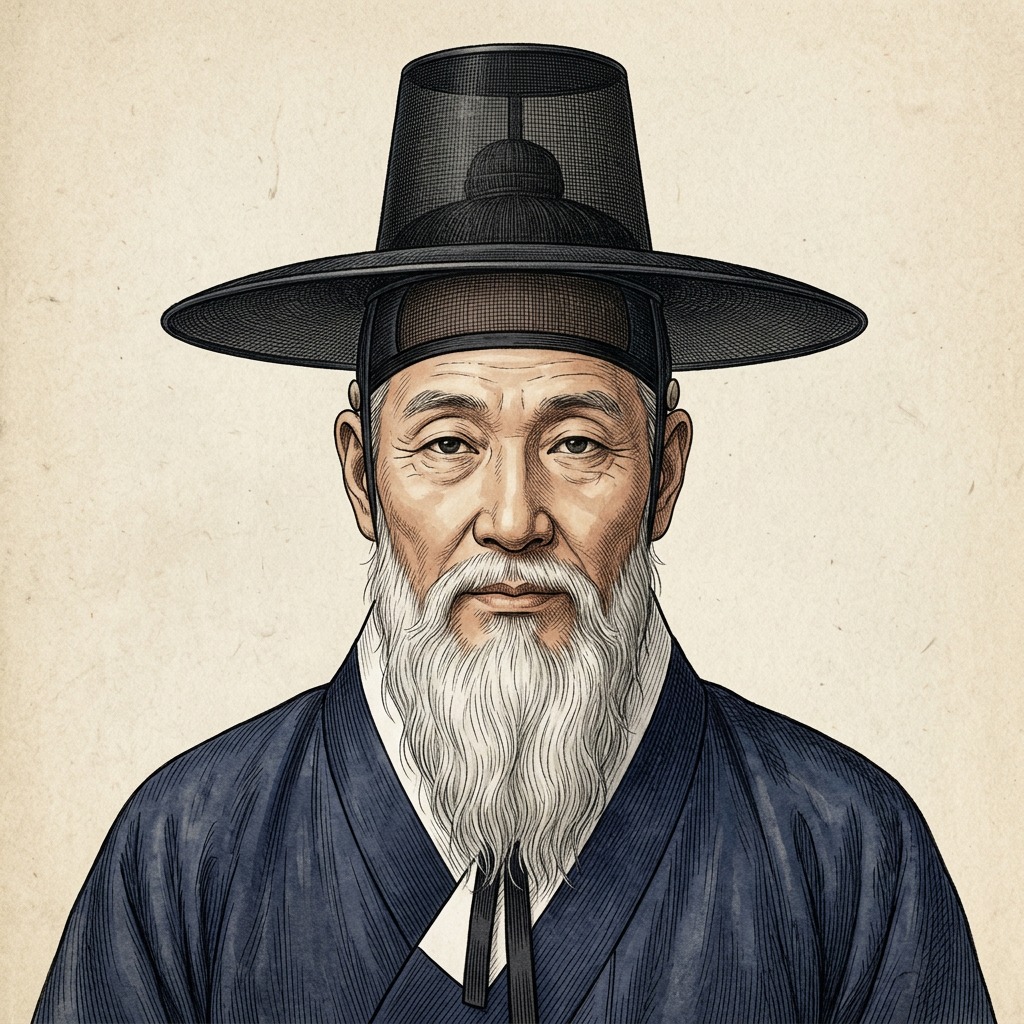
Yi Hwang (Toegye) · 이황(퇴계) — Dosan, Joseon Korea, c. 1565 CE
💡 The Idea
Yi Hwang (1501-1570), called Toegye, was one of the most important scholars of Joseon Korea. He passed the government exams and served as an official, but he did not want that life for long. A Korean encyclopedia says that from 1543 he resigned or refused office more than twenty times. He was often ill, and the royal court was a troubled place. He wanted time to read and think. In 1560 he built Dosan Seodang, a study hall, and taught students there. The encyclopedia says that more than 260 people followed his way of learning. In his late sixties, the king called him back to the court, and he gave the young King Seonjo a book called the Ten Diagrams on Sage Learning. His big idea in this unit is gyeong. In English we can say "reverent mindfulness" or "serious attention". It means giving your whole mind to what you are doing, with care and respect. The encyclopedia says that Toegye saw gyeong as the beginning and the end of learning, and that he tried to live it in daily life. It is like a quiet guard for the mind: you notice when your thoughts run away, and you bring them back. The aha is simple. You cannot learn well, or treat people well, with a mind that is half somewhere else. Toegye also had a famous exchange of letters with a much younger scholar, Gi Daeseung. The two men did not agree on everything. The debate (1559-1566) is called the Four-Seven debate, and it is too technical for this unit. What we can say is that a famous older scholar kept answering a younger man's hard questions, and historians still study the letters today. (The encyclopedia says the two men wrote to each other for twelve years in all.) About the sources: the dates, the more than twenty resignations or refusals, the study hall, the plum plant, and the letters come from the Encyclopedia of Korean Culture (Academy of Korean Studies). One tourism source says Dosan Seodang was built in 1561, and the encyclopedia says 1560, so we say "1560 (or 1561)". Dosan Seowon was built after his death: the encyclopedia says by people from his home area, and the tourism source says by his followers. The UNESCO listing in 2019 includes it with eight other seowon. A 2006 news report on the Bank of Korea's new design describes the 1,000-won note with his portrait, and a 2022 news article says it is still on the front today. The conversation with the student is imagined, and the student is not a real person. We do not have a record of Toegye saying these words. The explanation of gyeong in the scene is a simple teaching version, not a full scholarly definition.
이황(1501~1570)은 호가 퇴계예요. 그는 조선에서 가장 중요한 학자 중 한 사람이에요. 과거에 급제해 벼슬을 했지만, 그런 삶을 오래 바라지는 않았어요. 《한국민족문화대백과사전》에 따르면, 그는 1543년부터 벼슬에서 물러나거나 벼슬을 사양한 일이 스무 번이 넘어요. 몸이 자주 아팠고, 조정은 어지러운 곳이었어요. 그는 책을 읽고 생각할 시간을 원했어요. 1560년에 그는 도산서당을 짓고 그곳에서 제자들을 가르쳤어요. 백과사전은 그의 학풍을 따른 사람이 260여 명이라고 해요. 예순 후반에 임금이 그를 조정으로 다시 불렀고, 그는 어린 선조 임금에게 《성학십도》라는 책을 바쳤어요. 이 단원의 큰 생각은 경(敬)이에요. 영어로는 "reverent mindfulness(경건한 마음 모으기)"나 "serious attention(진지한 집중)"이라고 말할 수 있어요. 지금 하는 일에 온 마음을 쏟는 것, 조심하고 존중하는 마음으로 하는 것이에요. 백과사전은 퇴계가 경을 학문의 처음이자 끝으로 보았고, 일상생활에서도 경을 실천하려고 했다고 해요. 경은 마음을 지키는 조용한 파수꾼 같아요. 생각이 딴 데로 달아나는 것을 알아차리고 다시 데려오는 거예요. 깨달음은 단순해요. 마음이 반쯤 다른 곳에 가 있으면 공부도 사람 대하는 일도 잘할 수 없어요. 퇴계는 훨씬 젊은 학자 기대승과 유명한 편지를 주고받기도 했어요. 두 사람은 모든 것에 의견이 같지는 않았어요. 1559년부터 1566년까지 이어진 이 논쟁은 '사단칠정 논쟁'이라고 불러요. 이 단원에서 다루기에는 너무 전문적이에요. 우리가 말할 수 있는 것은, 이름난 나이 많은 학자가 젊은 사람의 어려운 질문에 계속 답했고, 역사학자들이 지금도 그 편지를 연구한다는 점이에요. (백과사전에 따르면 두 사람은 모두 12년 동안 편지를 주고받았어요.) 출처에 대해: 연도, 스무 번이 넘는 사직과 사양, 서당, 매화 화분, 편지 이야기는 한국학중앙연구원의 《한국민족문화대백과사전》에서 가져왔어요. 한 관광 자료는 도산서당이 1561년에 지어졌다고 하고 백과사전은 1560년이라고 해서, 여기서는 "1560년(또는 1561년)"이라고 썼어요. 도산서원은 그가 세상을 떠난 뒤에 지어졌어요. 백과사전은 고향 사람들이, 관광 자료는 제자들이 지었다고 해요. 2019년 유네스코 세계유산 등재에는 다른 서원 여덟 곳과 함께 포함되었어요. 한국은행의 새 도안을 알린 2006년 뉴스 보도는 그의 초상이 들어간 1,000원권을 설명하고, 2022년 기사는 지금도 앞면에 그가 있다고 해요. 제자와의 대화는 상상한 장면이고, 제자는 실제 인물이 아니에요. 퇴계가 이런 말을 했다는 기록은 없어요. 장면 속 경에 대한 설명은 쉽게 풀어 쓴 것이고, 학문적인 정의 전체는 아니에요.
📚 Grammar focus
Present perfect with for / since (how long?)
✏️ Try it
Put the verb in brackets into the present perfect. Then choose for or since. 1. Toegye _______ (live) beside the stream _______ many years. 2. He _______ (teach) students at Dosan _______ 1560. 3. Gi Daeseung _______ (write) to him _______ 1559. 4. "I _______ (love) books _______ I was about fourteen." 5. How long _______ the students _______ (study) with Toegye? Bonus: Write two true sentences about yourself. Use "for" in one and "since" in the other.
전체 레슨을 보고 싶으세요?
Want the full lesson?
회화 연습, 역할극, 문법, 그리고 진짜 선생님이 안에 있어요.
Conversation practice, roleplay, grammar, and a real tutor are inside.