Eureka! · No. 62
Understanding Makes Us Free
이해하면 자유로워져요
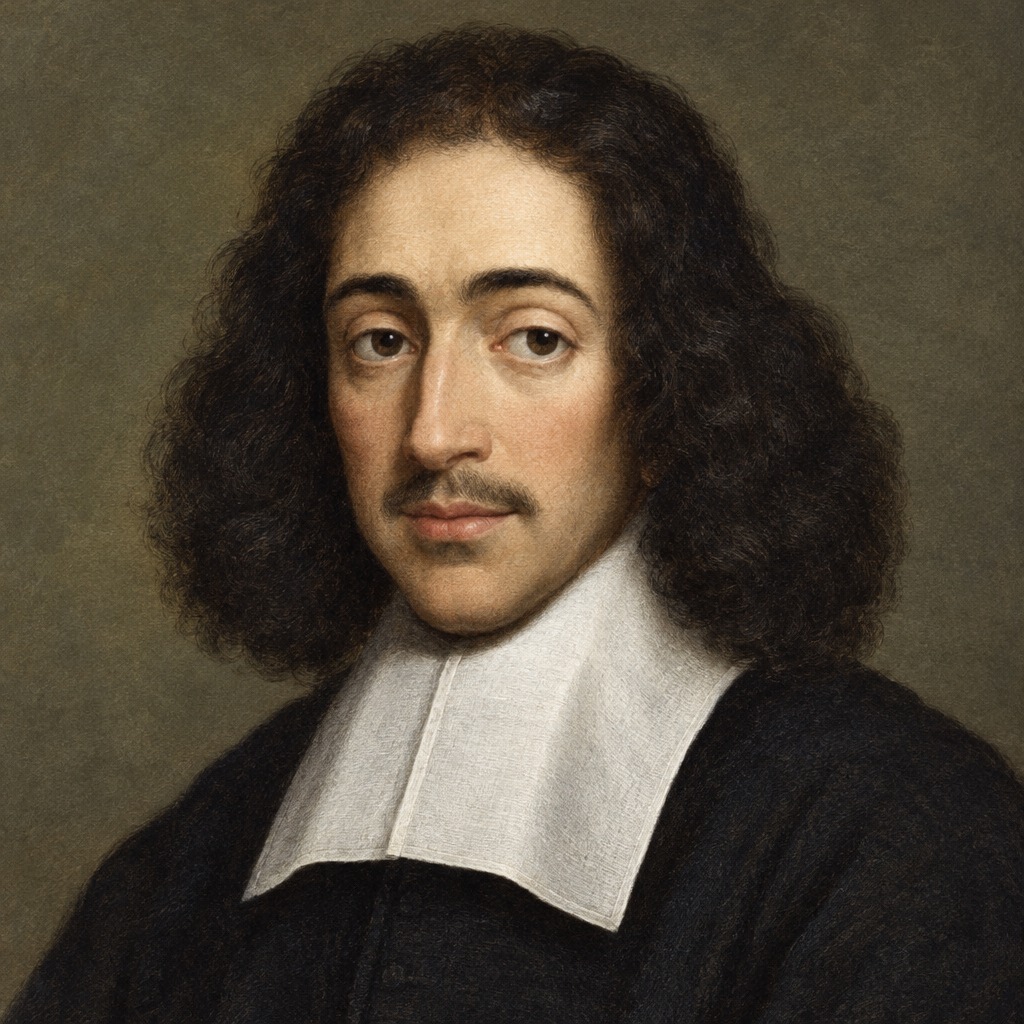
Baruch Spinoza · 바뤼흐 스피노자 — Amsterdam and The Hague, Dutch Republic, 1656-1677 CE
💡 The Idea
Baruch Spinoza (1632-1677) was born in Amsterdam in the Portuguese-Jewish community. According to the Stanford Encyclopedia of Philosophy, on 27 July 1656 the community issued against him "the harshest writ of herem ... ever pronounced" by the Sephardic community of Amsterdam, and it was never cancelled. The writ talks about "abominable heresies" and "monstrous deeds" but gives no details. Scholars can only guess that he already held ideas later seen in his books: for example, that the soul is not immortal and that God is not a person who judges. His main idea is that everything, including human beings, is part of nature and follows nature's own laws. In the Ethics (published after his death), he writes about "God or Nature" (Deus sive Natura). He rejects the picture of God as a judge. He thinks this picture keeps people living with hope and fear and with superstition. He explains emotions the way we explain a triangle or a moving body: by their causes. We cannot remove our feelings completely, but when we understand what causes them, they have less power over us. This is why understanding can make us freer. The Heidelberg offer is real and is in his letters. A professor, I. L. Fabritius, wrote for the Elector Palatine on 16 February 1673, and Spinoza replied from The Hague on 30 March 1673. In the 1883 English translation of the letters, Spinoza says he does not wish to teach in public, that teaching would stop his research, and that he does not know the limits of his freedom there. Spinoza asked for more time to think, but he never took the post. About the sources: the 27 July 1656 date, the "abominable heresies" and the main ideas come from the Stanford Encyclopedia of Philosophy (Steven Nadler). The words of the herem come from a translation by Asa Kasher and Shlomo Biderman. The ban was written in Portuguese, so any English wording depends on the translator. The Internet Encyclopedia of Philosophy says that he "most likely" became a lens grinder after the ban; this is not certain, so we say so. The conversation with the "Friend" is imagined. His later fame, his book on religion and politics (1670) and his friendship with other thinkers are for another unit.
바뤼흐 스피노자(1632~1677)는 암스테르담의 포르투갈계 유대인 공동체에서 태어났어요. 스탠퍼드 철학 백과사전에 따르면 1656년 7월 27일에 공동체는 그에게 암스테르담 세파르디 공동체가 내린 것 가운데 "가장 가혹한 헤렘"을 선포했고, 이 파문은 끝내 취소되지 않았어요. 파문장은 "혐오스러운 이단"과 "끔찍한 행위"를 말하지만 자세한 내용은 주지 않아요. 학자들은 그가 이미 훗날 책에 나오는 생각들을 갖고 있었을 것이라고 짐작할 뿐이에요. 예를 들어 영혼은 죽지 않는 것이 아니며 신은 심판하는 인격이 아니라는 생각이에요. 그의 중심 생각은, 인간을 포함한 모든 것이 자연의 일부이고 자연 자체의 법칙을 따른다는 거예요. 『에티카』(사후에 출간)에서 그는 "신, 곧 자연"(Deus sive Natura)에 대해 써요. 그는 신을 심판관으로 그리는 그림을 거부해요. 그런 그림은 사람들을 희망과 두려움, 미신 속에서 살게 한다고 생각해요. 그는 감정을 삼각형이나 움직이는 물체를 설명하듯 원인으로 설명해요. 우리는 감정을 완전히 없앨 수는 없지만 그 원인을 이해하면 감정의 힘이 줄어들어요. 그래서 이해는 우리를 더 자유롭게 만들 수 있어요. 하이델베르크의 제안은 실제로 있었고 그의 편지에 남아 있어요. I. L. 파브리티우스 교수가 선제후를 대신해 1673년 2월 16일에 편지를 썼고, 스피노자는 3월 30일 헤이그에서 답했어요. 1883년의 영어 번역 서간집에서 스피노자는 공개적으로 가르치고 싶지 않고, 가르치면 연구가 멈출 것이며, 그곳에서 자신의 자유가 어디까지인지 모른다고 말해요. 스피노자는 생각할 시간을 더 달라고 청했지만 그 자리를 받지는 않았어요. 출처에 대해: 1656년 7월 27일이라는 날짜, "혐오스러운 이단", 중심 생각은 스탠퍼드 철학 백과사전(스티븐 내들러)에서 가져왔어요. 파문장의 문장은 아사 카셔와 슐로모 비더만의 번역이에요. 파문장은 포르투갈어로 쓰였기 때문에 영어 표현은 번역자에 따라 달라요. 인터넷 철학 백과사전은 그가 파문 뒤에 "아마도" 렌즈 가는 일을 하게 되었다고 말해요. 확실하지 않아서 그렇게 적었어요. '친구'와의 대화는 상상한 것이에요. 그의 훗날 명성, 종교와 정치에 관한 책(1670), 다른 사상가들과의 교류는 다른 단원에서 다뤄요.
📚 Grammar focus
Make / let + object + base verb
✏️ Try it
Complete each sentence with make or let (in the right form) and the verb in brackets. 1. The ban did not _______ anyone _______ (talk) to Spinoza. 2. Fear can _______ people _______ (believe) strange things. 3. Learning the causes _______ us _______ (see) things more clearly. 4. The prince was ready to _______ Spinoza _______ (teach) freely. 5. My teacher _______ me _______ (repeat) the sentence, so I did it again. (past of "make") Bonus: Write two sentences about your life. Use "... makes me ..." and "My parents let me ...".
전체 레슨을 보고 싶으세요?
Want the full lesson?
회화 연습, 역할극, 문법, 그리고 진짜 선생님이 안에 있어요.
Conversation practice, roleplay, grammar, and a real tutor are inside.