Eureka! · No. 59
Life Is Long Enough
삶은 충분히 길어요
Seneca the Younger · 세네카 — Rome, probably after 49 CE
💡 The Idea
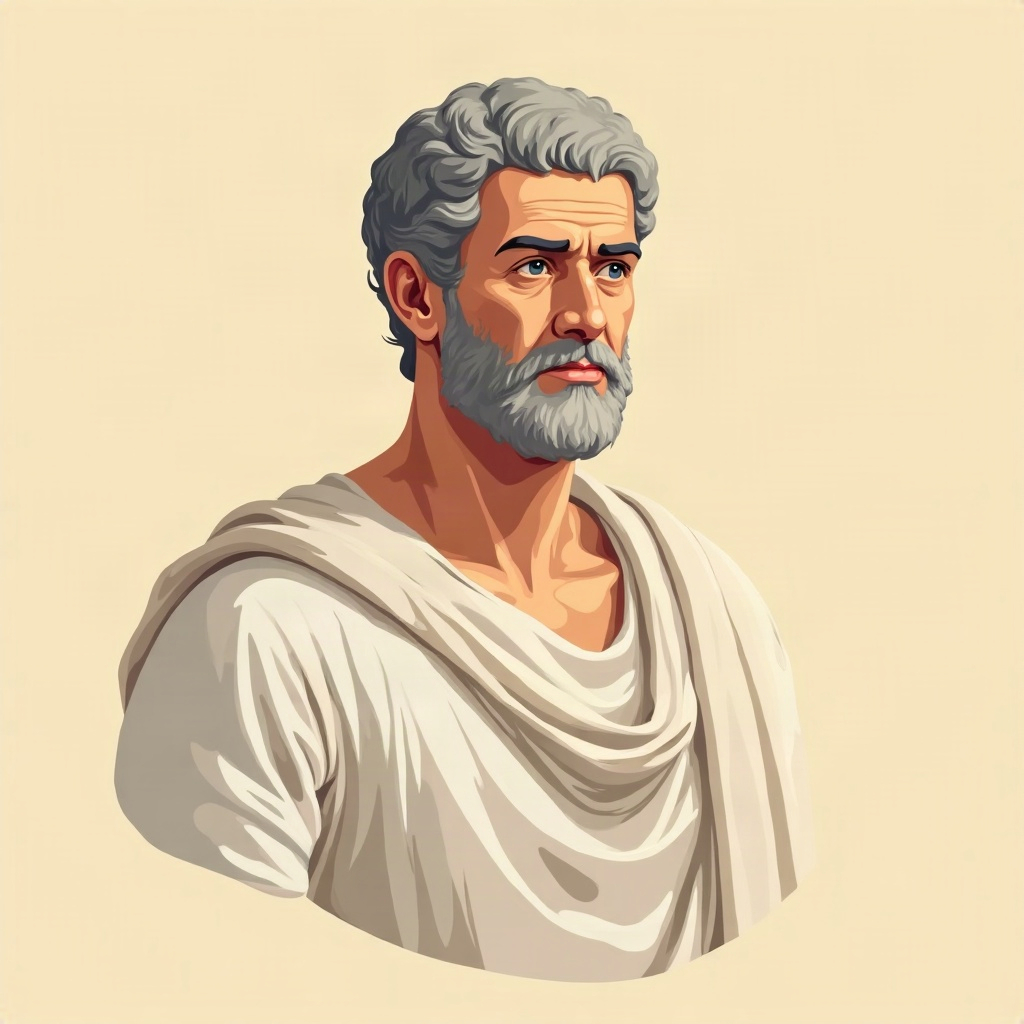
Seneca the Younger (Lucius Annaeus Seneca, about 1 BCE to 65 CE) was born in Corduba, in Spain, and educated in Rome. According to the Stanford Encyclopedia of Philosophy, he was sent away to Corsica in 41 CE, he came back to Rome in 49 CE, and he was one of Nero's advisors after Nero became emperor in 54. He was charged with taking part in a plot against Nero and was forced to take his own life in 65. In his essay On the Shortness of Life (in Latin, De Brevitate Vitae), Seneca starts with a complaint that many people make: life is too short. He answers it in a way that is simple to remember. In Aubrey Stewart's 1889 English translation (Project Gutenberg), he writes: "We do not have a very short time assigned to us, but we lose a great deal of it." A few lines later he writes: "Life is long enough, if you know how to use it." And: "we do not receive a short life, but we make it a short one, and we are not poor in days, but wasteful of them." His idea is that our problem is not too little time. Our problem is that we give our time away to greed, laziness, ambition and busy work for other people. Seneca gives some advice to Paulinus, a busy man. In section 18 he tells him: "take now some part of your time for yourself as well," and a few lines later, "it is better to understand your own mind than to understand the corn-market." He does not say "do nothing." He says that Paulinus can find greater work in a calmer life. About the sources: all the "From the book" lines are exact words from Stewart's translation of De Brevitate Vitae, sections 1, 2 and 18 (Project Gutenberg, ebook 64576, "Minor Dialogues", London, 1889). The facts of Seneca's life are from the Stanford Encyclopedia of Philosophy's entry on Seneca. The dates of the essay are not certain: the encyclopedia says that most of his surviving essays were written after his return to Rome in 49, but it does not give a year for this one, so we say "probably after 49 CE". The lines of Paulinus in the story are imagined. We should also remember that Seneca did not always follow his own advice. His life was busy and political, and the way it ended shows how dangerous that world was.
소(小) 세네카(루키우스 안나이우스 세네카, 기원전 1년경~기원후 65년)는 스페인의 코르두바에서 태어나 로마에서 교육을 받았어요. 스탠퍼드 철학 백과사전에 따르면 그는 기원후 41년에 코르시카로 쫓겨났고, 49년에 로마로 돌아왔고, 54년에 네로가 황제가 된 뒤에는 네로의 조언자 가운데 한 사람이었어요. 그는 네로를 해치려는 음모에 가담했다는 혐의를 받았고 65년에 스스로 목숨을 끊도록 강요당했어요. 《삶의 짧음에 대하여》(라틴어로는 De Brevitate Vitae)에서 세네카는 많은 사람들이 하는 불평으로 시작해요. 삶이 너무 짧다는 불평이에요. 그는 기억하기 쉬운 방식으로 이에 답해요. 오브리 스튜어트가 1889년에 옮긴 영어 번역(프로젝트 구텐베르크)에서 그는 이렇게 써요. "우리에게 주어진 시간이 아주 짧은 것이 아니다. 우리가 그 시간을 많이 잃어버리는 것이다." 몇 줄 뒤에는 이렇게 써요. "삶은 충분히 길다. 쓰는 법을 안다면." 그리고 "우리는 짧은 삶을 받는 것이 아니라 삶을 짧게 만드는 것이고, 날이 모자란 것이 아니라 날을 낭비하는 것이다." 그의 생각은 우리의 문제가 시간이 모자라는 것이 아니라는 거예요. 문제는 우리가 욕심과 게으름과 야망, 그리고 남을 위한 바쁜 일에 시간을 내어 준다는 것이에요. 세네카는 바쁜 사람이었던 파울리누스에게 조언해요. 18절에서 그는 이렇게 말해요. "이제 시간의 일부를 자기 자신을 위해서도 써라." 그리고 몇 줄 뒤에 "곡물 시장을 이해하는 것보다 자기 마음을 이해하는 것이 더 낫다." 그는 '아무것도 하지 말라'고 하지 않아요. 파울리누스가 더 차분한 삶 속에서 더 큰 일을 찾을 수 있다고 말해요. 출처에 대해: '책에서'라고 표시한 모든 대사는 스튜어트가 옮긴 《삶의 짧음에 대하여》 1, 2, 18절의 정확한 영어 문장이에요(프로젝트 구텐베르크 64576번, 《소(小) 대화편》). 세네카의 생애에 관한 사실은 스탠퍼드 철학 백과사전의 세네카 항목에서 가져왔어요. 이 글을 쓴 해는 확실하지 않아요. 백과사전은 그의 남은 글 대부분이 49년 로마로 돌아온 뒤에 쓰였다고 하지만 이 글의 연도는 적지 않아서, 여기서는 '기원후 49년 이후로 추정'이라고 써요. 이야기 속 파울리누스의 대사는 상상한 거예요. 세네카가 늘 자기 조언대로 살지는 않았다는 점도 기억해야 해요. 그의 삶은 바쁘고 정치적이었고, 그 끝은 그 세계가 얼마나 위험했는지를 보여 줘요.
📚 Grammar focus
Question word + to + verb (how to / what to / where to)
✏️ Try it
Complete each sentence with a question word (how, what, where, who) and to + verb. Use the verb in brackets. 1. Seneca says that life is long enough if you know _______ _______ (use) it. 2. I have an hour. I do not know _______ _______ (do) first. 3. My friend is new here. Please tell her _______ _______ (catch) the bus. 4. I have a question. I do not know _______ _______ (ask). 5. She wants to study well. She is learning _______ _______ (plan) her time. Bonus: Write two sentences about yourself. Use "I know how to..." and "I do not know what to...".
전체 레슨을 보고 싶으세요?
Want the full lesson?
회화 연습, 역할극, 문법, 그리고 진짜 선생님이 안에 있어요.
Conversation practice, roleplay, grammar, and a real tutor are inside.