Eureka! · No. 45
Letters That Match Your Voice
내 말소리에 꼭 맞는 글자
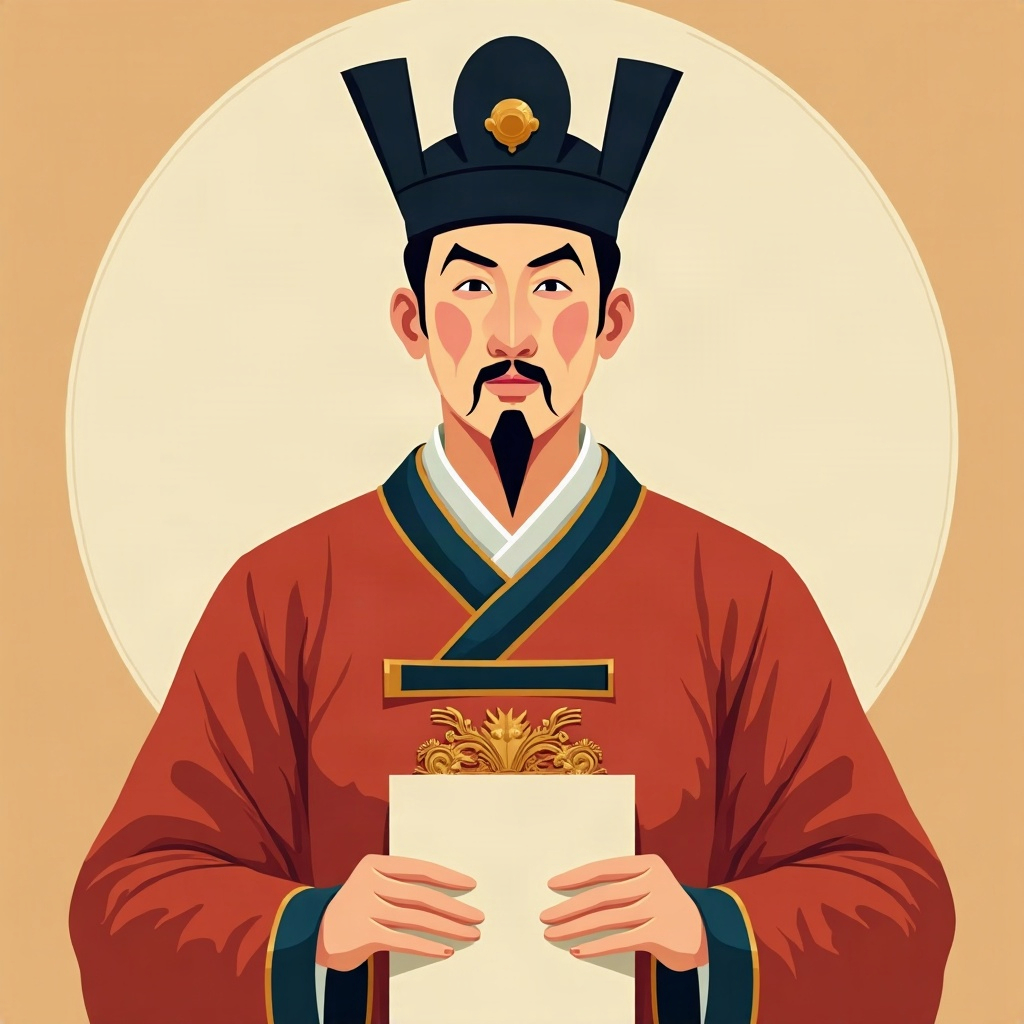
King Sejong the Great · 세종대왕 — Joseon, 1443
💡 The Idea
King Sejong (1397-1450) ruled Joseon, Korea, from 1418 to 1450. The Sejong Sillok, his official record, says that in the twelfth lunar month of 1443 "the King himself made twenty-eight letters" of eonmun, the new Korean script, and that they were called Hunminjeongeum. A book called Hunminjeongeum Haerye was published in 1446. It records the new script and explains its principles. The script was first called Hunminjeongeum, the same name as the book. Today we call it Hangeul. The king's own preface says why he did it. It begins by saying that the speech of the country is different from that of China and does not fit Chinese characters. In a modern Korean translation, the problem was that many people had something to say but could not write their thoughts. (The preface does not say in these words that Chinese characters are hard; the National Archives of Korea explains the king's worry as most people finding it hard to learn and use Chinese characters.) So he made new letters so that people could learn them easily and use them every day. The idea is a design principle: make the writing fit the speech, and make it simple enough for ordinary people. The Haerye explains the design. The five basic consonants are based on the speech organs. According to the Korean government's Hangeul site, ㄱ shows the tongue covering the throat, ㄴ the tongue touching the upper gums, ㅁ the mouth, ㅅ the teeth, and ㅇ the throat. The three basic vowels reflect the sky, the earth and the human. UNESCO added the Hunminjeongeum Haerye manuscript to its Memory of the World Register in 1997. About the sources: we read the two Sejong Sillok articles directly on the Annals of the Joseon Dynasty website (25th year, 12th month, 30th day; 28th year, 9th month, 29th day, lunar dates). The life and reign dates are from the Encyclopedia of Korean Culture. The dates (1443, 1446), the preface ideas, the consonant and vowel design and the UNESCO listing come from the National Institute of Korean Language's Hangeul site, the Encyclopedia of Korean Culture and UNESCO's nomination form; the National Archives of Korea lists the Hunminjeongeum as inscribed in October 1997. The conversation between Sejong and the Scholar is dramatized. The records do not tell us who spoke to the king in 1443, and we do not claim how fast anyone learned the letters. The Haerye was written by scholars of the king's court, so this unit says "the king created" the letters, as the Sillok does, and leaves the question of other helpers for another day.
세종대왕(1397~1450)은 1418년부터 1450년까지 조선을 다스린 임금이었어요. 공식 기록인 《세종실록》에는 1443년 음력 12월에 "이달에 임금이 친히 언문 28자를 지었다"는 기록이 있고, 이 글자를 훈민정음이라고 불렀다고 해요. 1446년에는 《훈민정음 해례본》이라는 책이 나왔어요. 이 책은 새 문자를 기록하고 그 원리를 설명해요. 이 문자는 처음에 책 이름과 같은 '훈민정음'이라고 불렸어요. 오늘날 우리는 한글이라고 불러요. 임금이 직접 쓴 서문에 만든 까닭이 나와 있어요. 서문은 나랏말이 중국과 달라 한자와 서로 통하지 않는다는 말로 시작해요. 현대 우리말 번역에 따르면, 문제는 하고 싶은 말이 있어도 자기 뜻을 글로 펴지 못하는 사람이 많다는 것이었어요. (서문이 '한자가 어렵다'고 그대로 말하지는 않아요. 국가기록원은 세종의 걱정을 대다수 백성이 한자를 배워서 쓰기 어려운 현실로 설명해요.) 그래서 사람들이 쉽게 익혀 날마다 편하게 쓰도록 새 글자를 만들었어요. 이 생각은 하나의 설계 원칙이에요. 글자를 말에 맞추고, 보통 사람도 쓸 수 있을 만큼 단순하게 만든다는 것이에요. 해례본은 글자의 설계를 설명해요. 기본 자음 다섯 개는 발음 기관을 바탕으로 해요. 국립국어원의 한글 누리집 설명에 따르면 ㄱ은 혀가 목구멍을 막는 모양, ㄴ은 혀가 윗잇몸에 닿는 모양, ㅁ은 입, ㅅ은 이, ㅇ은 목구멍을 나타내요. 기본 모음 세 개는 하늘, 땅, 사람을 나타내요. 유네스코는 1997년에 훈민정음 해례본을 세계기록유산으로 등재했어요. 출처에 대해: 《세종실록》의 두 기사(세종 25년 12월 30일, 세종 28년 9월 29일, 음력)는 조선왕조실록 누리집에서 직접 읽었어요. 생몰 연도와 재위 기간은 한국민족문화대백과사전에서 가져왔어요. 연도(1443년, 1446년), 서문의 내용, 자음과 모음의 설계, 유네스코 등재는 국립국어원 한글 누리집, 한국민족문화대백과사전, 유네스코 등재 신청서에서 가져왔어요. 국가기록원도 훈민정음이 1997년 10월에 등재되었다고 적어요. 세종과 '학자'의 대화는 극으로 꾸민 것이에요. 1443년에 누가 임금에게 말을 걸었는지는 기록에 없고, 글자를 얼마나 빨리 익혔는지도 말하지 않아요. 해례본은 궁궐 학자들이 썼어요. 그래서 이 단원은 《세종실록》처럼 '임금이 만들었다'고 쓰고, 다른 도움에 대한 이야기는 다음으로 미뤄요.
📚 Grammar focus
Purpose: to + verb, and so that
✏️ Try it
Join each pair of ideas. Use "to + verb" or "so that". 1. Sejong made new letters. He wanted to help ordinary people. (to ...) 2. The letters are simple. Everyone can learn them. (so that ...) 3. People studied for years. They wanted to read Chinese characters. (to ...) 4. The consonants copy the mouth. People can remember the sounds. (so that ...) 5. Why does he look at his mouth? (Answer with "To ...") Bonus: Write two true sentences about your day. Use "to" in one and "so that" in the other.
전체 레슨을 보고 싶으세요?
Want the full lesson?
회화 연습, 역할극, 문법, 그리고 진짜 선생님이 안에 있어요.
Conversation practice, roleplay, grammar, and a real tutor are inside.