Eureka! · No. 36
A Torch and a Bucket of Water
횃불과 물 한 양동이
Rabi'a al-Adawiyya · 라비아 알아다위야 — Basra, Iraq, 8th century CE
💡 The Idea
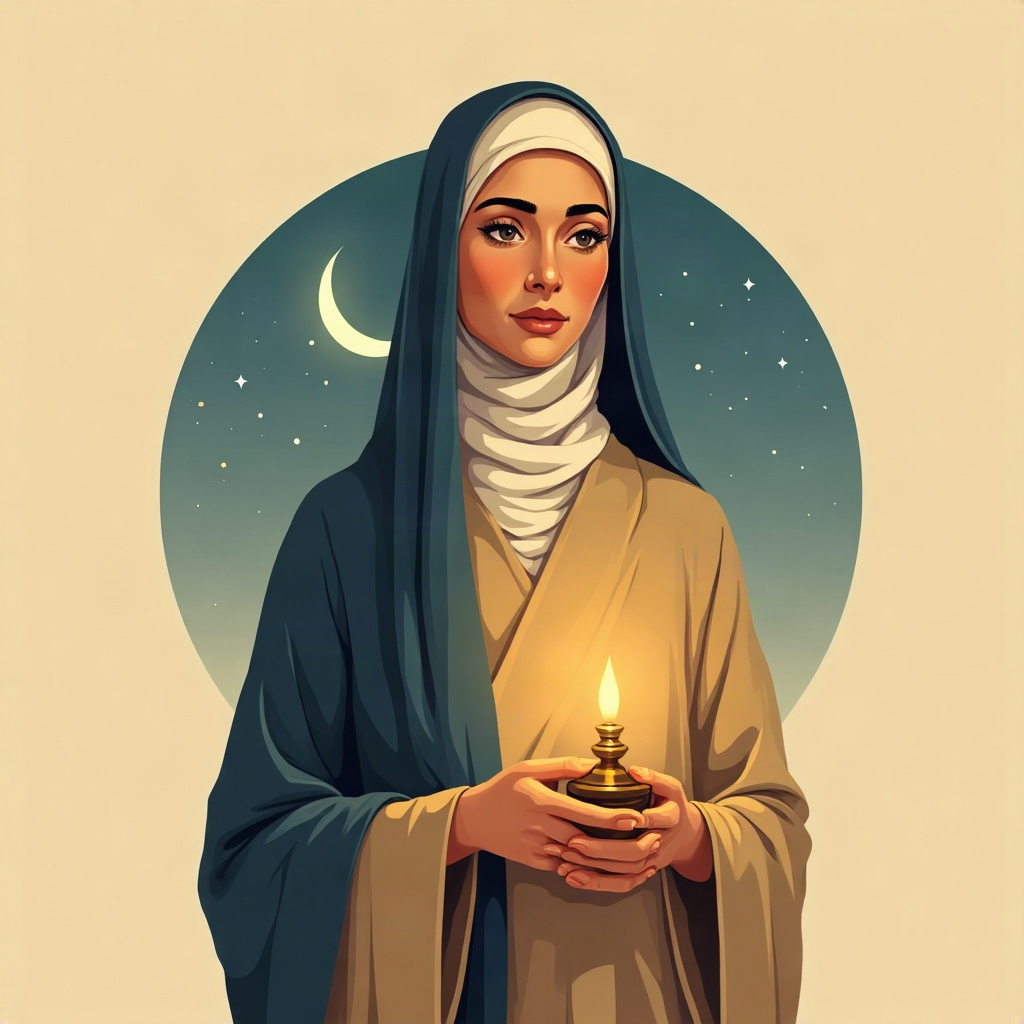
Rabi'a al-Adawiyya lived in Basra in the 700s. The scholar Margaret Smith (1928) says she was probably born about 717 and died in 801. Some old sources give 752 for her death instead, so these dates are not certain. She left no writings of her own. Almost everything we know comes from stories told after she died. The Persian poet Farid al-Din Attar, who died around 1220 to 1230, collected such stories in his Memorial of the Saints. He seems to have had a lost earlier book about her life. A scholar who translated part of that collection says Rabi'a was sold into slavery as a child, later settled in Basra, and became famous as a saint and a preacher. He also says she is credited with a large share in bringing the theme of divine love into Islamic mysticism. The idea of this unit is love without a price. Many people do good things for a reward, or because they fear a punishment. Rabi'a asked a harder question: what if we loved God only because God is God? She is not asking us to hate rewards. She is asking what love looks like when it has no hidden bargain. The prayer that Attar's collection credits to her says exactly that: worship not out of fear of Hell, not out of hope for Paradise, but for God's own sake. About the scene: the oldest version we found is in The Merits of the Gnostics (Manaqib al-'Arifin) by Aflaki, a Persian writer who collected stories between 1310 and 1353. Margaret Smith translates it and says the story is not found anywhere else. In it, some holy men see Rabi'a running with fire in one hand and water in the other. She says she is going to light fire in Paradise and pour water on Hell, so that people can see God without hope of reward or fear of punishment. The scene is not in the selection from Attar that we read. Smith also warns that much of what Aflaki writes is hard to believe. Later retellers turned the fire into a torch and the water into a bucket. The conversation with the neighbor is invented to teach the idea. We do not have a record of Rabi'a saying these exact words. About the sources: the facts about her life and the prayer come from A. J. Arberry's English translation of selections from Attar (Muslim Saints and Mystics). The dates and the oldest version of the scene come from Margaret Smith's book Rabi'a the Mystic and Her Fellow-Saints in Islam (1928). The writer says that many details of her biography cannot be traced anywhere else. So please read her life as tradition, not as a court record. Believers and non-believers can both ask this question: why do I do the good things I do?
라비아 알아다위야는 700년대에 바스라에서 살았어요. 학자 마거릿 스미스(1928)는 그녀가 717년 무렵에 태어나 801년에 세상을 떠났을 것이라고 말해요. 몇몇 옛 자료는 세상을 떠난 해를 752년으로 적기도 해서, 이 날짜들은 확실하지 않아요. 그녀는 직접 쓴 글을 남기지 않았어요. 우리가 아는 거의 모든 것은 그녀가 죽은 뒤에 전해진 이야기에서 와요. 1220~1230년 무렵에 세상을 떠난 페르시아 시인 파리드 알딘 아타르는 이런 이야기들을 《성자 열전》에 모았어요. 그는 그녀의 생애를 다룬, 지금은 사라진 더 오래된 책을 가지고 있었던 것 같아요. 이 모음집 일부를 번역한 학자는 라비아가 어린 시절 노예로 팔렸다가 나중에 바스라에 자리를 잡았고, 성자이자 설교자로 이름을 얻었다고 말해요. 또 이슬람 신비주의에 '신적인 사랑'이라는 주제를 들여오는 데 그녀가 큰 몫을 했다고 전해진다고 말해요. 이 단원의 생각은 '값을 따지지 않는 사랑'이에요. 많은 사람이 상을 받으려고, 또는 벌이 무서워서 좋은 일을 해요. 라비아는 더 어려운 질문을 던졌어요. 신이 신이기 때문에만 사랑한다면 어떨까? 그녀는 보상을 미워하라는 게 아니에요. 숨은 거래가 없는 사랑은 어떤 모습인지 묻는 거예요. 아타르의 모음집이 그녀의 것으로 전하는 기도가 바로 그 말을 해요. 지옥이 두려워서도, 천국을 바라서도 아니고, 신 그 자체를 위해 예배한다는 거예요. 장면에 대해: 우리가 찾은 가장 오래된 이야기는 1310년부터 1353년까지 이야기를 모은 페르시아 작가 아플라키의 《영지자들의 공덕》(마나키브 알아리핀)에 있어요. 마거릿 스미스는 이 이야기를 번역하고, 다른 어디에서도 찾을 수 없는 이야기라고 말해요. 이야기에서 성자 몇 사람이 한 손에는 불을, 다른 손에는 물을 들고 달려가는 라비아를 봐요. 그녀는 천국에 불을 붙이고 지옥에 물을 부으러 간다고 말해요. 그래야 사람들이 상을 바라지도 벌을 두려워하지도 않고 신을 볼 수 있다는 거예요. 우리가 읽은 아타르 선집에는 이 장면이 없어요. 스미스는 아플라키가 쓴 것 가운데 많은 부분이 믿기 어렵다고 경고하기도 해요. 나중에 이야기꾼들은 불을 횃불로, 물을 양동이로 바꿨어요. 이웃과의 대화는 생각을 가르치려고 지어낸 거예요. 라비아가 이런 말을 했다는 기록은 없어요. 출처에 대해: 그녀의 삶에 대한 사실과 기도문은 A. J. 아베리가 아타르 선집을 영어로 옮긴 《Muslim Saints and Mystics》에서 가져왔어요. 날짜와 이 장면의 가장 오래된 이야기는 마거릿 스미스의 책 《Rabi'a the Mystic and Her Fellow-Saints in Islam》(1928)에서 가져왔어요. 이 책은 그녀의 전기에 나오는 많은 세부 내용을 다른 곳에서는 찾을 수 없다고 말해요. 그러니 그녀의 삶은 궁정 기록이 아니라 전승으로 읽어 주세요. 믿는 사람이든 믿지 않는 사람이든 같은 질문을 할 수 있어요. 나는 내가 하는 좋은 일을 왜 하고 있을까?
📚 Grammar focus
Purpose (to + verb, in order to, so that)
✏️ Try it
Complete each sentence with to, in order to, or so that. 1. Rabi'a carried a bucket _______ put out the fire of Hell. 2. Some people pray _______ get a reward. 3. She wanted to remove both _______ people could see what was left. 4. I went to the library _______ borrow a book. 5. Make two sentences with the same meaning: "I study English. I want to talk to people from other countries." Bonus: Write two sentences about why you do something every day. Use "to" in one and "so that" in the other.
전체 레슨을 보고 싶으세요?
Want the full lesson?
회화 연습, 역할극, 문법, 그리고 진짜 선생님이 안에 있어요.
Conversation practice, roleplay, grammar, and a real tutor are inside.