Eureka! · No. 41
A Mind Needs a Heart Too
생각하는 머리에게도 마음이 필요해요
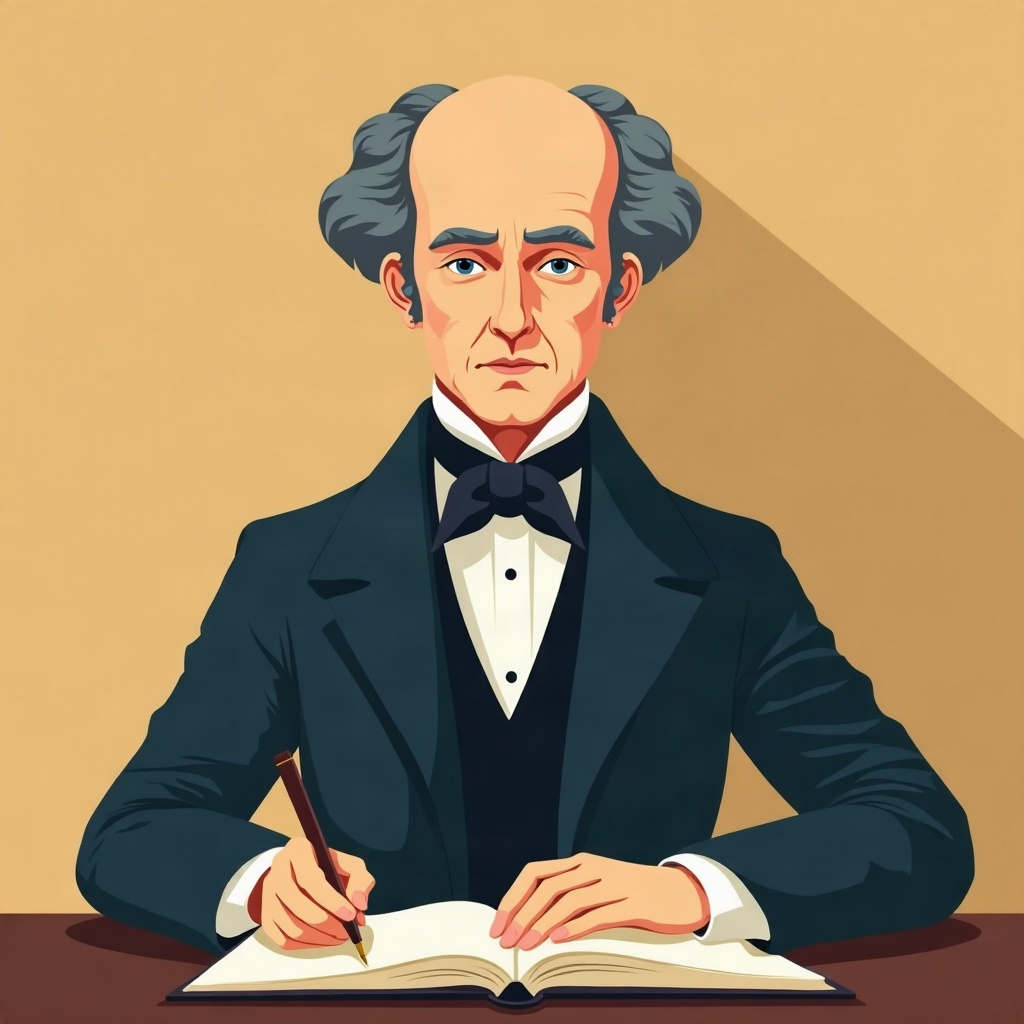
John Stuart Mill · 존 스튜어트 밀 — London, England, 1826-1828 CE
💡 The Idea
John Stuart Mill (1806-1873) was born in London and educated at home by his father, the Scottish thinker James Mill. According to the Stanford Encyclopedia of Philosophy, he started Greek at age three and Latin at eight. His father wanted him to become a leader of the next generation of reformers. In his Autobiography Mill tells the story of his "crisis". From the winter of 1821, when he first read the thinker Jeremy Bentham, he had an "object in life": to be a reformer of the world. His idea of his own happiness was completely joined to this goal. Then, in the autumn of 1826, in a low mood, he asked himself: "Suppose that all your objects in life were realized ... would this be a great joy and happiness to you?" An "irrepressible self-consciousness" answered, "No!" He wrote that he seemed to have nothing left to live for. The Stanford Encyclopedia says he was twenty and that the problem continued through 1826 and 1827. He did not tell other people about it. Reading Byron did not help. The first small light came when he read Marmontel's Memoirs and was moved to tears. In the autumn of 1828 he read Wordsworth, and he wrote that these poems were "the very culture of the feelings" that he was looking for. After the crisis, "the cultivation of the feelings" became one of the "cardinal points" (most important points) of his beliefs. Careful analysis was still important, but it had to be joined with other kinds of cultivation. The idea is not "do not think" or "feelings are better than reason". Mill still believed in careful thinking. His point is that a life made only of correct answers can feel empty. A healthy mind needs balance. About the sources: all the events of the crisis, the quotations, the dates (autumn 1826, autumn 1828) and the books (Marmontel's Memoirs, Wordsworth's poems) come from Mill's own Autobiography on Project Gutenberg. Mill says that he does not remember learning Greek and has only been told that it was at age three, so this fact is a family story. The dialogue between "Mill" and "Inner Voice" is dramatized, because Mill says he told nobody. His ideas about freedom, the harm principle and his partner Harriet Taylor Mill are for another unit.
존 스튜어트 밀(1806~1873)은 런던에서 태어나 스코틀랜드 사상가인 아버지 제임스 밀에게 집에서 교육을 받았어요. 스탠퍼드 철학 백과사전에 따르면 그는 세 살에 그리스어를, 여덟 살에 라틴어를 시작했어요. 아버지는 그가 다음 세대 개혁가들의 지도자가 되기를 바랐어요. 《자서전》에서 밀은 자신의 '위기'를 이야기해요. 1821년 겨울에 사상가 제러미 벤담을 처음 읽은 뒤로 그에게는 '인생의 목표'가 있었어요. 세상을 개혁하는 사람이 되는 것이었어요. 그는 자기 행복을 완전히 이 목표와 하나로 묶어 두었어요. 그러다 1826년 가을, 기운이 없던 어느 날 그는 스스로에게 물었어요. "네 인생의 모든 목표가 이루어진다고 해 보자. ... 그것이 네게 큰 기쁨과 행복이 될까?" 억누를 수 없는 자기 인식이 "아니!"라고 대답했어요. 그는 살아야 할 이유가 아무것도 남지 않은 것 같았다고 썼어요. 스탠퍼드 철학 백과사전은 그때 그가 스무 살이었고 이 문제가 1826년과 1827년까지 이어졌다고 말해요. 그는 이 일을 다른 사람에게 말하지 않았어요. 바이런을 읽어도 도움이 되지 않았어요. 첫 작은 빛은 마르몽텔의 《회고록》을 읽다가 눈물을 흘렸을 때 왔어요. 1828년 가을에 그는 워즈워스를 읽었고, 그 시들이 자기가 찾던 '감정을 기르는 바로 그것'이라고 썼어요. 위기를 겪은 뒤 '감정을 기르는 일'은 그의 신념에서 가장 중요한 요점 가운데 하나가 되었어요. 꼼꼼한 분석은 여전히 중요했지만, 다른 종류의 기르는 일과 함께해야 했어요. 이 생각은 '생각하지 말라'거나 '감정이 이성보다 낫다'는 뜻이 아니에요. 밀은 여전히 신중한 생각을 믿었어요. 그의 요점은, 맞는 답으로만 이루어진 삶은 공허하게 느껴질 수 있다는 거예요. 건강한 마음에는 균형이 필요해요. 출처에 대해: 위기의 모든 사건, 인용문, 연도(1826년 가을, 1828년 가을), 책(마르몽텔의 《회고록》, 워즈워스의 시)은 프로젝트 구텐베르크에 있는 밀의 《자서전》에서 가져왔어요. 밀은 그리스어를 배우기 시작한 때가 기억나지 않고 세 살이었다고 전해 들었을 뿐이라고 말해요. 그래서 이 사실은 집안에서 전해진 이야기예요. '밀'과 '속마음의 목소리'의 대화는 극으로 꾸민 것이에요. 밀이 아무에게도 말하지 않았다고 했기 때문이에요. 자유에 대한 생각, 해악 원칙, 그의 동반자 해리엇 테일러 밀은 다른 단원에서 다뤄요.
📚 Grammar focus
Past perfect (an earlier past action)
✏️ Try it
Complete each sentence with the past perfect (had + past participle) of the verb in brackets. 1. By 1826, Mill _______ (work) for reform for several years. 2. He _______ (read) all of Byron before he opened Wordsworth. 3. When he looked at The Excursion, he _______ not _______ (find) much in it. 4. After he _______ (read) Marmontel, he felt a little better. 5. _______ he _______ (tell) his father? No, he _______ not. Bonus: Write two sentences about your life. Use "By the time I was ten, I had..." and "Before I started this class, I had never...".
전체 레슨을 보고 싶으세요?
Want the full lesson?
회화 연습, 역할극, 문법, 그리고 진짜 선생님이 안에 있어요.
Conversation practice, roleplay, grammar, and a real tutor are inside.