Eureka! · No. 63
We Never See the "Because"
우리는 "때문에"를 본 적이 없어요
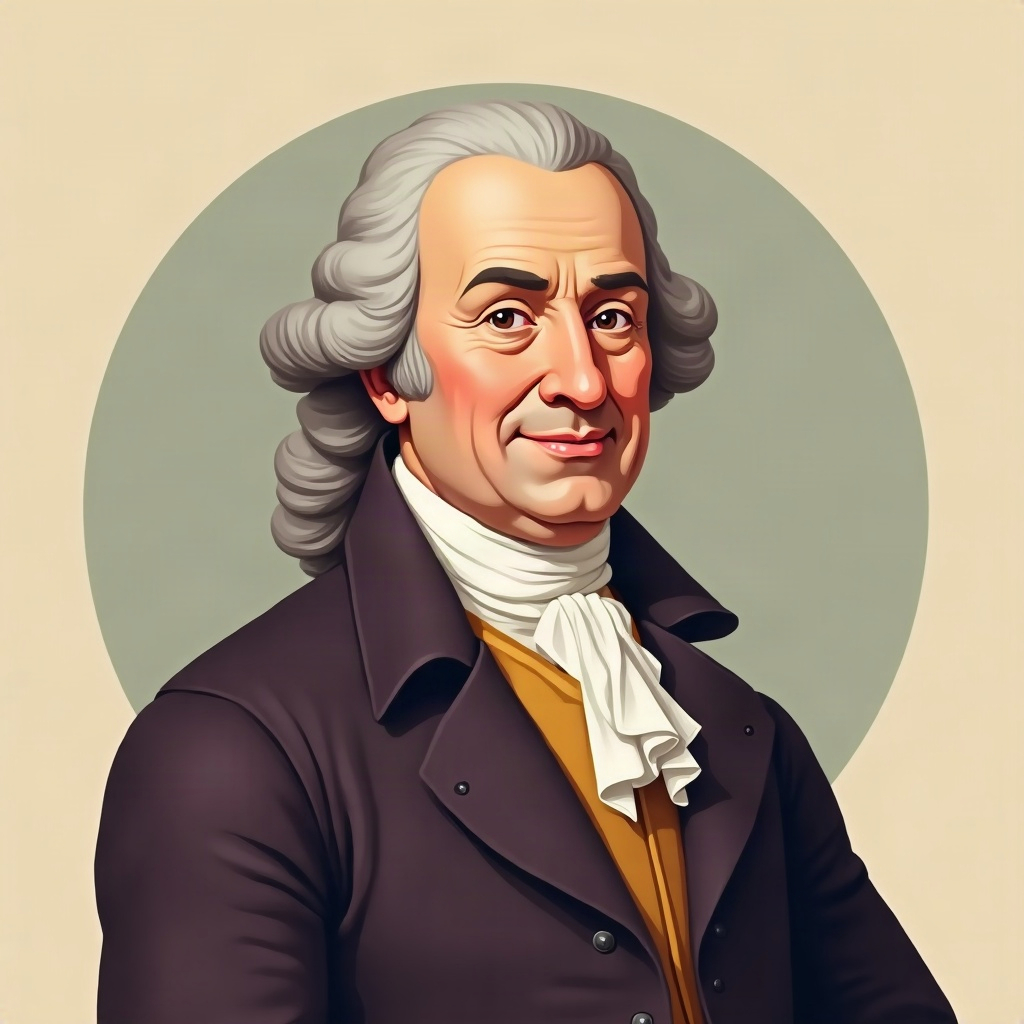
David Hume · 데이비드 흄 — La Flèche, France, c. 1734-1737 CE
💡 The Idea
David Hume (1711-1776) was a Scottish philosopher. He says in My Own Life that he was born on 26 April 1711 "old style", which is 7 May in the calendar we use today. In 1734, according to his own account, he went to France to study in the country, and he wrote his Treatise of Human Nature mostly at La Flèche in Anjou. He came back to London in 1737 and published the Treatise, without his name, at the end of 1738 (the title pages say 1739). The main idea is about cause and effect. In the Enquiry (1748), sections 4 and 5, Hume asks how we know that one thing causes another. His example is two billiard balls. When we see a ball move towards another, we may imagine that the second ball will move. But he says that this effect "is a quite distinct event" from its cause, so reason cannot find the effect inside the cause. Many other results are just as easy to imagine: both balls could stop, or the first could jump back. We learn the result only from experience. In Section 7 he adds that in a single case, "the mind feels no sentiment or inward impression" of power or necessary connection. We see one event follow another, but we do not see the power that links them. Why then do we expect the same result next time? Hume says that the principle is "Custom or Habit": when we have seen the same kind of event again and again, the mind is moved to expect it. He writes that custom "is the great guide of human life". It is not a reason that proves the result, but it is the habit that makes experience useful. This is why Hume is called an empiricist: he thinks that knowledge about the world comes from experience. The Treatise had a poor reception. In My Own Life he says that it "fell dead-born from the press". The Stanford Encyclopedia of Philosophy calls this an exaggeration, but Hume was disappointed. He says that his cheerful temper helped him to recover soon. In 1748 he published a shorter and clearer version of his ideas in the Enquiry. About the sources: all the quotations and the billiard ball example come from the Project Gutenberg text of Hume's Enquiry Concerning Human Understanding (sections 4, 5 and 7) and from his own My Own Life (on Wikisource). The facts about his years in France and the reception of the Treatise come from My Own Life, the Stanford Encyclopedia of Philosophy, and Wikipedia. The scene with the Inner Voice is imagined: Hume does not say that he thought of billiard balls at La Flèche, because the example is in the later Enquiry. His philosophy of the self, miracles and ethics are for another unit.
데이비드 흄(1711~1776)은 스코틀랜드의 철학자예요. 그는 《나의 생애》에서 자기가 1711년 4월 26일 '구력'으로 태어났다고 말하는데, 오늘날 우리가 쓰는 달력으로는 5월 7일이에요. 그 자신의 설명에 따르면 그는 1734년에 시골에서 공부하려고 프랑스로 갔고, 《인간 본성에 대한 논고》를 주로 앙주 지방의 라 플레슈에서 썼어요. 그는 1737년에 런던으로 돌아왔고, 1738년 말에 《논고》를 이름 없이 출판했어요(표지에는 1739년이라고 적혀 있어요). 핵심 생각은 원인과 결과에 대한 거예요. 《탐구》(1748년) 4장과 5장에서 흄은 어떤 일이 다른 일의 원인이라는 것을 우리가 어떻게 아는지 물어요. 그의 예는 당구공 두 개예요. 공 하나가 다른 공을 향해 움직이는 것을 보면 우리는 두 번째 공이 움직일 거라고 상상할 수 있어요. 하지만 그는 이 결과가 원인과 "완전히 다른 별개의 사건"이라서, 이성이 원인 안에서 결과를 찾아낼 수 없다고 말해요. 다른 결과들도 똑같이 쉽게 상상할 수 있어요. 두 공이 모두 멈출 수도 있고, 첫 번째 공이 뒤로 튈 수도 있어요. 결과는 경험으로만 알게 돼요. 7장에서 그는, 한 번의 사례에서 힘이나 필연적 연결에 대해 "마음은 아무런 느낌이나 내적 인상도 받지 않는다"고 덧붙여요. 우리는 한 사건이 다른 사건을 뒤따르는 것은 보지만, 둘을 잇는 힘은 보지 못해요. 그런데 왜 다음에도 같은 결과를 기대할까요? 흄은 그 원리가 "관습 또는 습관"이라고 말해요. 같은 종류의 사건을 되풀이해서 보면 마음이 그것을 기대하게 된다는 거예요. 그는 관습이 "인간 삶의 위대한 안내자"라고 써요. 관습은 결과를 증명하는 이성이 아니라, 경험을 쓸모 있게 만드는 습관이에요. 그래서 흄은 경험론자라고 불려요. 세계에 대한 지식이 경험에서 온다고 생각하기 때문이에요. 《논고》는 반응이 좋지 않았어요. 《나의 생애》에서 그는 이 책이 "인쇄기에서 태어나자마자 죽었다"고 말해요. 스탠퍼드 철학 백과사전은 이것을 과장이라고 보지만, 흄이 실망한 것은 사실이에요. 그는 쾌활한 성격 덕분에 곧 회복했다고 말해요. 1748년에 그는 《탐구》에서 자기 생각을 더 짧고 더 분명하게 다시 펴냈어요. 출처에 대해: 모든 인용문과 당구공 예는 프로젝트 구텐베르크에 있는 흄의 《인간 오성에 관한 탐구》(4, 5, 7장)와 그의 《나의 생애》(위키문헌)에서 가져왔어요. 프랑스에서 보낸 해와 《논고》의 반응에 대한 사실은 《나의 생애》, 스탠퍼드 철학 백과사전, 위키백과에서 가져왔어요. '속마음의 목소리'가 나오는 장면은 꾸며 낸 것이에요. 흄이 라 플레슈에서 당구공을 떠올렸다고 말한 적은 없어요. 그 예는 뒤의 《탐구》에 있기 때문이에요. 자아, 기적, 윤리에 대한 흄의 철학은 다른 단원에서 다뤄요.
📚 Grammar focus
Relative clauses (who / which / that / where / whose)
✏️ Try it
Join the two sentences with who, which, that, where or whose. 1. Hume was a philosopher. He was born in Edinburgh. 2. I never see the power. It makes the second ball move. 3. La Flèche is a quiet town. Hume wrote his Treatise there. 4. He wrote a book. It "fell dead-born from the press". 5. Hume had a brother. His house was in the country. Bonus: Write two sentences about a friend or a place. Use "who" and "where".
전체 레슨을 보고 싶으세요?
Want the full lesson?
회화 연습, 역할극, 문법, 그리고 진짜 선생님이 안에 있어요.
Conversation practice, roleplay, grammar, and a real tutor are inside.