Eureka! · No. 77
The River Keeps Changing
강물은 계속 바뀌어요
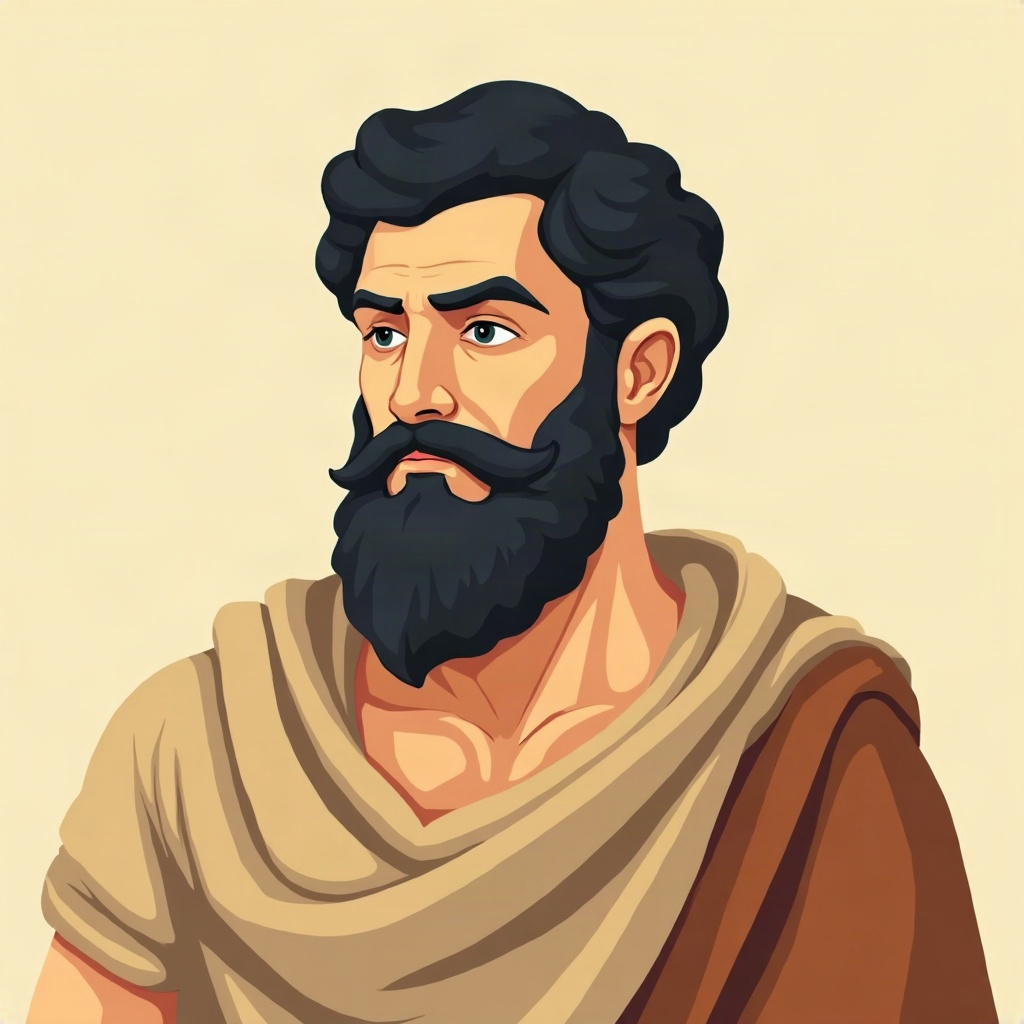
Heraclitus · 헤라클레이토스 — Ephesus, Ionia, c. 500 BCE
💡 The Idea
Heraclitus (active around 500 BCE) was a Greek thinker from Ephesus, a city near the modern town of Kusadasi in Turkey. We know very little about his life. The Stanford Encyclopedia of Philosophy says that most of what the ancient writers tell us about his life are stories, probably invented to match his character. We also do not have his whole book. We have only fragments, quoted by later writers. His best-known idea is change, often called "flux". The fragment that scholars think is closest to his own words says, in simple English: on people who step into the same rivers, other and other waters flow. This can mean that the river stays the same river because the water keeps changing. So change is not the enemy of things. Change is what makes the world work. A second idea is the unity of opposites. Heraclitus says that opposites are connected. In one fragment, sea water is the cleanest and the dirtiest water: good for fish and bad for people. In another, he says that sleeping and waking, and young and old, are in us as the same thing, because one changes into the other. Scholars debate exactly what he meant. The Stanford Encyclopedia reading is that he did not say opposites are identical, but that they are connected. About the sources: the date and the fragments come from the Stanford Encyclopedia of Philosophy. The sea water idea is fragment B61, and the sleeping-and-waking idea is B88. In Plato's dialogue Cratylus (402a), the character Socrates says that Heraclitus compares the world to a river and says you cannot step twice into the same river. Scholars say that this famous sentence is a paraphrase, and that the closest-to-original fragment (B12) says something a little different. Diogenes Laertius, Book 9, tells stories about his life, but we should treat them as legends. The conversation with the visitor is imagined, and the visitor is not a real person. We do not have a record of Heraclitus saying these words.
헤라클레이토스(기원전 500년경 활동)는 에페소스 출신의 그리스 사상가예요. 에페소스는 지금의 튀르키예 쿠샤다시 근처에 있던 도시예요. 그의 삶에 대해서는 아는 것이 거의 없어요. 《스탠퍼드 철학 백과사전》은 고대 작가들이 전하는 그의 삶의 이야기 대부분이, 그의 성격에 맞추어 지어낸 이야기일 가능성이 크다고 해요. 그의 책 전체도 없어요. 뒤의 작가들이 인용한 단편만 남아 있어요. 가장 널리 알려진 생각은 변화예요. 흔히 '만물유전'이라고 불러요. 학자들이 그의 원래 말에 가장 가깝다고 보는 단편은 쉬운 말로 이렇게 말해요. 같은 강에 들어가는 사람들에게 다른 물, 또 다른 물이 흘러온다. 이것은 물이 계속 바뀌기 때문에 강이 같은 강으로 남는다는 뜻일 수 있어요. 그러니 변화는 사물의 적이 아니에요. 변화는 세상이 돌아가게 하는 힘이에요. 두 번째 생각은 '반대되는 것들의 통일'이에요. 헤라클레이토스는 반대되는 것들이 서로 이어져 있다고 말해요. 한 단편에서 바닷물은 가장 깨끗한 물이면서 가장 더러운 물이에요. 물고기에게는 좋고 사람에게는 나쁘니까요. 다른 단편에서는 잠과 깨어 있음, 젊음과 늙음이 우리 안에 같은 것으로 있다고 말해요. 하나가 다른 하나로 바뀌기 때문이에요. 학자들은 그가 정확히 무엇을 뜻했는지에 대해 논쟁해요. 《스탠퍼드 철학 백과사전》의 해석은, 그가 반대되는 것이 똑같다고 말한 것이 아니라 서로 이어져 있다고 말했다는 거예요. 출처에 대해: 연대와 단편은 《스탠퍼드 철학 백과사전》에서 가져왔어요. 바닷물 이야기는 단편 B61이고, 잠과 깨어 있음 이야기는 B88이에요. 플라톤의 대화편 《크라틸로스》(402a)에서 등장인물 소크라테스는 헤라클레이토스가 세상을 강에 비유하고 같은 강에 두 번 들어갈 수 없다고 말했다고 해요. 학자들은 이 유명한 문장이 바꾸어 말한 것이고, 원래에 가장 가까운 단편(B12)은 조금 다른 말을 한다고 설명해요. 디오게네스 라에르티오스의 9권은 그의 삶에 대한 이야기를 전하지만, 전설로 여겨야 해요. 방문객과의 대화는 상상한 것이고, 방문객은 실제 인물이 아니에요. 헤라클레이토스가 이런 말을 했다는 기록은 없어요.
📚 Grammar focus
Present continuous for changing situations (is flowing / are growing / is getting)
✏️ Try it
Choose the correct form of the verb in brackets (present continuous or present simple). 1. Look! The water _______ (flow) past us right now. 2. My little brother _______ (grow) fast this year. 3. Heraclitus _______ (not / sit) at home today. He _______ (stand) by the river. 4. The sun _______ (rise) every morning. (a fact) 5. Your English _______ (get) better every week. Bonus: Write two sentences about a change you can see around you now. Use "is getting" or "are changing".
전체 레슨을 보고 싶으세요?
Want the full lesson?
회화 연습, 역할극, 문법, 그리고 진짜 선생님이 안에 있어요.
Conversation practice, roleplay, grammar, and a real tutor are inside.