Eureka! · No. 82
A Medical Book for Ordinary People
보통 사람을 위한 의학책
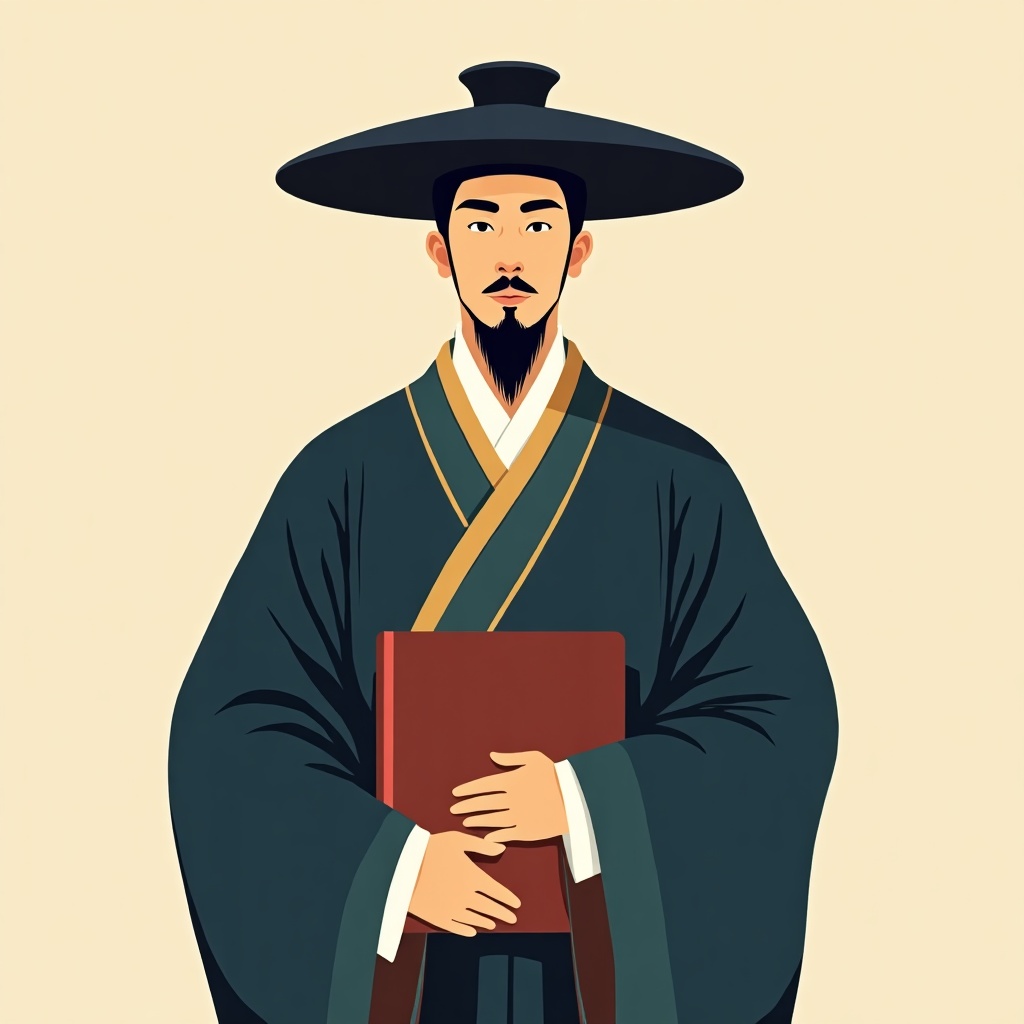
Heo Jun · 허준 — Joseon Korea, 1596-1613
💡 The Idea
Heo Jun was born in 1539 and died in 1615, according to the Encyclopedia of Korean Culture. (Some other sources give a different birth year, so this unit uses the encyclopedia.) He became a doctor at the Naeuiwon, the royal medical office, in 1571. He treated the crown prince's smallpox in 1590, and he stayed with King Seonjo when the king fled during the Imjin War. In 1596 King Seonjo ordered a new medical book. The war had damaged Joseon, and many medical books were lost. Heo Jun and other doctors began the work, but in 1597 the Japanese invaded again, and the team scattered. In 1601, after the war, the king asked Heo Jun to continue alone and gave him about 500 books from the royal collection. In 1608 the king died, and Heo Jun was sent to Uiju. The encyclopedia says that he wrote more than half of the book there. Heo Jun finished it in 1610, and the Royal Medical Office printed it in 1613. Together, it took about 14 years from the first order to the finished manuscript. (Months such as the first month of 1597 and the eighth month of 1610 follow the lunar calendar that Joseon used, so they are not the same as January and August today.) What was new in it? Medical books from China and Japan were usually organized by disease. Dongui Bogam is organized by the human body, from the organs inside to the outside of the body, and then by diseases, herbal medicine and acupuncture. It also puts prevention first. Its list of medicines has 1,403 items. Hangeul names are written beside 637 of them, so people in the countryside could find the herbs that grew near them. Only 102 of the medicines come from China (about 7 percent). The main text of the book is in Chinese characters (Hanja), but the Hangeul names were meant for ordinary readers. In 1601 Heo Jun also wrote three shorter books with Korean (Hangeul) translations on childbirth, first aid and smallpox. UNESCO says the work developed ideas of preventive medicine and public health care by the state that were almost new before the 19th century. The book spread beyond Korea. It was printed more than thirty times in China and twice in Japan. UNESCO registered it as Memory of the World in 2009. Today, Heo Jun is also known from Korean TV dramas. Be careful, because some drama stories are fiction. The story that Heo Jun worked hard in exile is told in Korean sources, but not every detail is certain. About the sources: facts come from the Encyclopedia of Korean Culture (Academy of Korean Studies), the History Net of Korea, the National Library of Korea and UNESCO. The conversation is imagined.
허준은 『한국민족문화대백과사전』에 따르면 1539년에 태어나 1615년에 세상을 떠났어요. (다른 자료는 태어난 해를 다르게 적기도 해서, 이 단원은 백과사전을 따랐어요.) 그는 1571년에 왕실 의료 기관인 내의원의 의관이 되었어요. 1590년에는 왕세자의 천연두를 치료했고, 임진왜란 때 선조가 피난을 갈 때도 곁을 지켰어요. 1596년에 선조는 새 의학책을 만들라고 명령했어요. 전쟁으로 조선은 큰 피해를 입었고 많은 의학책이 사라졌어요. 허준은 다른 의관들과 함께 작업을 시작했지만, 1597년에 일본이 다시 쳐들어와 팀이 흩어졌어요. 전쟁이 끝난 1601년에 임금은 허준에게 혼자서 이어 쓰라고 하며 왕실 소장 책 약 500권을 내주었어요. 1608년에 선조가 세상을 떠나자 허준은 의주로 유배되었어요. 백과사전은 그가 거기서 책의 절반 이상을 썼다고 해요. 허준은 1610년에 책을 완성했고, 내의원이 1613년에 인쇄했어요. 첫 명령에서 완성된 원고까지 모두 약 14년이 걸렸어요. (1597년 1월, 1610년 8월 같은 달은 조선이 쓰던 음력 날짜라서 오늘날 양력의 1월, 8월과 같지 않아요.) 무엇이 새로웠을까요? 중국과 일본의 의학책은 보통 병의 이름별로 짜여 있었어요. 『동의보감』은 몸 안의 장기에서 몸 바깥까지 인체를 중심으로 짜고, 이어서 여러 병, 약재, 침과 뜸을 다뤄요. 또 예방을 맨 앞에 놓아요. 약재 목록에는 1,403가지가 있고, 그중 637가지 옆에 한글 이름이 적혀 있어서 시골 사람들이 가까이에서 자라는 약초를 찾을 수 있었어요. 중국에서 온 약재는 102가지뿐이에요(약 7퍼센트). 책의 본문은 한자로 쓰였지만 한글 이름은 보통 사람 독자를 위한 것이었어요. 허준은 1601년에 출산, 응급 처치, 천연두에 대해 우리말 번역을 단 더 짧은 책 세 권도 썼어요. 유네스코는 이 책이 19세기까지는 거의 새로웠던 예방 의학과 국가가 책임지는 공공 의료의 생각을 발전시켰다고 말해요. 책은 한국 밖으로도 퍼졌어요. 중국에서 30번 넘게, 일본에서 두 번 인쇄되었어요. 유네스코는 2009년에 이 책을 세계기록유산으로 등재했어요. 오늘날 허준은 한국 드라마로도 널리 알려져 있어요. 하지만 드라마 이야기에는 허구가 있으니 조심하세요. 허준이 유배지에서 열심히 책을 썼다는 이야기는 한국 자료에 나오지만 모든 세부 사항이 확실한 것은 아니에요. 출처에 대해: 사실은 한국학중앙연구원의 『한국민족문화대백과사전』, 우리역사넷, 국립중앙도서관, 유네스코 자료에서 가져왔어요. 대화는 상상한 것이에요.
📚 Grammar focus
Quantifiers (many / much / few / little / a few / a little / some / any / enough)
✏️ Try it
Choose the correct word: many, much, few, little, a few, a little, some, any, enough. 1. There are _______ sick people in the village, but only two doctors. 2. How _______ herbs grow near the river? 3. We do not have _______ time. The king wants the book soon. 4. The village has _______ doctors. Almost nobody can help. 5. Heo Jun used _______ old books, but he also used his own experience. 6. Is there _______ medicine left in the box? 7. I have _______ tea in my cup, so I can drink one more sip. 8. Do you drink _______ water every day? Bonus: Write two true sentences about your week. Use "many" or "a lot of" in one and "much" in a negative sentence in the other.
전체 레슨을 보고 싶으세요?
Want the full lesson?
회화 연습, 역할극, 문법, 그리고 진짜 선생님이 안에 있어요.
Conversation practice, roleplay, grammar, and a real tutor are inside.