Eureka! · No. 69
The Letters That Could Be Used Again
다시 쓸 수 있는 글자들
Johannes Gutenberg · 요하네스 구텐베르크 — Mainz, Germany, about 1450 CE
💡 The Idea
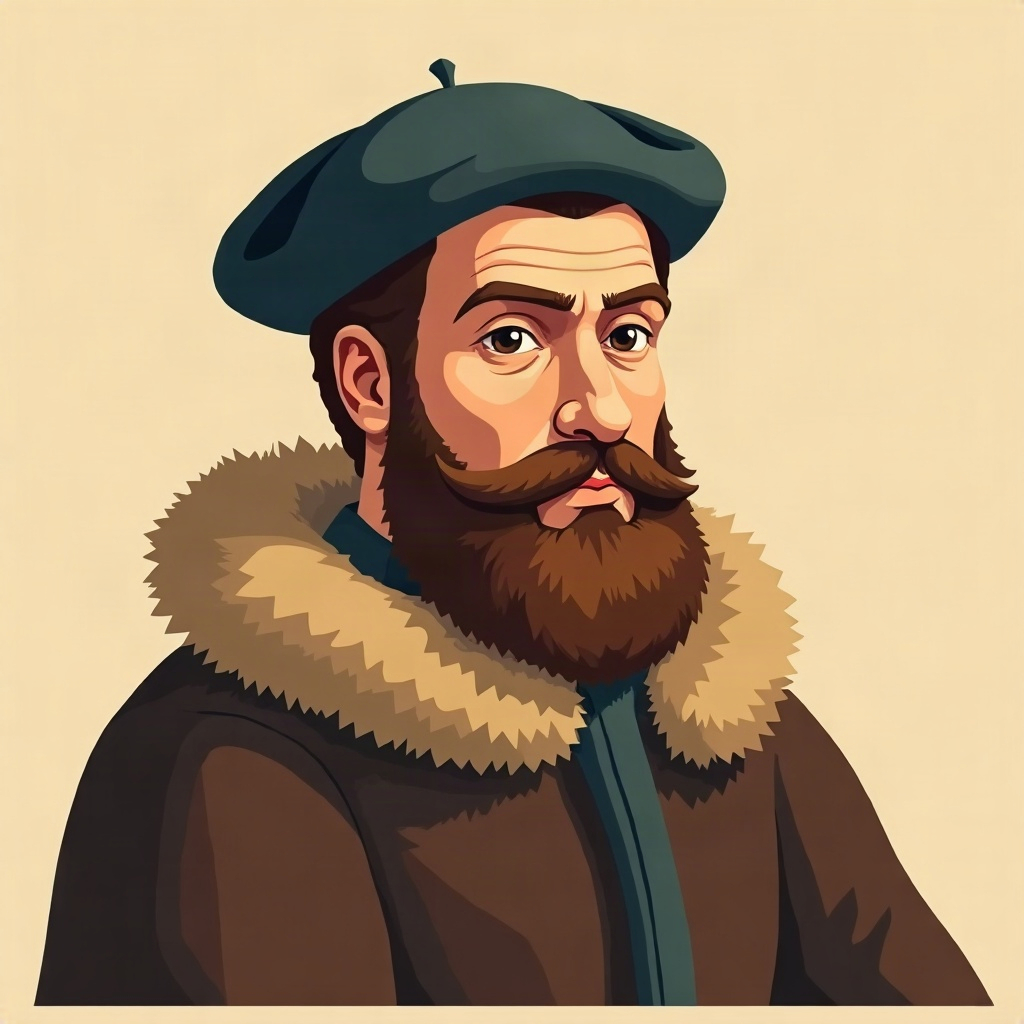
Johannes Gutenberg lived from about 1400 to about 1468. The Library of Congress says that scholars do not know exactly when he was born, and that much of his early life in Mainz is unknown. We know more about his adult life from legal records. He was in Strasbourg by 1434 and worked there as a goldsmith. He was back in Mainz by 1448, when he borrowed 150 guilders. We have no picture of Gutenberg made in his own time. The invention: Gutenberg is generally credited with a way of making uniform, interchangeable metal letters (movable type) and with solving the many problems of materials and methods for printing. The Cambridge University Library explains two key points. First, the press itself was an adaptation of existing technology, because wine and oil presses had existed for centuries. Second, the separately cast metal letters were the really important part. The same letters could be washed, broken up and used again to make new pages. The records of his workshop do not say exactly when his first printing happened. The first printed works from the early 1450s include indulgences, a poem and a Latin grammar. We say "about 1450" for the start of his printing work. The Gutenberg Bible: the Library of Congress says that its text is the Latin Vulgate, mostly in two columns of 42 lines. The Gutenberg Museum in Mainz says that he made it between 1452 and 1455 with many helpers, in about 180 copies (about 150 on paper and 30 on parchment, probably), and that 49 copies survive today. The printing was probably finished late in 1455 (Library of Congress); the Cambridge Library dates the Bible to 1454/55. We use "about 1454-55". The pages were printed in black, and buyers had the colour decoration and binding made by specialist craftsmen. So each copy is unique. On 12 March 1455, Enea Silvio Piccolomini wrote that he had seen samples in Frankfurt and that the type was so clear that it could be read without glasses. According to the Cambridge Library, he wrote that all copies were sold. What happened next: the Library of Congress explains that the main source about the workshop is a lawsuit by his partner Johann Fust, who had lent him 800 guilders twice. Legend says that Fust ruined Gutenberg, but the documents do not support that dark story. Fust took the workshop and replaced Gutenberg with Peter Schoeffer. Gutenberg continued printing. Scholars are confident that the Latin dictionary known as the Catholicon (Mainz, 1460) came from his press, although no printer's name is printed in it. Korea first: the Library of Congress says that Gutenberg "cannot claim" to be the inventor of printing, because printing was pioneered in East Asia centuries earlier. The Bibliothèque nationale de France (BnF) says that Jikji, printed in Cheongju in 1377 with movable cast metal characters, is the oldest known book printed with movable metal type, 78 years before the Gutenberg Bible. The Library of Congress also calls Jikji "the oldest surviving book printed from moveable metal type". The BnF keeps the second volume today. Jikji has been on UNESCO's Memory of the World Register since 4 September 2001. The page on UNESCO's own website could not be read by our tools, so we took this date from the BnF and from the Cheongju-based Jikji Global website. Note that "oldest surviving" is careful: other earlier books may have existed but did not survive. About the sources and the story: the two helpers and all the talk between them and Gutenberg are imagined. They are not real quotes. The Piccolomini letter is described by the Cambridge University Library, and we did not read the letter itself.
요하네스 구텐베르크는 1400년경부터 1468년경까지 살았어요. 미국 의회도서관은 학자들이 그가 정확히 언제 태어났는지 알지 못하고, 마인츠에서의 어린 시절도 대부분 알려지지 않았다고 말해요. 어른이 된 뒤의 삶은 법률 기록으로 더 많이 알려져 있어요. 그는 1434년에는 스트라스부르에 있었고 그곳에서 금속 세공사로 일했어요. 1448년에는 마인츠로 돌아와 있었고, 그해에 150굴덴을 빌렸어요. 구텐베르크의 시대에 만들어진 그의 초상화는 남아 있지 않아요. 발명은 이래요. 구텐베르크는 균일하고 서로 바꿔 쓸 수 있는 금속 글자(활자)를 만드는 방법과, 인쇄에 필요한 재료와 방법의 여러 문제를 푼 사람으로 일반적으로 인정받아요. 케임브리지 대학 도서관은 두 가지 핵심을 설명해요. 첫째, 인쇄기 자체는 기존 기술을 응용한 것이었어요. 포도주와 기름 압착기가 수백 년 전부터 있었기 때문이에요. 둘째, 따로 주조한 금속 글자가 정말 중요한 부분이었어요. 같은 글자를 씻어서 풀어 새 쪽을 만드는 데 다시 쓸 수 있었어요. 작업장 기록에는 그의 첫 인쇄가 정확히 언제였는지 나와 있지 않아요. 1450년대 초에 인쇄한 것으로는 면벌부, 시 한 편, 라틴어 문법책 등이 있어요. 그래서 인쇄 일의 시작은 '1450년경'이라고 말해요. 구텐베르크 성경에 대해서 말하자면, 미국 의회도서관은 본문이 라틴어 불가타 성경이고 대부분 한 쪽에 두 단, 42줄로 되어 있다고 말해요. 마인츠 구텐베르크 박물관은 그가 1452년부터 1455년까지 여러 조수와 함께 약 180부(아마 종이 약 150부, 양피지 약 30부)를 만들었고 오늘날 49부가 남아 있다고 말해요. 인쇄는 1455년 말쯤 끝났을 가능성이 커요(의회도서관). 케임브리지 도서관은 성경을 1454/55년으로 보아요. 우리는 '1454~55년경'이라고 써요. 쪽은 검은색으로 찍었고, 산 사람이 전문 기술자에게 색 장식과 제본을 맡겼어요. 그래서 모든 책이 서로 달라요. 1455년 3월 12일에 에네아 실비오 피콜로미니는 프랑크푸르트에서 견본을 보았고 활자가 안경 없이도 읽을 만큼 또렷하다고 썼어요. 케임브리지 도서관에 따르면 그는 모든 책이 팔렸다고도 썼어요. 그 뒤 이야기는 이래요. 의회도서관에 따르면 작업장에 대한 주된 자료는 동업자 요한 푸스트의 소송 기록이에요. 푸스트는 그에게 800굴덴을 두 번 빌려주었어요. 전설은 푸스트가 구텐베르크를 파산시켰다고 말하지만, 문서는 그런 어두운 이야기를 뒷받침하지 않아요. 푸스트는 작업장을 가졌고 구텐베르크 대신 페터 쇠퍼를 앉혔어요. 구텐베르크는 계속 인쇄를 했어요. 학자들은 《카톨리콘》이라는 라틴어 사전(마인츠, 1460년)이 그의 인쇄소에서 나왔다고 확신해요. 그 책에는 인쇄한 사람의 이름이 적혀 있지 않지만요. 한국이 먼저예요. 미국 의회도서관은 구텐베르크가 인쇄술의 발명자라고 '주장할 수 없다'고 말해요. 인쇄는 수백 년 전 동아시아에서 시작되었기 때문이에요. 프랑스 국립도서관(BnF)은 1377년 청주에서 주조한 금속활자로 인쇄한 《직지》가 금속활자로 인쇄한 책 중 알려진 가장 오래된 책이며 구텐베르크 성경보다 78년 앞선다고 말해요. 의회도서관도 《직지》를 '금속활자로 인쇄한 현존하는 가장 오래된 책'이라고 불러요. 지금은 BnF가 하권을 보관해요. 《직지》는 2001년 9월 4일부터 유네스코 세계기록유산에 올라 있어요. 유네스코 누리집의 해당 쪽은 우리 도구로 읽을 수 없어서, 이 날짜는 BnF와 청주의 직지 글로벌 누리집에서 가져왔어요. '현존하는 가장 오래된'이라는 말은 조심스러운 표현이에요. 더 이른 책이 있었더라도 남아 있지 않을 수 있기 때문이에요. 출처와 이야기에 대해: 두 조수와 그들이 구텐베르크와 나눈 모든 대화는 상상이에요. 실제로 한 말이 아니에요. 피콜로미니의 편지는 케임브리지 대학 도서관의 설명을 따랐고, 편지 자체를 읽지는 않았어요.
📚 Grammar focus
Used to (past habits and situations that are over)
✏️ Try it
Complete each sentence with used to / didn't use to and a verb from the box: copy / press / write / live / be. (One verb is extra.) 1. Before the printing press, scribes _______ books by hand. 2. People _______ wine and oil with a press. Gutenberg used the idea for paper. 3. Gutenberg _______ in Strasbourg before he went back to Mainz. 4. Books _______ printed in Europe. Now they are printed everywhere. (Use the negative.) 5. "Did people _______ copy books by hand?" "Yes, they did." Bonus: Write two sentences about your life five years ago. One with "I used to..." and one with "I didn't use to..."
전체 레슨을 보고 싶으세요?
Want the full lesson?
회화 연습, 역할극, 문법, 그리고 진짜 선생님이 안에 있어요.
Conversation practice, roleplay, grammar, and a real tutor are inside.