Eureka! · No. 2
The Boy Who Added 1 to 100 in Seconds
1부터 100까지 몇 초 만에 더한 소년
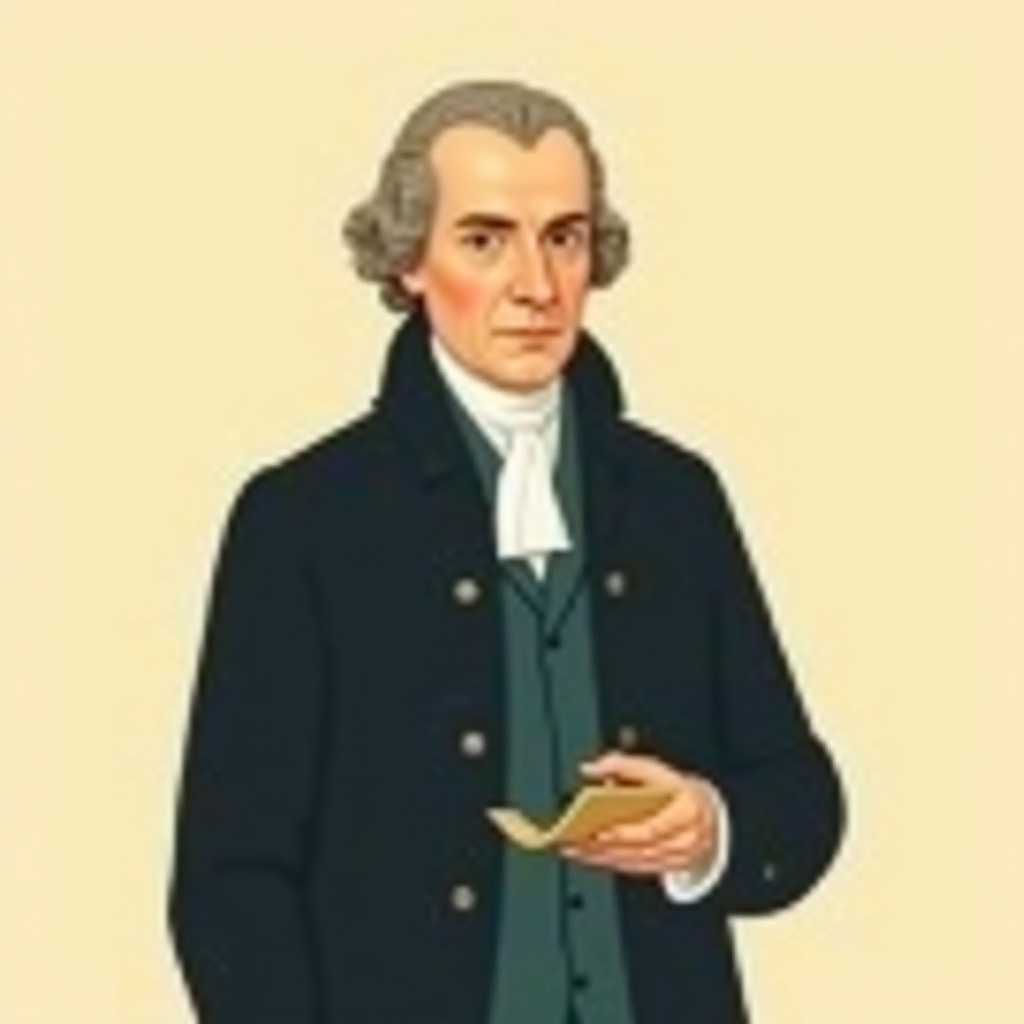
Carl Friedrich Gauss · 카를 프리드리히 가우스 — Brunswick, c. 1786
💡 The Idea
Gauss noticed that if you write the numbers 1 to 100 in a row, and then write them again in reverse underneath, every column adds up to the same total: 101. 1 + 2 + 3 + … + 98 + 99 + 100 100 + 99 + 98 + … + 3 + 2 + 1 Each column: 101. There are 100 columns. Two copies of the sum = 100 × 101 = 10,100. So one copy = 10,100 ÷ 2 = 5,050. General formula for the sum of 1 to n: S = n × (n + 1) ÷ 2 For n = 100: S = 100 × 101 ÷ 2 = 5,050 For n = 10: S = 10 × 11 ÷ 2 = 55 This is called an arithmetic series. It appears in computer science (loop counts), architecture (staircase steps), and statistics (triangular numbers).
가우스는 1부터 100까지 숫자를 한 줄로 쓰고, 그 아래에 거꾸로 다시 쓰면 각 열의 합이 항상 101이라는 것을 발견했어요. 1 + 2 + 3 + … + 98 + 99 + 100 100 + 99 + 98 + … + 3 + 2 + 1 각 열의 합: 101. 열이 100개예요. 합계 두 배 = 100 × 101 = 10,100. 그러면 합계 한 번 = 10,100 ÷ 2 = 5,050. 1부터 n까지의 합 공식: S = n × (n + 1) ÷ 2 n = 100일 때: S = 100 × 101 ÷ 2 = 5,050 n = 10일 때: S = 10 × 11 ÷ 2 = 55 이것을 등차수열의 합이라고 해요. 컴퓨터 과학(반복 횟수), 건축(계단 칸 수), 통계학(삼각수)에서 자주 사용돼요.
📚 Grammar focus
Past Continuous vs Past Simple
✏️ Try it
Use Gauss's pairing method to find the sum of 1 + 2 + 3 + … + 20. Bonus: Write it using the formula S = n × (n + 1) ÷ 2 to verify your answer.
전체 레슨을 보고 싶으세요?
Want the full lesson?
회화 연습, 역할극, 문법, 그리고 진짜 선생님이 안에 있어요.
Conversation practice, roleplay, grammar, and a real tutor are inside.