Eureka! · No. 15
The Stolen Lamp
도둑맞은 램프
Epictetus · 에픽테토스 — Nicopolis, Greece, c. 100 CE
💡 The Idea
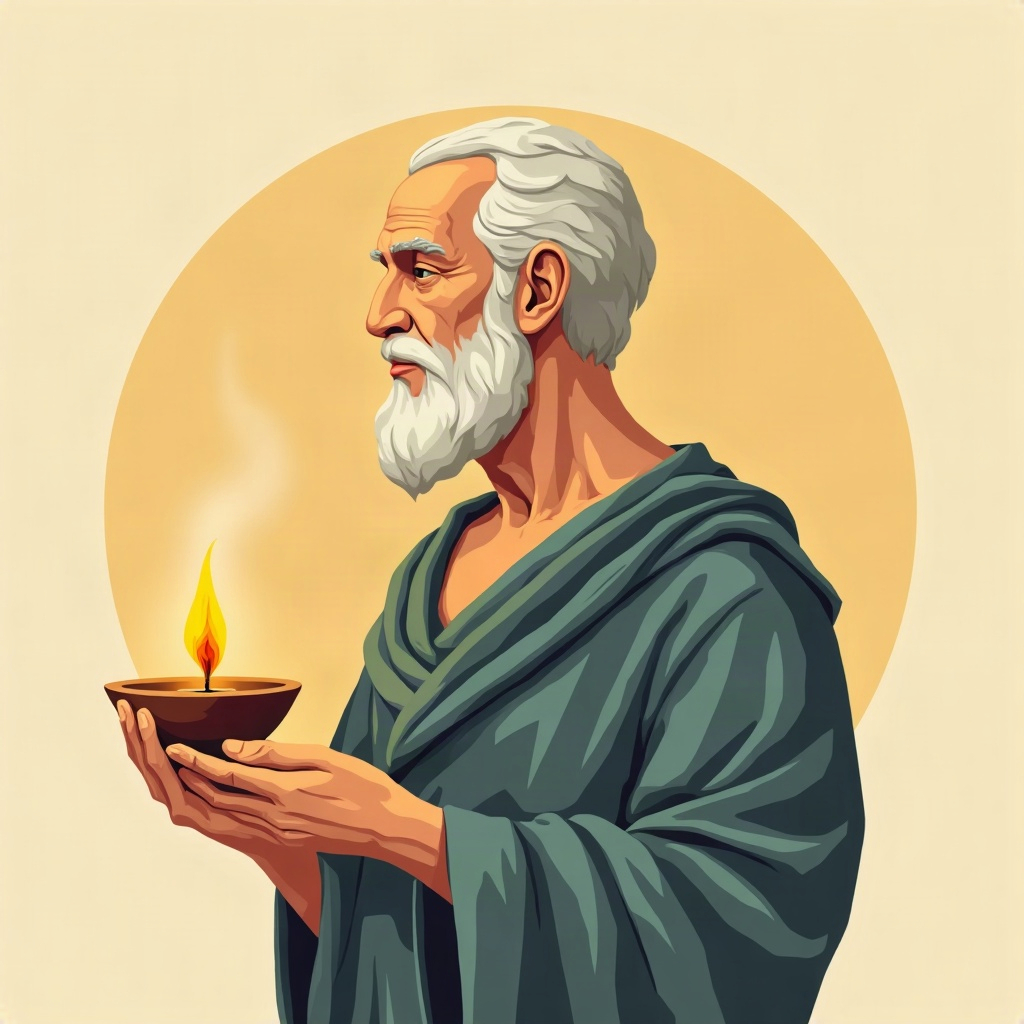
Epictetus taught that some things are up to us, and some things are not. Up to us: our opinions, our choices, our actions. Not up to us: our body, our money, our fame, and other people's actions. We suffer more when we treat the second list as if it were the first. The Stoic habit is simple. Ask: "Can I control this?" If yes, act. If no, accept it and choose your response. Epictetus was a teacher in Nicopolis. He wrote nothing himself. His student Arrian wrote down the lectures in a book called the Discourses. This story is told in Epictetus's own lecture notes (written down by Arrian). The lamp scene and the thief's "terrible price" are both in the Discourses. Later retellings with a gold lamp are only decoration. The student dialogue here is retold, not word for word. The "two lists" idea comes from Enchiridion 1, a handbook compiled by his student Arrian.
에픽테토스는 어떤 것은 우리에게 달려 있고, 어떤 것은 그렇지 않다고 가르쳤어요. 우리에게 달린 것: 우리의 생각, 선택, 행동. 우리에게 달리지 않은 것: 우리의 몸, 돈, 명성, 그리고 다른 사람의 행동. 두 번째 목록을 첫 번째 목록처럼 다룰 때 우리는 더 괴로워해요. 스토아 철학의 습관은 간단해요. "이것을 내가 통제할 수 있나?"라고 물어보세요. 그렇다면 행동하세요. 아니라면 받아들이고 내 반응을 선택하세요. 에픽테토스는 니코폴리스의 선생님이었어요. 그는 직접 아무것도 쓰지 않았어요. 제자 아리아노스가 강의를 받아 적어 '담화록'이라는 책으로 남겼어요. 이 이야기는 에픽테토스의 강의 기록(아리아노스가 받아 적은 것)에 실려 있어요. 램프 장면과 도둑이 치른 "아주 비싼 값"은 모두 '담화록'에 나와요. 금 램프가 나오는 후대의 이야기는 장식일 뿐이에요. 여기 나오는 학생과의 대화는 말 그대로가 아니라 다시 들려주는 것이에요. '두 목록' 생각은 제자 아리아노스가 엮은 '엥케이리디온' 1장에서 나와요.
📚 Grammar focus
Modals of ability (can / can't)
✏️ Try it
Fill in the blank with can or can't. 1. I ____ control the weather. 2. I ____ choose my answer to a rude person. 3. ____ you control other people's opinions? No, I ____. 4. The test is tomorrow, but she ____ change the questions. 5. We ____ change the past. Bonus: Write two sentences about your own life: one thing you can control and one thing you can't.
전체 레슨을 보고 싶으세요?
Want the full lesson?
회화 연습, 역할극, 문법, 그리고 진짜 선생님이 안에 있어요.
Conversation practice, roleplay, grammar, and a real tutor are inside.