Eureka! · No. 78
A Good Life Needs Very Little
좋은 삶에는 아주 적은 것이면 충분해요
Diogenes of Sinope · 시노페의 디오게네스 — Athens and Corinth, 4th century BCE
💡 The Idea
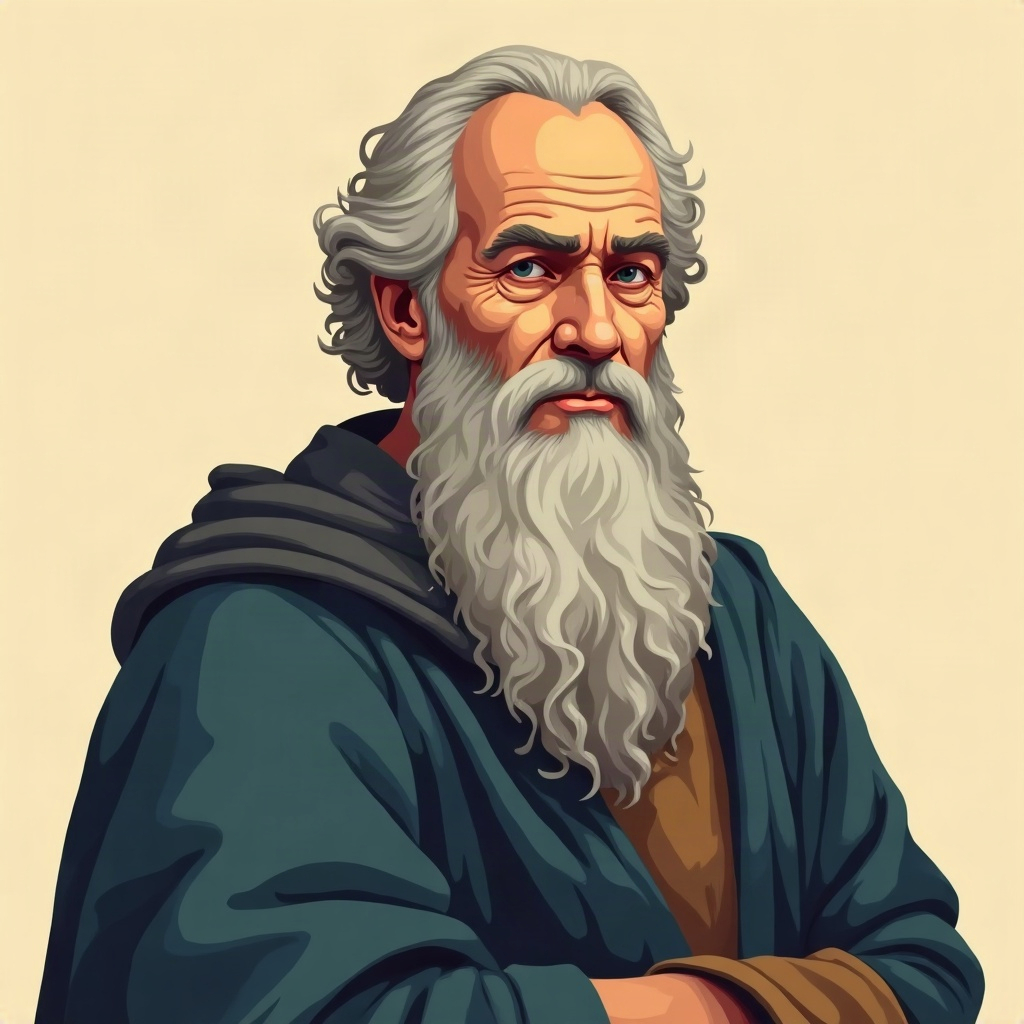
Diogenes of Sinope was a Greek philosopher of the 4th century BCE. He was born in Sinope, a Greek city, and he left it as an exile. The ancient writer Diogenes Laertius gives different reasons: some stories say that he, or his father, made false coins. According to Diogenes Laertius, he then went to Athens, where he met the thinker Antisthenes. Diogenes Laertius says that Antisthenes did not want students, but Diogenes kept coming back until Antisthenes accepted him. After that he began a very simple life. He is known as one of the Cynics, a group of philosophers who said that a good life follows nature and needs very few things. Ancient writers tell many stories about him. He carried a bag and a stick and folded his cloak to sleep in it. According to Diogenes Laertius, when someone was slow to find him a small house, he made his home in a large jar in a place called the Metroon, in Athens. (The Greek word is pithos, a big clay jar, and the English translation of Diogenes Laertius says "tub".) One story says he threw away his cup after he saw a child drink from his hands. Another says he lit a lamp in daylight and said, as he walked around, "I am looking for a man" (the Greek word, anthropos, means a human being). And two ancient writers tell the Alexander story: when the king offered him a favour, he asked him to stand out of his light. The aha of this unit is this: most people work hard for things they do not need. Diogenes asked what a person really needs. His answer was: much less than we think. This does not mean that everyone must live in a jar. It means that a good life is about what we do and think, not about how much we own. (We should also remember that these are stories. Some of them may be legends.) About the sources: all the ancient details come from Diogenes Laertius (Lives of the Eminent Philosophers, Book 6, translated by R. D. Hicks) and from Plutarch (Life of Alexander, chapter 14). In the first, the jar is at section 23, the cup and bowl at 37, the Alexander story at 38, and the lamp at 41. Plutarch says Diogenes was lying in the sun at Craneion near Corinth when Alexander visited. Both writers lived hundreds of years after Diogenes. The dates 404-323 BCE are given in the Hicks edition, and the text itself says "nearly ninety" and tells different stories about his death, so the dates are uncertain. The conversation with the visitor is imagined, and the visitor is not a real person. The lines about crowds and "thinking for himself" are not ancient quotations.
시노페의 디오게네스는 기원전 4세기의 그리스 철학자예요. 그는 그리스 도시 시노페에서 태어났고, 추방당해서 그곳을 떠났어요. 고대 작가 디오게네스 라에르티오스는 여러 이유를 전하는데, 어떤 이야기에서는 그나 그의 아버지가 가짜 돈을 만들었다고 해요. 디오게네스 라에르티오스에 따르면, 그 뒤 그는 아테네로 가서 사상가 안티스테네스를 만났어요. 디오게네스 라에르티오스는 안티스테네스가 제자를 받으려 하지 않았지만 디오게네스가 계속 찾아오자 결국 받아들였다고 해요. 그 뒤로 그는 아주 단순한 삶을 시작했어요. 그는 견유학파(키니코스학파)의 한 사람으로 알려져 있어요. 이 학파의 철학자들은 좋은 삶은 자연을 따르고 아주 적은 것만 있으면 된다고 말했어요. 고대 작가들은 그에 관해 많은 이야기를 전해요. 그는 가방과 지팡이를 가지고 다녔고, 외투를 접어서 그 안에서 잤어요. 디오게네스 라에르티오스에 따르면, 어떤 사람이 작은 집을 구해 주는 일이 늦어지자 그는 아테네의 메트로온이라는 곳에 있던 큰 항아리를 집으로 삼았어요. (그리스어로는 피토스, 곧 커다란 흙 항아리예요. 디오게네스 라에르티오스의 영어 번역은 '통'이라고 해요.) 한 이야기에서는 아이가 손으로 물을 마시는 것을 보고 컵을 버렸다고 해요. 또 다른 이야기에서는 대낮에 등불을 켜고 돌아다니며 "나는 사람을 찾고 있다"라고 말했다고 해요. (영어 번역은 'a man'이지만, 그리스어 안트로포스는 '사람'이라는 뜻이에요.) 그리고 두 고대 작가가 알렉산드로스 이야기를 전해요. 왕이 소원을 들어주겠다고 하자, 그는 자기 햇볕에서 비켜 달라고 했다는 거예요. 이 단원의 깨달음은 이거예요. 대부분의 사람은 필요하지 않은 것을 얻으려고 열심히 일해요. 디오게네스는 사람에게 정말 필요한 것이 무엇인지 물었어요. 그의 대답은 우리가 생각하는 것보다 훨씬 적다는 것이었어요. 모든 사람이 항아리에서 살아야 한다는 뜻은 아니에요. 좋은 삶은 얼마나 가졌느냐가 아니라 무엇을 하고 어떻게 생각하느냐에 달려 있다는 뜻이에요. (이것들이 이야기라는 점도 기억해야 해요. 일부는 전설일 수 있어요.) 출처에 대해: 고대의 세부 내용은 모두 디오게네스 라에르티오스(《유명한 철학자들의 생애》 6권, R. D. 힉스 번역)와 플루타르코스(《알렉산드로스전》 14장)에서 가져왔어요. 앞의 책에서 항아리는 23절, 컵과 그릇은 37절, 알렉산드로스 이야기는 38절, 등불은 41절에 나와요. 플루타르코스는 알렉산드로스가 찾아갔을 때 디오게네스가 코린토스 근처 크라네이온에서 햇볕을 쬐며 누워 있었다고 해요. 두 작가 모두 디오게네스보다 수백 년 뒤에 살았어요. 기원전 404~323년이라는 연대는 힉스판에 적혀 있지만, 본문에서는 "아흔 살 가까이"라고 하고 죽음에 대한 이야기도 여럿이라서 연대는 확실하지 않아요. 방문객과의 대화는 상상한 것이고, 방문객은 실제 인물이 아니에요. 군중과 "스스로 생각하는 사람"에 관한 대사는 고대의 인용이 아니에요.
📚 Grammar focus
Modals of deduction (must / might / can't)
✏️ Try it
Fill in the blank with must, might, or can't. 1. Diogenes lives in a jar. He _______ be rich. (I am sure he is not.) 2. He is carrying a lamp in the daytime. He _______ be looking for something. (I am almost sure.) 3. I don't know who the man is. He _______ be a farmer, or he _______ be a teacher. (Both are possible.) 4. I see a man with a crown and many soldiers. He _______ be a king. (I am almost sure.) 5. This man is lying in the sun and he looks happy. He _______ be unhappy. (I am sure he is not.) Bonus: Look at a person near you. Write two guesses about them. Use "must" in one and "might" in the other.
전체 레슨을 보고 싶으세요?
Want the full lesson?
회화 연습, 역할극, 문법, 그리고 진짜 선생님이 안에 있어요.
Conversation practice, roleplay, grammar, and a real tutor are inside.