Eureka! · No. 67
The Book He Read for Fun
재미로 읽은 책 한 권
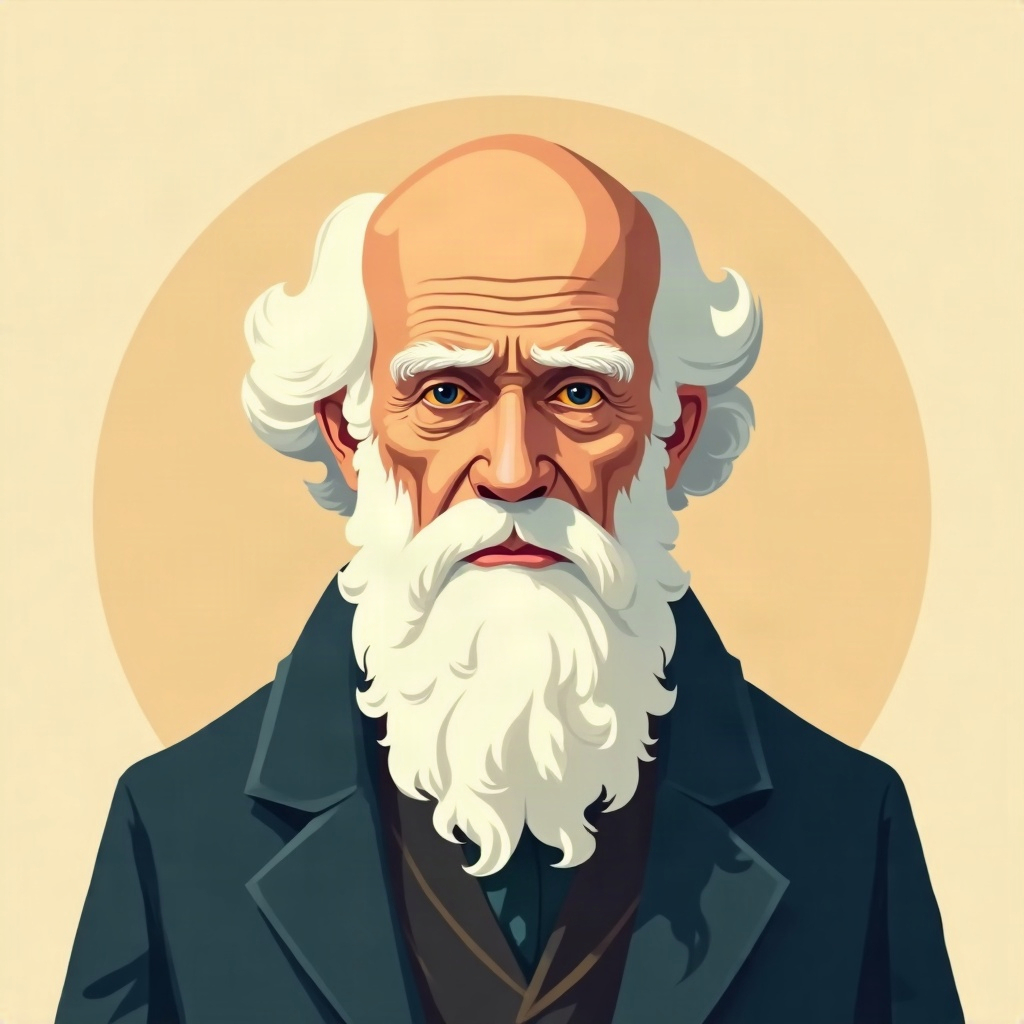
Charles Darwin · 찰스 다윈 — London, England, 1838
💡 The Idea
Charles Darwin (1809-1882) was born at Shrewsbury, England, on 12 February 1809. In his Autobiography he says that the voyage of the Beagle was by far the most important event in his life. The ship left England on 27 December 1831 and he returned on 2 October 1836. A popular story says that the finches and mockingbirds of the Galapagos Islands gave him the idea of natural selection on the spot. But that is not how Darwin tells it. In his Autobiography (written in 1876) he lists three things that impressed him on the voyage: fossil animals in South America, the way related animals replace each other as you travel south, and the South American character of the Galapagos plants and animals, which differ slightly from island to island. These facts, he writes, could only be explained if species gradually change, and the subject "haunted" him. But he could not explain how adaptation happened. The word "finch" does not appear in the Autobiography. Darwin Online also says that his famous branching-tree sketch in Notebook B was drawn before he had thought of natural selection. He opened his first notebook on the question in July 1837 and collected facts "on a wholesale scale" from breeders, gardeners and books. He soon saw that selection is the key to how people make useful races of animals and plants. But how it could work in nature "remained for some time a mystery". Then, in his words, he "happened to read for amusement" Malthus on Population. Malthus's 1798 essay says that population, when nothing checks it, increases much faster than food, so there is always a check on population. Darwin was already used to watching the struggle for existence. It struck him at once that in this struggle favourable variations would tend to be kept and unfavourable ones destroyed, and that the result would be new species. "Here then I had at last got a theory by which to work." The date is a small puzzle. In the Autobiography Darwin writes October 1838, fifteen months after he began his enquiry. But Darwin Online says that pages 134 and 135 of Notebook D record his reading of Malthus in September 1838. So his memory, written down nearly forty years later, was one month off. Darwin did not rush to publish. He wrote a 35-page pencil summary in June 1842 and a 230-page version in 1844. In early summer 1858 Alfred Russel Wallace sent him an essay with the same theory. Short papers by both men were published together in 1858, and On the Origin of Species appeared in November 1859. About the sources: the facts of Darwin's life, the Galapagos passage, the Malthus story, the 1842 and 1844 summaries, the 1858 essay and the 1859 book all come from the Autobiography, in the version edited by his son Francis Darwin (printed in The Life and Letters of Charles Darwin). The notebook dates and the Notebook B sketch come from the Darwin Online introduction to the notebooks. The Malthus sentences come from the text of his 1798 essay. We do not know which edition Darwin read. The year he died (April 1882) was checked against the Internet Encyclopedia of Philosophy entry on Darwin. We did not check the year he visited the Galapagos, so the story does not give it. In the story, the 1842 and 1844 summaries are told by the narrator, because the conversation takes place in 1838. The conversation with the friend is imagined, and the friend is not a real person. The finch story is a popular story, not a quotation from Darwin.
찰스 다윈(1809~1882)은 1809년 2월 12일 영국 슈루즈버리에서 태어났어요. 《자서전》에서 그는 비글호 항해가 자기 삶에서 단연 가장 중요한 사건이었다고 말해요. 배는 1831년 12월 27일에 영국을 떠났고, 그는 1836년 10월 2일에 돌아왔어요. 갈라파고스 제도의 핀치새와 흉내지빠귀가 그 자리에서 자연선택이라는 생각을 주었다는 유명한 이야기가 있어요. 하지만 다윈이 직접 말한 방식은 달라요. 1876년에 쓴 《자서전》에서 그는 항해 중 깊은 인상을 받은 세 가지를 들어요. 남아메리카의 화석 동물, 남쪽으로 갈수록 가까운 동물이 서로 바뀌는 모습, 그리고 섬마다 조금씩 다른 갈라파고스 동식물의 남아메리카적 특징이에요. 이런 사실들은 종이 서서히 변한다고 해야만 설명되고, 이 주제가 그를 '사로잡았다'고 해요. 하지만 적응이 어떻게 일어나는지는 설명할 수 없었어요. 《자서전》에는 '핀치'라는 단어가 나오지 않아요. 다윈 온라인은 또한 공책 B에 있는 가지가 뻗은 나무 그림이 그가 자연선택을 생각하기 전에 그려진 것이라고 해요. 그는 1837년 7월에 이 질문에 대한 첫 공책을 펼쳤고, 사육사와 정원사와 책에서 '대규모로' 사실을 모았어요. 그는 곧 선택이 사람이 쓸모 있는 동식물 품종을 만드는 열쇠라는 것을 알았어요. 하지만 자연에서 그것이 어떻게 작동할 수 있는지는 '한동안 수수께끼로 남아 있었'어요. 그러다가 그의 표현대로 '재미로 우연히' 맬서스의 《인구론》을 읽었어요. 맬서스의 1798년 글은 인구를 막는 것이 없으면 식량보다 훨씬 빠르게 늘어나므로 인구를 막는 힘이 늘 있다고 해요. 다윈은 이미 생존 경쟁을 지켜보는 데 익숙했어요. 그 경쟁에서는 유리한 변이는 남고 불리한 변이는 사라지기 쉽고, 그 결과가 새로운 종이라는 생각이 그에게 바로 떠올랐어요. "마침내 내게 연구할 이론이 생겼다." 날짜에는 작은 수수께끼가 있어요. 《자서전》에서 다윈은 탐구를 시작한 지 15개월 뒤인 1838년 10월이라고 써요. 하지만 다윈 온라인은 공책 D의 134쪽과 135쪽에 1838년 9월에 맬서스를 읽은 일이 적혀 있다고 해요. 그러니 거의 40년 뒤에 적은 그의 기억은 한 달 어긋났어요. 다윈은 서둘러 발표하지 않았어요. 1842년 6월에 연필로 쓴 35쪽 요약을, 1844년에 230쪽 원고를 썼어요. 1858년 초여름에 앨프리드 러셀 월리스가 같은 이론의 글을 보냈어요. 두 사람의 짧은 글이 1858년에 함께 발표되었고, 《종의 기원》은 1859년 11월에 나왔어요. 출처에 대해: 다윈의 삶의 사실, 갈라파고스 대목, 맬서스 이야기, 1842년과 1844년의 요약, 1858년의 글, 1859년의 책은 모두 《자서전》에서 가져왔어요. 아들 프랜시스 다윈이 엮은 판(《찰스 다윈의 생애와 편지》에 실린 것)이에요. 공책 날짜와 공책 B의 그림은 다윈 온라인의 공책 소개 글에서 가져왔어요. 맬서스의 문장은 1798년 글의 본문에서 가져왔어요. 다윈이 어느 판을 읽었는지는 몰라요. 그가 세상을 떠난 때(1882년 4월)는 인터넷 철학 백과사전(IEP)의 다윈 항목으로 확인했어요. 갈라파고스를 방문한 해는 확인하지 못해서 이야기에 쓰지 않았어요. 대화가 1838년에 일어나므로, 1842년과 1844년의 요약은 이야기에서 해설자가 전해요. 친구와의 대화는 상상한 것이고, 친구는 실제 인물이 아니에요. 핀치 이야기는 다윈의 말이 아니라 널리 퍼진 이야기예요.
📚 Grammar focus
Verb patterns (verb + to-infinitive / verb + -ing)
✏️ Try it
Complete each sentence with the correct form of the verb in brackets (to + verb, or -ing). 1. Darwin decided not _______ (write) a sketch for some time. 2. He kept _______ (read) books and letters. 3. He wanted _______ (collect) facts first. 4. After he read Malthus, he could not stop _______ (think) about the idea. 5. He was good at _______ (watch) animals and plants. 6. He happened _______ (read) the book for fun. Bonus: Write two sentences about your life. Use "I want to..." in one and "I enjoy ..." in the other.
전체 레슨을 보고 싶으세요?
Want the full lesson?
회화 연습, 역할극, 문법, 그리고 진짜 선생님이 안에 있어요.
Conversation practice, roleplay, grammar, and a real tutor are inside.