Eureka! · No. 28
Courage is a middle, and practice builds it
용기는 중간에 있고, 연습이 용기를 길러요
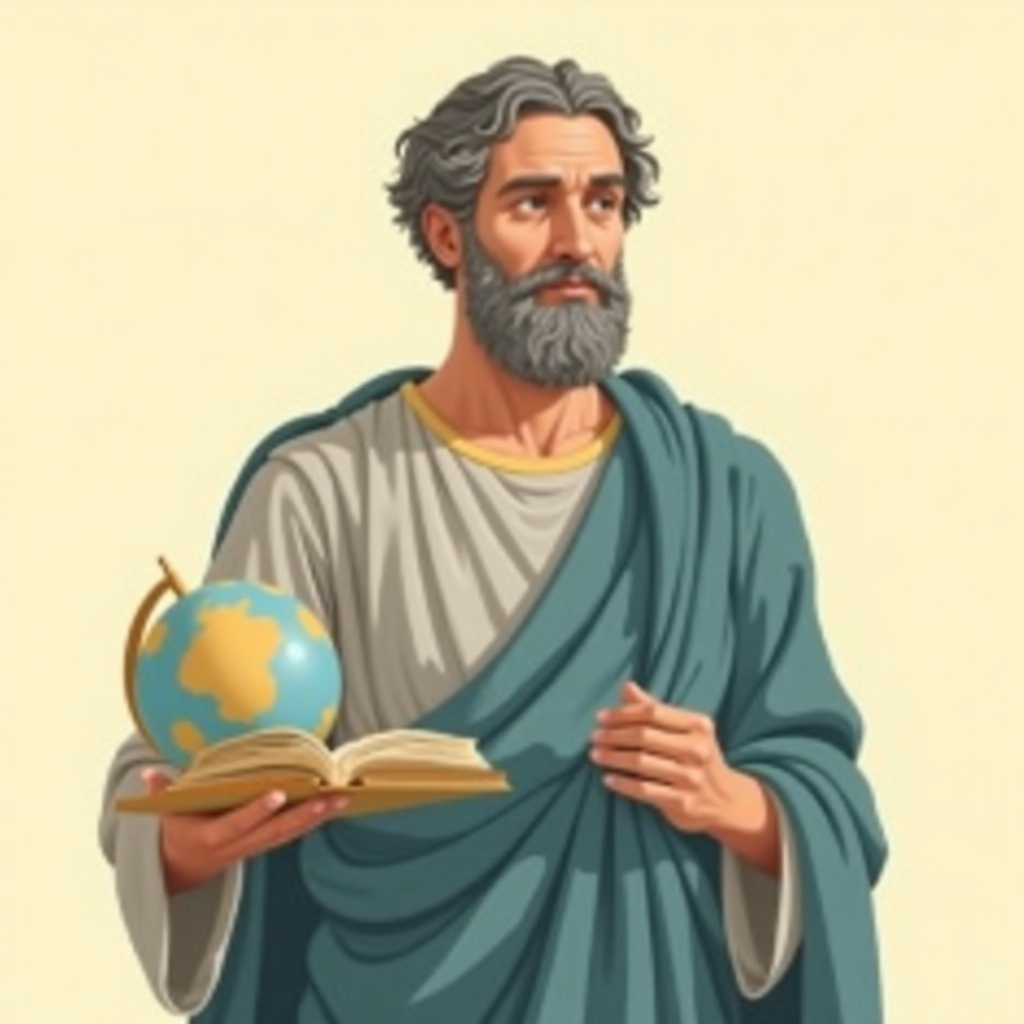
Aristotle · 아리스토텔레스 — Athens, Greece, c. 335 BCE
💡 The Idea
The source is the "Nicomachean Ethics," a book by Aristotle (384-322 BCE). The ideas here come from Books II and III. The name "Peripatetic" may also come from the covered walkway (peripatos) of the Lyceum. Aristotle asks: how do people become good? His first answer is practice. We become builders by building and lyre players by playing the lyre. In the same way, we become just by doing just things, and brave by doing brave things. Good habits, repeated, shape our character. His second idea is "the mean." A mean here is a middle point between two extremes. Courage sits between cowardice (too much fear) and recklessness (too much boldness). Each good quality has two bad neighbours: one too much, one too little. FALSE FRIEND WARNING: here "mean" is a noun that means "middle". It is not the adjective "mean" (unkind, 못된). And Aristotle's mean is not "be average" or "do not try hard". It is the best response, neither too much nor too little. The mean is not always a mathematical halfway point. He says it is "relative to us": it can be different for different people and situations. A wise person decides what is right in each case. His example is food for athletes: a famous wrestler needs more than a beginner. The conversation in this story is imagined. The ideas come from the Nicomachean Ethics, but these words are our own, not a quotation. The detail that Aristotle walked while teaching is a tradition, not a certain fact. For Korean readers, a comparison may help. The Confucian "Doctrine of the Mean" (중용) also values the right balance. This is a comparison only. The two ideas grew in different traditions.
이 이야기의 출처는 아리스토텔레스(기원전 384~322)의 책 '니코마코스 윤리학'이에요. 여기 나오는 생각은 제2권과 제3권에서 와요. '소요학파'라는 이름은 뤼케이온의 지붕 있는 산책로(페리파토스)에서 왔을 수도 있어요. 아리스토텔레스는 이렇게 물어요. 사람은 어떻게 훌륭해질까? 그의 첫 번째 답은 연습이에요. 우리는 집을 지으면서 집 짓는 사람이 되고, 리라를 연주하면서 리라 연주자가 돼요. 마찬가지로 정의로운 행동을 하면서 정의로운 사람이 되고, 용감한 행동을 하면서 용감한 사람이 돼요. 반복된 좋은 습관이 우리의 성품을 만들어요. 두 번째 생각은 '중용(the mean)'이에요. 여기서 mean은 두 극단 사이의 중간 지점을 뜻해요. 용기는 비겁함(두려움이 너무 큼)과 무모함(대담함이 너무 큼) 사이에 있어요. 좋은 성품마다 나쁜 이웃이 둘 있어요. 하나는 너무 많은 쪽, 하나는 너무 적은 쪽이에요. 혼동 주의: 여기서 mean은 '중간'이라는 뜻의 명사예요. '못된, 심술궂은'이라는 뜻의 형용사 mean이 아니에요. 그리고 아리스토텔레스의 중용은 '평균이 되라'거나 '애쓰지 말라'는 뜻이 아니에요. 너무 많지도 너무 적지도 않은 가장 알맞은 반응이에요. 중용이 항상 수학적인 정확한 한가운데는 아니에요. 그는 중용이 '우리에게 상대적'이라고 말해요. 사람과 상황에 따라 다를 수 있다는 뜻이에요. 무엇이 알맞은지는 지혜로운 사람이 상황마다 판단해요. 그가 든 예는 운동선수의 음식이에요. 유명한 레슬링 선수는 초보자보다 더 많이 필요해요. 이 이야기 속 대화는 상상한 것이에요. 생각은 니코마코스 윤리학에서 왔지만, 이 대사는 인용문이 아니라 우리가 지은 거예요. 아리스토텔레스가 걸으면서 가르쳤다는 이야기는 확실한 사실이 아니라 전해 내려오는 전통이에요. 한국 독자에게는 비교가 도움이 될 수 있어요. 유교의 '중용(中庸)'도 알맞은 균형을 중요하게 여겨요. 이것은 비교일 뿐이에요. 두 생각은 서로 다른 전통에서 자랐어요.
📚 Grammar focus
Comparatives and superlatives
✏️ Try it
Complete each sentence with the correct comparative or superlative. 1. The brave man is _______ (careful) than the reckless man. 2. A famous wrestler needs _______ (much) food than a beginner. 3. Practice is the _______ (important) part of learning. 4. Aristotle's book is _______ (old) than your grandfather. (Think: more than 2,000 years!) Bonus: Write one sentence comparing two things you do every day. Use "than". Then write one sentence with "the most".
전체 레슨을 보고 싶으세요?
Want the full lesson?
회화 연습, 역할극, 문법, 그리고 진짜 선생님이 안에 있어요.
Conversation practice, roleplay, grammar, and a real tutor are inside.