Eureka! · No. 71
No Peon, No Water
사환이 없으면 물도 없다
B. R. Ambedkar · B. R. 암베드카르 — Satara, India, about 1901 CE
💡 The Idea
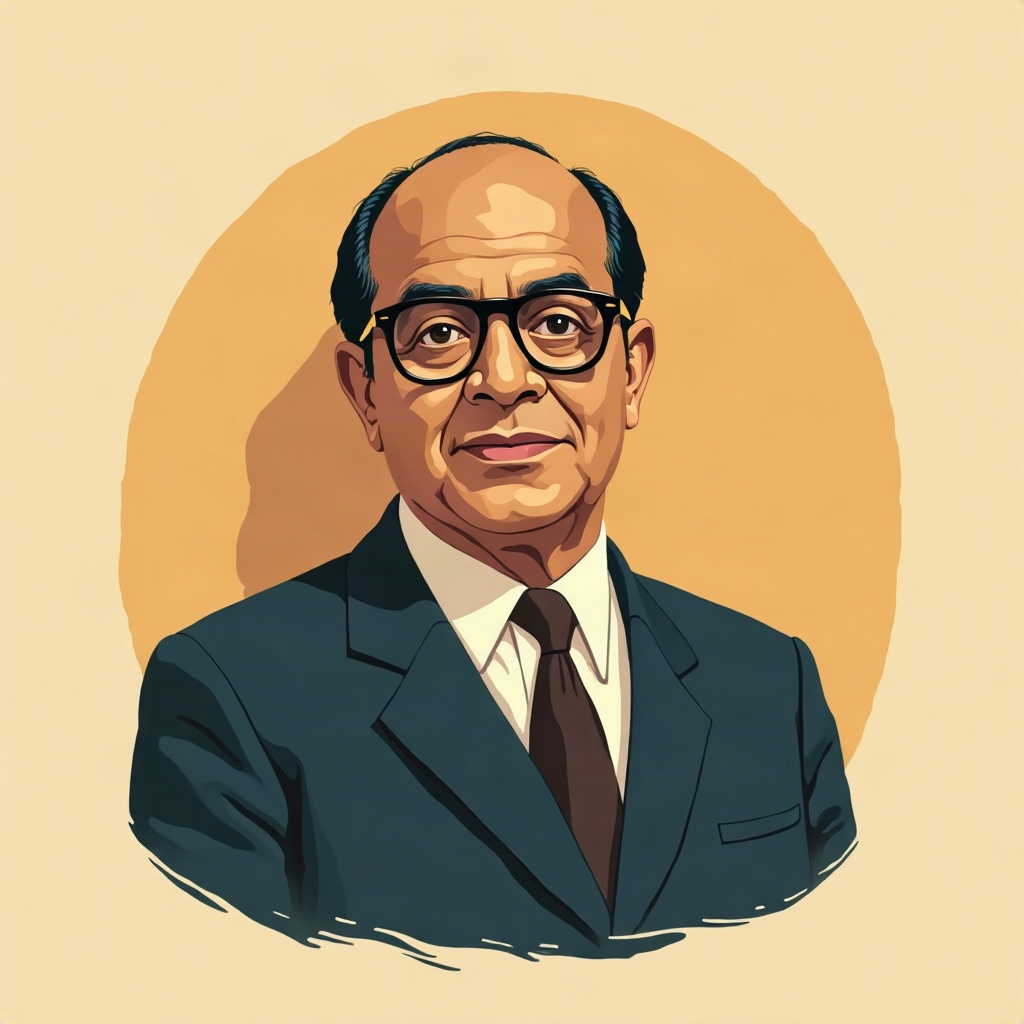
Bhimrao Ramji Ambedkar (14 April 1891 - 6 December 1956) was born in Mhow, in the Central Provinces of British India, into an "untouchable" family (Columbia University Libraries; Indian National Congress tribute page). Columbia University's own exhibit calls him the "champion of Dalit rights" and the chief architect of the Constitution of India. The scene: the story comes from "Waiting for a Visa", a set of personal reminiscences that Ambedkar wrote in his own handwriting. The People's Education Society first published the text as a booklet on 19 March 1990 (Dr. Babasaheb Ambedkar: Writings and Speeches, Vol. 12, on archive.org). Ambedkar says that the first incident happened "in about 1901", when he was a boy of nine. He and the other children in his family travelled by train from Satara to Koregaon, where his father worked as a cashier. At the station, he told the station-master that they were Mahars. The cartmen refused to carry them, and the children had to drive the cart themselves, with a cartman walking beside them. They could not get clean water, not even at the toll-collector's hut, and they spent the night hungry. Ambedkar adds that he already knew school rules: he sat in a corner, brought his own gunny cloth every day, and could not touch the tap, so that it was "no peon, no water". He calls the night "an indelible impression" on his life. We made his words shorter and simpler. The text has a few small differences in the number of children who travelled, so we did not give a number. The education: a scholarship from the Maharaja of Baroda took Ambedkar to Columbia University. Columbia's "Remarkable Columbians" page says that he earned his MA in 1915, a DSc at the London School of Economics, and his Columbia PhD in 1927. In "Waiting for a Visa", Ambedkar himself says that he went to America in 1913. Columbia says that he told the New York Times in 1930 that some of his classmates and professors, including John Dewey, were the best friends of his life. In the same essay, he writes that five years in Europe and America "wiped out" his awareness that he was untouchable. Back in Baroda to serve the state, he tried to stay in a Parsi inn, where he gave a Parsi name. Eleven days later, a group of angry men with sticks told him to leave by the evening, and his friends could not or would not take him in, so he left the city. We use "eleven days" from his own account. The essay gives some dates for his return that do not match (1916, 1917, 1918), so we give no year for it. The Constitution: the Constituent Assembly set up a Drafting Committee on 29 August 1947, led by Ambedkar (Frontline). B. N. Rau, the Constitutional Adviser, prepared the first Draft Constitution in October 1947, and the Committee gave its own draft to the President of the Assembly on 21 February 1948. Ambedkar presented the Draft Constitution to the Assembly on 4 November 1948. The Assembly voted for his motion on 26 November 1949, the members signed on 24 January 1950, and the Constitution came into effect on 26 January 1950 (Constitution of India, CLPR). Article 17 says: "Untouchability" is abolished and its practice in any form is forbidden. He was also independent India's first Minister of Law and Justice (Indian National Congress tribute page; Columbia). After: Ambedkar died on 6 December 1956 in Delhi. A law cannot change every habit at once. Caste is still discussed and argued about in India today, and Columbia's exhibit shows that the debate about Ambedkar's ideas continues. About the sources: all of the scenes are told from Ambedkar's own account, so there is no second witness for them. We do not put invented words in the mouths of real people. The only quoted words, "Can you drive the cart?", come from his text, and we shortened and simplified them.
빔라오 람지 암베드카르(1891년 4월 14일 ~ 1956년 12월 6일)는 영국령 인도 중부주의 마우에서 '불가촉천민' 집안에 태어났어요(컬럼비아 대학 도서관, 인도국민회의 추모 글). 컬럼비아 대학 자체 전시는 그를 '달리트 권리의 챔피언'이자 인도 헌법의 수석 설계자라고 불러요. 장면은 이래요. 이야기는 암베드카르가 직접 손으로 쓴 개인 회상 〈비자를 기다리며〉에서 왔어요. 인민교육협회가 1990년 3월 19일에 이 글을 소책자로 처음 냈어요(《암베드카르 박사: 저작과 연설》 12권, archive.org). 암베드카르는 첫 사건이 아홉 살 소년이던 "1901년쯤"에 일어났다고 말해요. 그와 가족의 다른 아이들은 아버지가 회계 담당으로 일하던 코레가온으로 사타라에서 기차를 타고 갔어요. 역에서 그는 역장에게 자신들이 마하르라고 말했어요. 달구지 주인들은 아이들을 태우길 거절했고, 아이들이 직접 달구지를 몰았으며 주인은 옆에서 걸었어요. 아이들은 깨끗한 물을 얻을 수 없었어요. 통행료 징수인의 오두막에서도 마찬가지였고, 배고픈 채로 밤을 보냈어요. 암베드카르는 학교 규칙도 이미 알고 있었다고 덧붙여요. 구석에 앉았고, 날마다 자기 거친 천을 가져왔고, 수도꼭지를 만질 수 없어서 "사환이 없으면 물도 없다"였어요. 그는 그 밤이 삶에 "지워지지 않는 인상"을 남겼다고 말해요. 우리는 그의 말을 더 짧고 쉽게 줄였어요. 글에는 여행한 아이들의 수가 조금씩 다르게 나와서 숫자는 쓰지 않았어요. 교육은 이래요. 바로다 마하라자의 장학금이 암베드카르를 컬럼비아 대학으로 보냈어요. 컬럼비아의 '주목할 만한 컬럼비아인' 쪽은 그가 1915년에 석사, 런던 정경대학에서 이학박사(DSc), 1927년에 컬럼비아 박사 학위를 받았다고 말해요. 〈비자를 기다리며〉에서 암베드카르 자신은 1913년에 미국에 갔다고 말해요. 컬럼비아에 따르면 그는 1930년 《뉴욕 타임스》에 존 듀이를 포함한 일부 급우와 교수들이 평생 가장 좋은 친구였다고 말했어요. 같은 글에서 그는 유럽과 미국에서 보낸 5년이 자신이 불가촉천민이라는 의식을 "지워 버렸다"고 써요. 바로다로 돌아와 주를 위해 일하려 했을 때, 그는 파르시 여관에 머물려고 파르시 이름을 댔어요. 열하루 뒤 막대기를 든 화난 사람들이 저녁까지 떠나라고 했고, 친구들도 그를 받아 줄 수 없었거나 받아 주려 하지 않아서 도시를 떠났어요. '열하루'는 그의 직접 기록에서 가져왔어요. 글에는 귀국 연도가 서로 맞지 않게 나와(1916, 1917, 1918) 연도는 적지 않았어요. 헌법은 이래요. 제헌의회는 1947년 8월 29일에 암베드카르가 이끄는 기초위원회를 만들었어요(프런트라인). 헌법 자문관 B. N. 라우가 1947년 10월에 첫 헌법 초안을 준비했고, 위원회는 1948년 2월 21일 의회 의장에게 자체 초안을 제출했어요. 암베드카르는 1948년 11월 4일 의회에 헌법 초안을 제출했어요. 의회는 1949년 11월 26일 그의 동의안에 찬성 투표를 했고, 의원들은 1950년 1월 24일 서명했으며, 헌법은 1950년 1월 26일 효력을 얻었어요(인도 헌법, CLPR). 제17조는 "'불가촉천민 제도'를 폐지하며 어떤 형태로든 그 관행을 금지한다"고 말해요. 그는 독립 인도의 첫 법무장관이기도 했어요(인도국민회의 추모 글, 컬럼비아). 그 뒤는 이래요. 암베드카르는 1956년 12월 6일 델리에서 세상을 떠났어요. 법이 모든 습관을 한꺼번에 바꿀 수는 없어요. 카스트는 오늘날에도 인도에서 논의되고 논쟁되는 주제이고, 컬럼비아의 전시는 암베드카르의 생각에 대한 논쟁이 계속되고 있음을 보여 줘요. 출처에 대해: 모든 장면은 암베드카르 자신의 기록에서 가져온 것이라 두 번째 목격자가 없어요. 우리는 실존 인물의 입에 지어낸 말을 넣지 않았어요. 인용한 말 "달구지를 몰 수 있니?"는 그의 글에서 온 것이고 우리가 줄여 쉽게 바꿨어요.
📚 Grammar focus
Obligation and permission in the past (had to / didn't have to / could not / was not allowed to)
✏️ Try it
Complete each sentence with had to, didn't have to, could not, or was / were allowed to. 1. Ambedkar _______ sit in a corner of the classroom. (It was a rule for him.) 2. He _______ touch the water tap. (It was forbidden for him.) 3. The other children _______ open the tap and drink. (It was permitted.) 4. The school servant _______ open the tap for him. (It was a rule.) 5. The other children _______ wait for the servant. (There was no duty.) 6. In Baroda, he _______ leave the inn after eleven days. (He had no choice.) Bonus: Write one rule that you had to follow in primary school, and one thing that you were not allowed to do.
전체 레슨을 보고 싶으세요?
Want the full lesson?
회화 연습, 역할극, 문법, 그리고 진짜 선생님이 안에 있어요.
Conversation practice, roleplay, grammar, and a real tutor are inside.