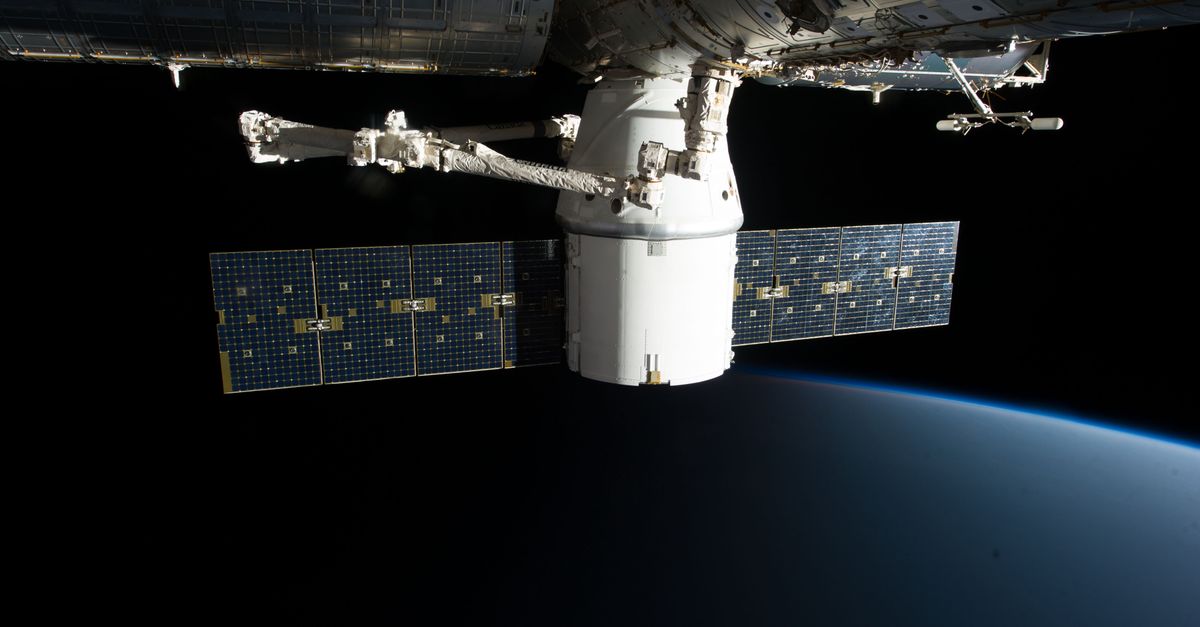
File photo — not from this news story. · See the original story's photos → · Photo: SpaceX / Pexels
📰 Daily News
Three astronauts blast toward space station 250 miles up
AI가 레벨별로 작성한 세계 뉴스 · World news, written by AI at each level
Three people walked into a spacecraft and left Earth. This simple moment is actually quite remarkable when you understand what happens next: these explorers are heading to a place where humans live 250 miles above the planet. The destination is the International Space Station, or ISS, a laboratory in space where nations work together.
The journey began in Kazakhstan, a country in Central Asia with a long history of space exploration. A Soyuz spacecraft—a vehicle design that has been used for decades—lifted the crew into orbit. The crew includes Anil Menon, a NASA astronaut from the United States, and two Russian cosmonauts: Pyotr Dubrov and Anna Kikina. Each person brings special training and skills that the ISS mission requires.
Why spend eight months in space? The answer lies in the work itself. The International Space Station is not a vacation destination. It is a workplace where scientists study how the human body changes in weightlessness. They conduct experiments that cannot happen on Earth. They maintain equipment that keeps the station running safely. They also prepare for future exploration further into space.
The station orbits Earth every 90 minutes, which means the crew watches sixteen sunrises and sunsets each day. Food, water, and supplies arrive regularly on cargo vehicles. The crew lives in a zero-gravity environment where water floats in bubbles and astronauts sleep in sleeping bags attached to walls. It sounds strange, but for trained explorers, this becomes normal.
What makes this mission interesting is the international aspect. Cosmonauts and astronauts from different countries live and work together in confined spaces. Language is not a barrier because all crew members speak Russian. Differences between nations disappear inside that orbiting laboratory. Instead, there is shared purpose: to learn, to explore, and to push human knowledge forward.
The eight-month mission will be long. The crew will miss their families and Earth's natural environment. However, they join a special group of humans who have chosen to leave the planet for science. Each mission to the ISS teaches us more about how humans can survive and work in space. It also brings nations together in ways that politics on Earth sometimes cannot.
Would you want to spend eight months in space? What would you miss most about Earth?
Inspired by reporting from BBC News.
📚 Vocabulary
cosmonaut
an astronaut from Russia or the Soviet Union
러시아 또는 소련의 우주인
orbit
to travel in a circular path around something, usually in space
무엇 주위를 원형으로 도는 것
confined
limited to a small or restricted space
좁은 공간에 제한된
weightlessness
the state of having no weight, as experienced in space
무중력 상태
maintain
to keep something in good working condition
어떤 것을 좋은 상태로 유지하다
conduct
to carry out or perform an activity, especially a study or experiment
활동(특히 연구나 실험)을 수행하다
destination
the place where someone or something is going
누군가 또는 무엇이 가려고 하는 장소
shared purpose
a common goal or reason that unites people
사람들을 하나로 묶는 공동의 목표
Your next step
Step 1 · Free level test
Find your English level in about 12 minutes — free, no signup required.
Take the level test →
Step 2 · Free 30-minute class
Try one real class with Uncle J, free.
Book my free class →
Step 3 · Sign up free to get started ↓
전체 레슨을 보고 싶으세요?
Want the full lesson?
회화 연습, 역할극, 문법, 그리고 진짜 선생님이 안에 있어요.
Conversation practice, roleplay, grammar, and a real tutor are inside.