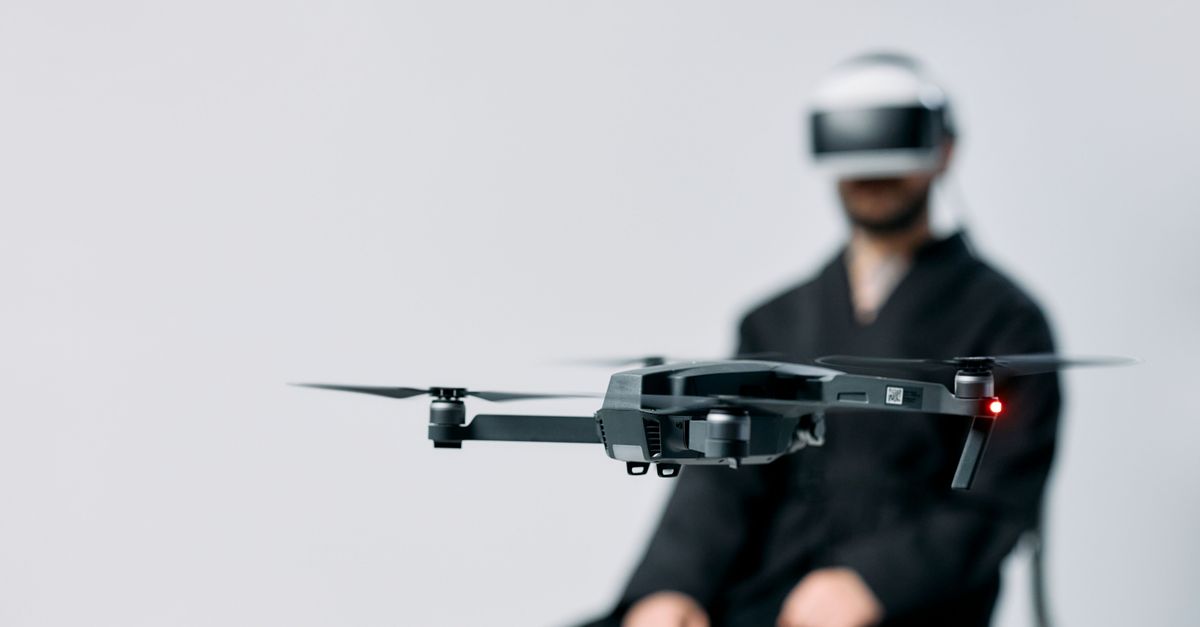
File photo — not from this news story. · See the original story's photos → · Photo: cottonbro studio / Pexels
📰 Daily News
Robots learn millions of moves in fake worlds first
AI가 레벨별로 작성한 세계 뉴스 · World news, written by AI at each level
Imagine a robot learning to pour coffee or stack boxes—not by making a thousand mistakes in your kitchen, but by practicing millions of times in a computer world that looks and behaves just like reality. This is already happening, and it is changing how robots learn.
For decades, teaching a robot a new task meant programming it step by step. Engineers wrote code, tested it, fixed bugs, and started over. It was slow and expensive. Today, companies are taking a different path: they build a virtual copy of the real world, let the robot practice there, and then move that knowledge to a real machine. The virtual robot learns in seconds what might take hours to teach a physical robot.
These digital training spaces are becoming remarkably realistic. Software designers program in every detail—the weight of objects, how light bounces off surfaces, even the texture of different materials. When a virtual robot learns to pick up a glass without crushing it, that knowledge transfers surprisingly well to the physical world. Researchers discovered something fascinating: a robot trained entirely in simulation can often handle tasks in real life with little extra adjustment.
Why does this matter? Cost is one huge reason. Building a physical test environment full of objects, sensors, and backup equipment is expensive. Virtual worlds cost a fraction of that. A company can run thousands of experiments simultaneously on computers, watching robots fail safely and learn fast. There is no broken glass, no wasted materials, no injured workers to worry about.
The technology is not perfect yet. Sometimes what works in the virtual world fails in the real one—a problem engineers call the "reality gap." A robot trained to grab a shiny object might struggle when the lighting changes, or when the real object feels slightly different than expected. Researchers are closing this gap by adding unpredictability to simulations. Virtual robots now practice with slightly different lighting, textures, and weights every single time. This messy, varied training makes them tougher and more adaptable.
The real excitement comes from what this unlocks. Robots can now learn far more complex tasks than before. Factory robots can adapt to new products without complete reprogramming. Home robots might soon handle dozens of different household jobs. And here is the remarkable part: as virtual training improves, it becomes cheaper to teach robots almost anything. The barrier to entry drops.
We are at a turning point. Instead of robots being expensive, specialized machines for one job, they could become flexible helpers that learn and improve. The next generation of robots will not be trained in your home or factory—they will be trained in digital worlds, and then deployed into yours.
What would you want a robot to learn how to do in your life? What task would make your day easier?
Inspired by reporting from BBC News.
📚 Vocabulary
simulate
to create a copy of something real in a computer or model form
컴퓨터나 모형으로 실제의 것과 같은 상황을 만들어내다
deploy
to put something into use or send it to a place where it is needed
어떤 것을 실제로 사용하기 위해 배치하거나 필요한 곳에 보내다
texture
the way a surface feels when you touch it; rough, smooth, bumpy, etc.
손으로 만졌을 때 느껴지는 표면의 특징; 거친, 부드러운, 울퉁불퉁한 등
transfer
to move or pass something from one place or situation to another
어떤 것을 한 장소나 상황에서 다른 곳으로 옮기거나 전달하다
adaptable
able to change and work well in different situations
다양한 상황에서 변화에 대응할 수 있고 잘 작동하는
barrier
something that stops or prevents progress; an obstacle
진행을 방해하거나 막는 것; 장애물
gap
a space, difference, or problem between two things
두 가지 사이의 공간, 차이, 또는 문제
unpredictability
the quality of being uncertain or impossible to know in advance
미리 알 수 없거나 불확실한 특성
Your next step
Step 1 · Free level test
Find your English level in about 12 minutes — free, no signup required.
Take the level test →
Step 2 · Free 30-minute class
Try one real class with Uncle J, free.
Book my free class →
Step 3 · Sign up free to get started ↓
전체 레슨을 보고 싶으세요?
Want the full lesson?
회화 연습, 역할극, 문법, 그리고 진짜 선생님이 안에 있어요.
Conversation practice, roleplay, grammar, and a real tutor are inside.