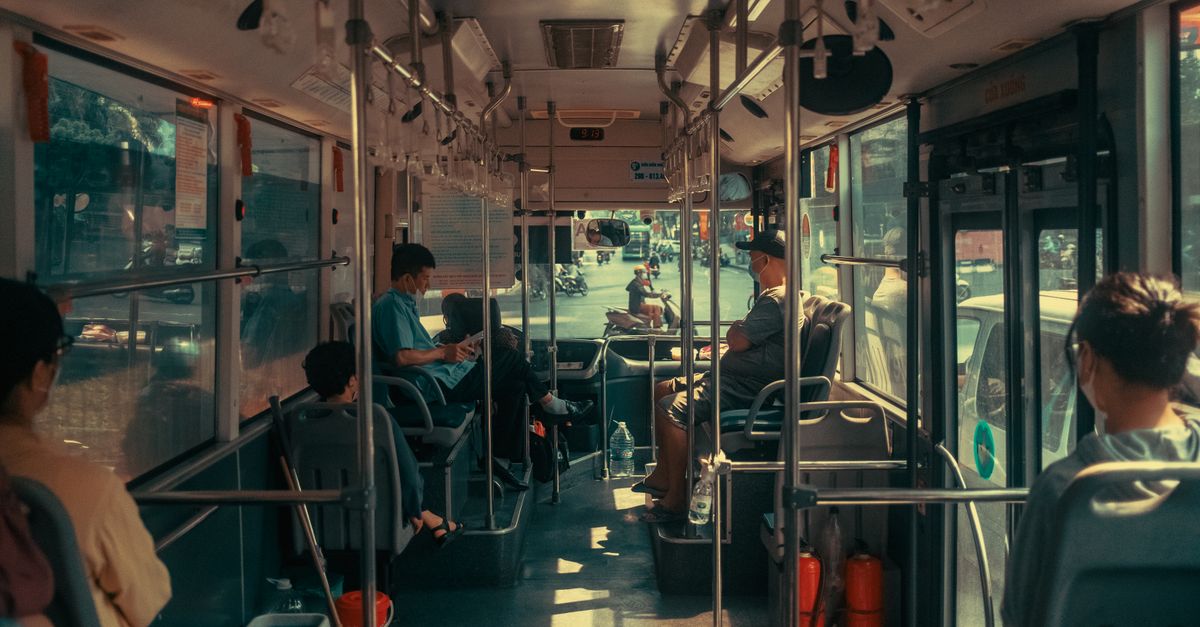
자료사진(기사 내용과 무관) · 원본 기사 사진 보기 → · Photo: Quý Nguyễn / Pexels
📰 Daily News
싱가포르, 버스에서 큰 음량 재생하면 수백 달러 벌금
Singapore fines loud music players hundreds of dollars on buses
AI가 레벨별로 작성한 세계 뉴스 · World news, written by AI at each level
Imagine sitting on a crowded bus. A passenger next to you is playing music loudly from a phone. Another person has their feet stretched across two seats. You cannot concentrate, cannot relax. This is what bothers many people who use public transport every day.
Now, imagine that the person with the loud music receives a fine of several hundred dollars. In Singapore, this is not imagination—it is the new reality. The government has decided to stop disruptive behavior on buses and trains through serious punishment.
What counts as disruptive? The rules are quite clear. Playing loud music without headphones is forbidden. Eating certain foods, especially pungent ones like durian, can result in a fine. Putting your feet on seats disturbs other passengers. Even talking loudly on your phone breaks the rules. The goal is simple: make public transport a peaceful place for everyone.
Why is Singapore taking such a strict approach? The city-state is famously organized and orderly. Authorities believe that small bad behaviors can grow into bigger problems. If one person feels allowed to be noisy, others might follow. Soon, buses become unpleasant for thousands of commuters. By stopping these behaviors early and firmly, the government hopes to maintain a culture of respect.
The fines are substantial—often between $500 and $1,000 Singapore dollars, which equals roughly $370 to $740 USD. For many working people, this is a serious amount of money. Some observers think this is harsh. Others argue it is fair punishment for spoiling the experience of hundreds of other passengers who simply want a quiet ride home.
This raises an interesting question about public spaces. How should we balance individual freedom with shared responsibility? Is a large fine too extreme, or is it the only way to make people think twice? Different countries handle this differently. Some rely on education and gentle reminders. Singapore chooses enforcement and consequences. Neither approach is wrong—they simply reflect different values.
The real test will come in the coming months. Will passengers change their behavior? Will the buses become quieter and cleaner? And will visitors and new residents adapt to these strict rules, or will Singapore's reputation as an extremely orderly place only grow stronger?
Inspired by reporting from BBC News.
📚 어휘
disruptive
causing trouble; preventing normal activity or peace
방해가 되는; 정상적인 활동이나 평화를 방해하는
enforce
to make people obey a rule or law using power or punishment
힘이나 벌칙을 사용하여 규칙이나 법을 지키도록 하다
commuter
a person who travels regularly between home and work or school
집과 직장이나 학교 사이를 정기적으로 이동하는 사람
substantial
large in amount or size; considerable
크거나 큰 크기의; 상당한
pungent
having a strong, sharp smell or taste, often unpleasant
강하고 날카로운 냄새나 맛을 가진, 종종 불쾌한
balance
to keep two different things in a fair or equal proportion
두 가지 다른 것을 공정하거나 동등한 비율로 유지하다
enforce
to make certain that people obey a rule or law
사람들이 규칙이나 법을 지키도록 보장하다
reflect
to show or express something; to think deeply about something
어떤 것을 보여주거나 표현하다; 무언가에 대해 깊이 생각하다
다음 단계
1단계 · 무료 레벨 테스트
약 12분이면 내 영어 레벨을 확인할 수 있어요 — 무료, 회원가입 없이 가능해요.
레벨 테스트 하러 가기 →
2단계 · 무료 30분 수업
Uncle J와 진짜 수업을 무료로 한 번 체험해보세요.
무료 수업 신청하기 →
3단계 · 무료로 가입하고 시작하세요 ↓
전체 레슨을 보고 싶으세요?
Want the full lesson?
회화 연습, 역할극, 문법, 그리고 진짜 선생님이 안에 있어요.
Conversation practice, roleplay, grammar, and a real tutor are inside.