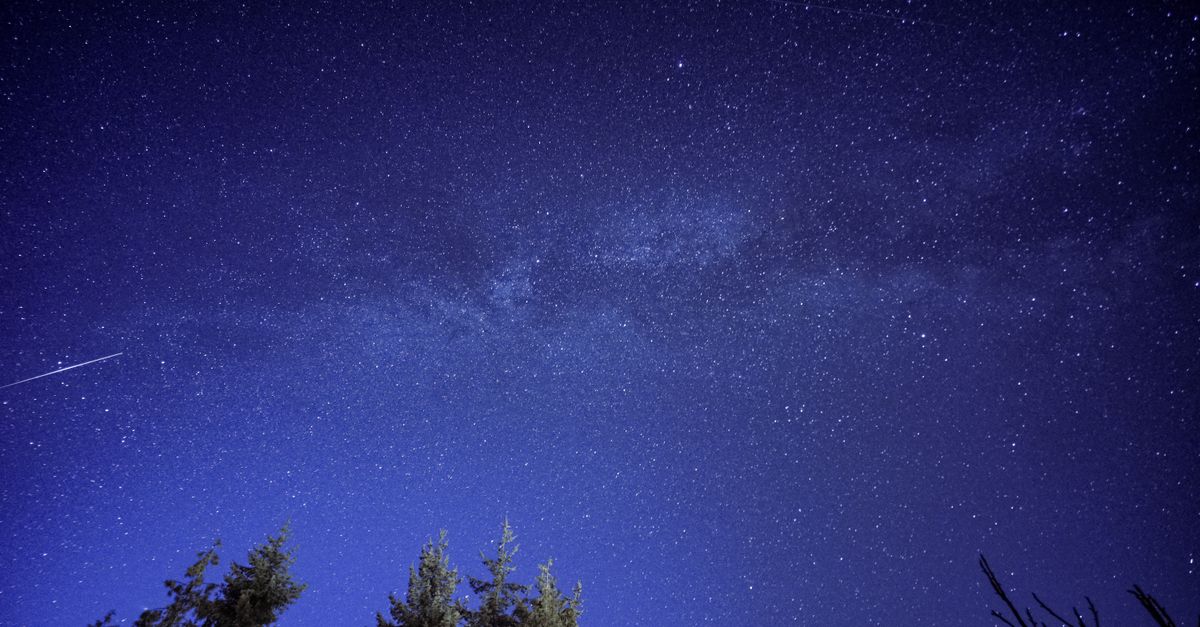
File photo — not from this news story. · See the original story's photos → · Photo: Jason Pittman / Pexels
📰 Daily News
Perseid meteor shower peaks this week across the globe
AI가 레벨별로 작성한 세계 뉴스 · World news, written by AI at each level
Imagine standing in the darkness and watching a streak of light suddenly race across the sky. That magical moment has a name: a meteor shower. This week, millions of people around the world will experience exactly that, thanks to the Perseid meteor shower reaching its peak.
So what creates this spectacular display? The answer is surprisingly simple. Every year, Earth's orbit carries our planet through a cosmic cloud—a trail of dust and tiny rocks left behind by a comet called Swift-Tuttle. This comet visits our corner of space only once every 130 years, but the debris it leaves stays behind. When our planet rushes through this debris field at tremendous speed, these particles enter Earth's atmosphere and burn up. The result is what we call a "shooting star."
The Perseid meteor shower is special for two reasons. First, it produces more visible meteors than most other showers throughout the year. On the best nights, observers in dark locations report seeing dozens of meteors per hour. Second, it happens during summer in the Northern Hemisphere, when nights are shorter but the weather is usually warm and pleasant—perfect conditions for staying outside to watch.
Timing matters more than you might think. The shower has been building for weeks, but Wednesday night offers the absolute peak. This is when Earth passes most directly through the densest part of the debris cloud. If you wait until Thursday or Friday, you will still see some meteors, but fewer. The best viewing window is usually between midnight and dawn, when your location tilts most directly into the incoming particles. Bring a blanket, find a spot away from city lights, and simply look upward. Your eyes need about 20 minutes to adjust to darkness, so be patient.
Where you are matters too. If you live in a city with heavy light pollution, travel to the countryside if you can. Even 30 minutes away from bright streets can make a dramatic difference. Clear skies are essential—clouds will hide the show completely. Check the weather forecast for your region before you go.
Here is a curious fact: the Perseids have been observed for over 2,000 years. Ancient astronomers in China and Japan recorded seeing this shower, though they did not understand what caused it. Now we do. We know the name "Perseid" comes from the constellation Perseus, where the meteors appear to originate in the sky. Of course, they actually come from all directions—the constellation is just a reference point our eyes use.
Did you know that other planets experience meteor showers too? Mars, for example, has its own meteor events. But Earth's position, our atmosphere, and the particular debris fields we pass through make our shows especially visible. The Perseids represent one of nature's greatest free spectacles.
Inspired by reporting from BBC News.
📚 Vocabulary
meteor shower
A celestial event when many meteors (shooting stars) appear to fall from the sky in one night, caused by Earth passing through debris from a comet.
지구가 혜성의 파편을 통과할 때 하나의 밤에 수많은 유성(별똥별)이 하늘에서 떨어지는 것처럼 보이는 천체 현상
debris
Scattered pieces or fragments of something broken or destroyed, often left in space after a comet passes.
부서지거나 파괴된 것의 흩어진 조각, 종종 혜성이 지나간 후 우주에 남겨진 것
atmosphere
The layer of air and gases surrounding Earth that protects life and burns up incoming space objects.
지구를 둘러싼 공기와 가스의 층으로, 생명을 보호하고 우주 물체를 태워버립니다
peak
The highest point or best time for an event; when something reaches its maximum intensity.
사건의 최고점 또는 최적의 시간; 무언가가 최대 강도에 도달했을 때
comet
A large icy object in space that orbits the sun and leaves a trail of dust and gas when it approaches.
태양 주위를 도는 우주의 큰 얼음 물체로, 태양에 접근할 때 먼지와 가스의 흔적을 남깁니다
celestial
Relating to the sky or space; involving stars, planets, and other objects in the heavens.
하늘이나 우주와 관련된; 별, 행성, 그리고 우주의 다른 물체를 포함하는
light pollution
Excessive artificial light from cities and towns that makes it hard to see stars and natural sky features.
도시와 마을의 과도한 인공 조명으로 인해 별과 자연 하늘을 보기 어려운 상태
constellation
A group of stars in the sky that form a recognizable pattern, given a name by ancient observers.
하늘에서 인식할 수 있는 패턴을 형성하는 별들의 그룹으로, 고대 관찰자들에게 이름이 주어짐
Your next step
Step 1 · Free level test
Find your English level in about 12 minutes — free, no signup required.
Take the level test →
Step 2 · Free 30-minute class
Try one real class with Uncle J, free.
Book my free class →
Step 3 · Sign up free to get started ↓
전체 레슨을 보고 싶으세요?
Want the full lesson?
회화 연습, 역할극, 문법, 그리고 진짜 선생님이 안에 있어요.
Conversation practice, roleplay, grammar, and a real tutor are inside.