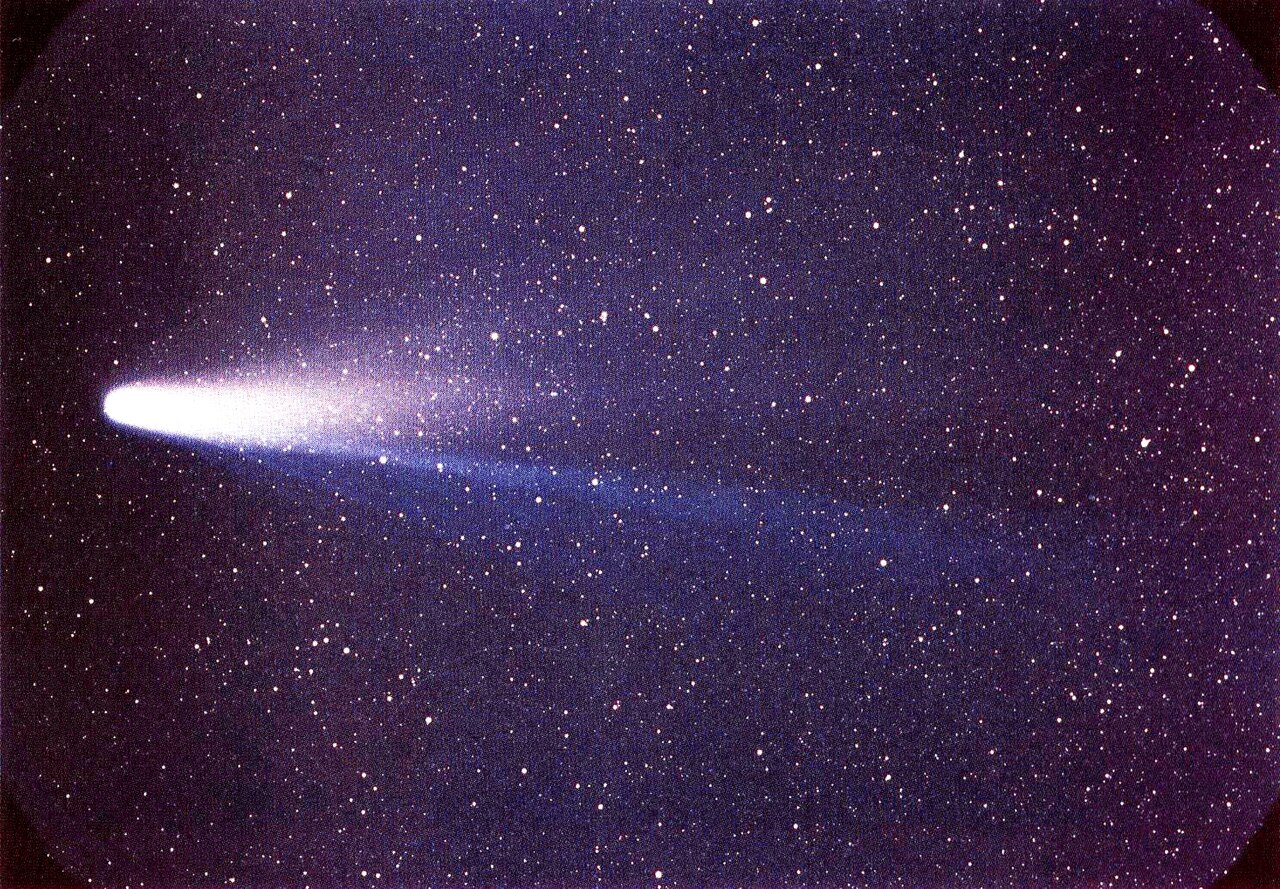
File photo — not from this news story. · See the original story's photos → · Photo: NASA/W. Liller / Wikimedia Commons
📰 Daily News
Halley's Comet dust creates bright meteor shower this week
AI가 레벨별로 작성한 세계 뉴스 · World news, written by AI at each level
Imagine standing outside on a clear night and watching a bright line streak across the sky in just a few seconds. That moment is called a meteor—and this week, you might see dozens of them. The Orionid meteor shower is happening now, and it's one of the best shows Earth offers every year.
Here's the fascinating part: these meteors are not random visitors. They come from a famous comet called Halley's Comet. Every 75 or 76 years, Halley's Comet swings near Earth, and then it disappears into deep space for another century. Long before it returns, Earth moves through the trail of dust and rocks that the comet left behind. This debris has been floating in space all these years, waiting for our planet to pass through it.
When Earth moves through this cosmic trail in October, pieces of dust and rock hit our atmosphere at incredible speed. They burn up from the heat, creating the bright streaks we call meteors. The shower is named after the constellation Orion, which is where many of these meteors seem to come from in the sky. It's not that they actually originate there—it's just how they appear to us on Earth.
Why is this shower so special? Orionid meteors are fast. They enter our atmosphere at about 41 miles per second, which is much faster than many other meteor showers. This speed makes them bright and exciting to watch. Another reason to look: the meteors often leave glowing trails behind them that last several seconds. These traces hang in the sky like ghost lines before they fade away.
To see the shower, you don't need a telescope or any equipment. Find a place away from city lights—a dark park, a quiet road, or even your backyard if it's not too bright. The best time is after midnight and before sunrise. Lie on your back or sit in a comfortable chair and let your eyes adjust to the darkness for about 20 minutes. Be patient. You won't see a meteor every minute, but over an hour you should catch several. Clear skies improve your chances greatly, so check the weather before you plan to watch.
Here's something to think about: when you watch a meteor, you're actually seeing a piece of space history. That dust particle began its journey when Halley's Comet passed Earth decades ago. It has been traveling through the vacuum of space all that time, and now it's burning up in front of your eyes. You're witnessing a moment that connects you to the vast universe.
Have you ever watched a meteor shower before? What would it feel like to see something that came from so far away and so long ago, suddenly appear above your head?
Inspired by reporting from BBC News.
📚 Vocabulary
debris
pieces of rubbish or broken material left behind after something is destroyed or broken
무언가가 부서지거나 깨진 후 남겨지는 쓰레기나 부서진 재료 조각들
cosmic
relating to or belonging to space beyond Earth; very large in scale
지구 너머의 우주와 관련된; 매우 큰 규모의
atmosphere
the layer of air and gases surrounding a planet or moon
행성이나 달을 둘러싼 공기와 가스의 층
originate
to come from a particular place, person, or situation; to begin or start
특정 장소, 사람, 또는 상황에서 오다; 시작되다
constellation
a group of stars that form a recognizable pattern in the night sky
밤하늘에서 인식할 수 있는 패턴을 형성하는 별들의 그룹
trail
a mark or path left behind by something as it moves
무언가가 움직일 때 남기는 자국이나 길
glowing
shining brightly with light or heat; appearing bright and warm
빛이나 열로 밝게 빛나는; 밝고 따뜻하게 보이는
vacuum
a space completely empty of all matter, especially air; the emptiness of space
모든 물질, 특히 공기가 완전히 없는 공간; 우주의 공허함
Your next step
Step 1 · Free level test
Find your English level in about 12 minutes — free, no signup required.
Take the level test →
Step 2 · Free 30-minute class
Try one real class with Uncle J, free.
Book my free class →
Step 3 · Sign up free to get started ↓
전체 레슨을 보고 싶으세요?
Want the full lesson?
회화 연습, 역할극, 문법, 그리고 진짜 선생님이 안에 있어요.
Conversation practice, roleplay, grammar, and a real tutor are inside.