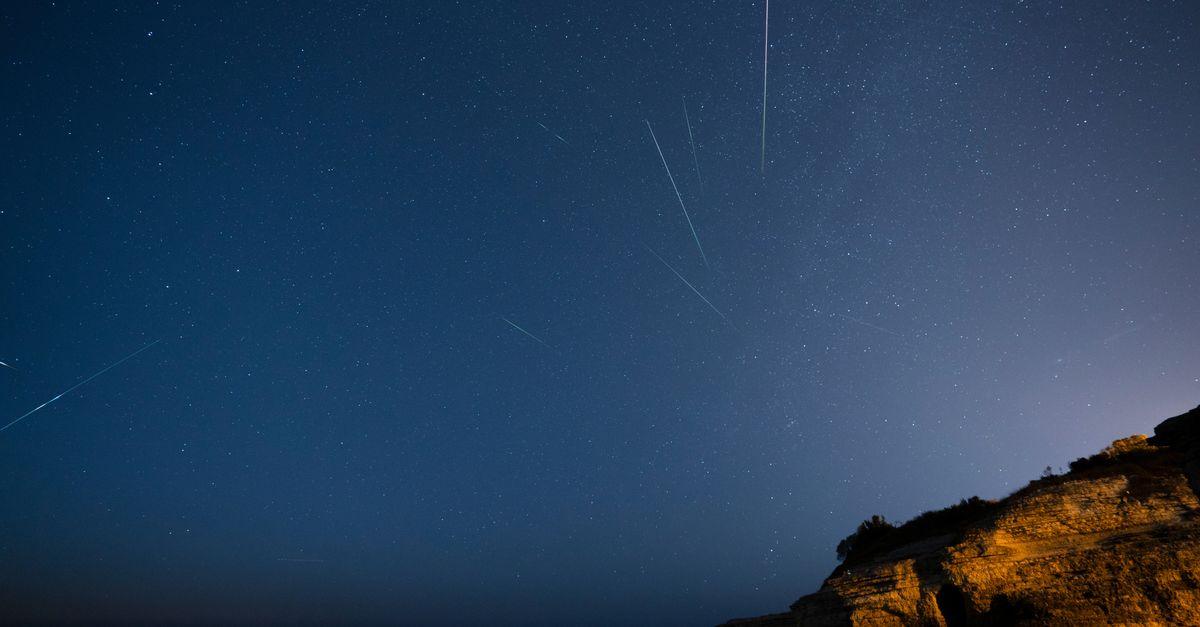
File photo — not from this news story. · See the original story's photos → · Photo: FURKAN GÜNEŞ / Pexels
📰 Daily News
Leonid meteor shower lights up sky this weekend
AI가 레벨별로 작성한 세계 뉴스 · World news, written by AI at each level
Imagine lying on your back under a dark sky and watching a bright streak of light cross overhead—so fast you almost miss it. This weekend, you'll have the chance to see this moment again and again. The Leonid meteor shower is about to light up the night sky, and it's one of the most impressive shows the cosmos offers each year.
Meteor showers happen when Earth passes through the debris left behind by a comet. In this case, the debris comes from an ancient comet that orbits the sun. As our planet moves through this cloud of dust and rock, millions of tiny particles burn up when they enter Earth's atmosphere. The friction creates heat, and that heat produces the brilliant flashes we see from the ground.
The Leonid shower is special because its meteors are exceptionally bright and move at high speed. Some people describe them as "shooting stars," though that's not scientifically accurate—these are not stars at all, just small pieces of cosmic material. What makes the Leonid shower distinctive is the speed. These meteors can travel at more than 40 miles per second. At that velocity, they produce more light and create more dramatic streaks across the sky.
The shower starts this weekend and will continue until the end of November. The best viewing time is usually in the early morning hours, just before dawn. At that time, your location on Earth is facing directly into the debris stream, so you'll see more meteors per hour. You don't need any special equipment—your eyes are all you need. Find a dark place away from city lights, lie down, and give your eyes about 20 minutes to adjust to the darkness. Then watch, and be patient. On average, you might see ten to twenty meteors per hour, though this number varies from year to year.
Why is watching meteors so powerful for so many people? Perhaps it's because we're witnessing something genuinely rare and beautiful. Or perhaps it's because meteor showers connect us to the larger cosmos—a reminder that we're part of something vast and ancient. Whatever the reason, this weekend offers a wonderful opportunity to step outside and look up.
Have you ever seen a meteor shower before? If you do watch the Leonids this year, what would make it special for you—watching alone, sharing the experience with a friend, or something else entirely?
Inspired by reporting from BBC News.
📚 Vocabulary
meteor shower
A natural event when many small rocks and dust from space burn up as they enter Earth's atmosphere, creating bright streaks of light in the night sky.
유성우
debris
Scattered fragments or pieces of something that has been broken or destroyed.
파편, 잔해
exceptionally
In a way that is unusual or remarkable; much better or more extreme than normal.
유난히, 특히
distinctive
Having a quality that makes something clearly different from others; unique or special.
독특한
velocity
The speed at which something moves in a particular direction.
속도
friction
The resistance or force that occurs when two surfaces rub against each other.
마찰
cosmos
The universe, especially when considered as a whole; the vast space containing all stars, planets, and matter.
우주
cosmic
Relating to the universe or cosmos; extremely large or significant.
우주의
Your next step
Step 1 · Free level test
Find your English level in about 12 minutes — free, no signup required.
Take the level test →
Step 2 · Free 30-minute class
Try one real class with Uncle J, free.
Book my free class →
Step 3 · Sign up free to get started ↓
전체 레슨을 보고 싶으세요?
Want the full lesson?
회화 연습, 역할극, 문법, 그리고 진짜 선생님이 안에 있어요.
Conversation practice, roleplay, grammar, and a real tutor are inside.