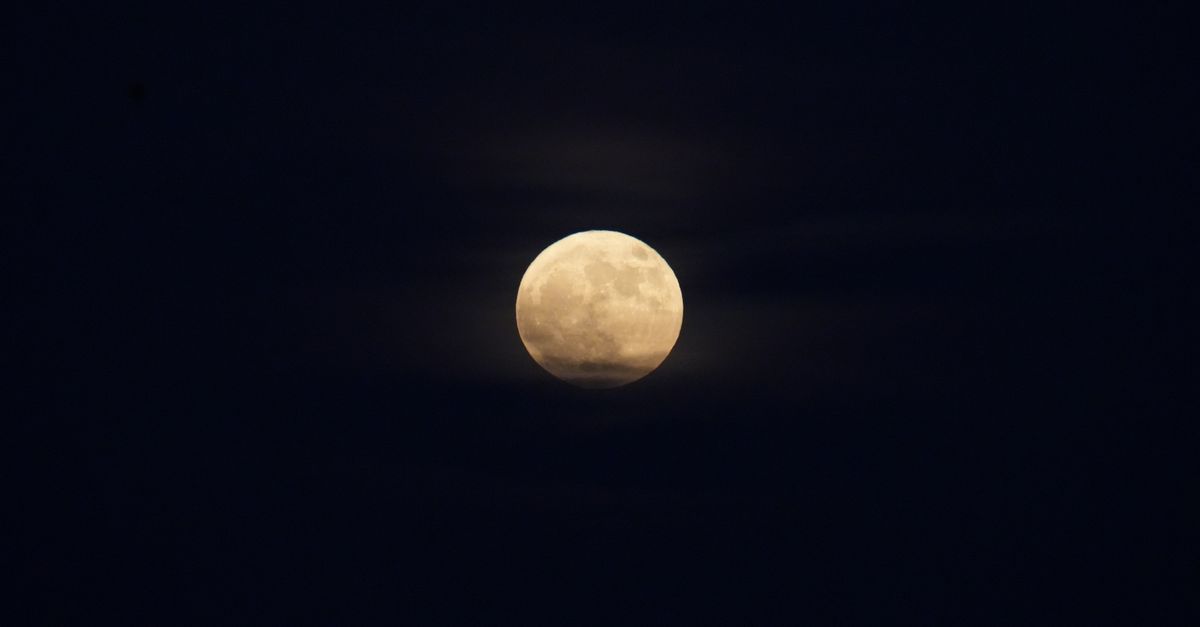
File photo — not from this news story. · See the original story's photos → · Photo: Eve R / Pexels
📰 Daily News
Hunter's Moon lights up Sunday night sky
AI가 레벨별로 작성한 세계 뉴스 · World news, written by AI at each level
Have you ever noticed that the same Moon appears different each month? October's full moon has a name that tells a story — the Hunter's Moon — and this Sunday night, you might see it rise above your horizon.
Long ago, people needed names for each month's full moon. They chose names based on what was happening in nature at that time of year. October's Hunter's Moon got its name because autumn was when hunters prepared for winter. They needed to hunt animals while the bright moonlight helped them see clearly at night. The full moon gave them extra light to work by.
Today, we do not hunt for food as our ancestors did. But the name remains, and so does the magic of seeing a full moon rise. When the moon is full, it sits directly opposite the sun in Earth's sky. This means the entire face of the moon reflects sunlight toward us. For a few nights around the full moon, the light is strong and steady.
This October's Hunter's Moon arrives at a specific moment on Sunday night. Different countries and time zones will see it at slightly different times. For many people in Europe and Asia, the full moon will be visible on Sunday evening. For people in North America, it may appear late Sunday night or early Monday morning. The exact time depends on where you live on the planet.
Here is the tricky part: weather matters. A clear sky is essential for moon-watching. If clouds cover your area on Sunday night, you will not see the moon at all. Some regions will have perfect conditions. Others might wake up Monday morning and discover the clouds have finally cleared. This is why astronomers always add a small warning: the weather forecast is just as important as the moon itself.
The Hunter's Moon is not brighter than other full moons. It is not closer to Earth. What makes it special is partly tradition and partly science. In autumn, the moon rises at a steeper angle in the sky, and it rises earlier each night compared to other seasons. This meant hunters in past centuries could work longer by moonlight. Today, we simply enjoy the connection to history and the beauty of a full moon lighting up the dark sky.
If you do see it on Sunday night, take a moment to think about all the people throughout history who have watched this same moon rise. You will be sharing something ancient and continuous with them.
Inspired by reporting from BBC News.
📚 Vocabulary
horizon
the line where the sky appears to meet the land or ocean in the distance
지평선
ancestor
a family member from many generations before you
조상
reflect
to bounce light or sound off a surface back toward its source
반사하다
astronomer
a scientist who studies the stars, planets, and the night sky
천문학자
steeper
at a greater angle from the ground; closer to vertical
더 가파른
tradition
a belief or practice passed down from generation to generation
전통
essential
absolutely necessary; required in order for something to happen
필수적인
forecast
a prediction about what will happen in the future, often about weather
예보
Your next step
Step 1 · Free level test
Find your English level in about 12 minutes — free, no signup required.
Take the level test →
Step 2 · Free 30-minute class
Try one real class with Uncle J, free.
Book my free class →
Step 3 · Sign up free to get started ↓
전체 레슨을 보고 싶으세요?
Want the full lesson?
회화 연습, 역할극, 문법, 그리고 진짜 선생님이 안에 있어요.
Conversation practice, roleplay, grammar, and a real tutor are inside.