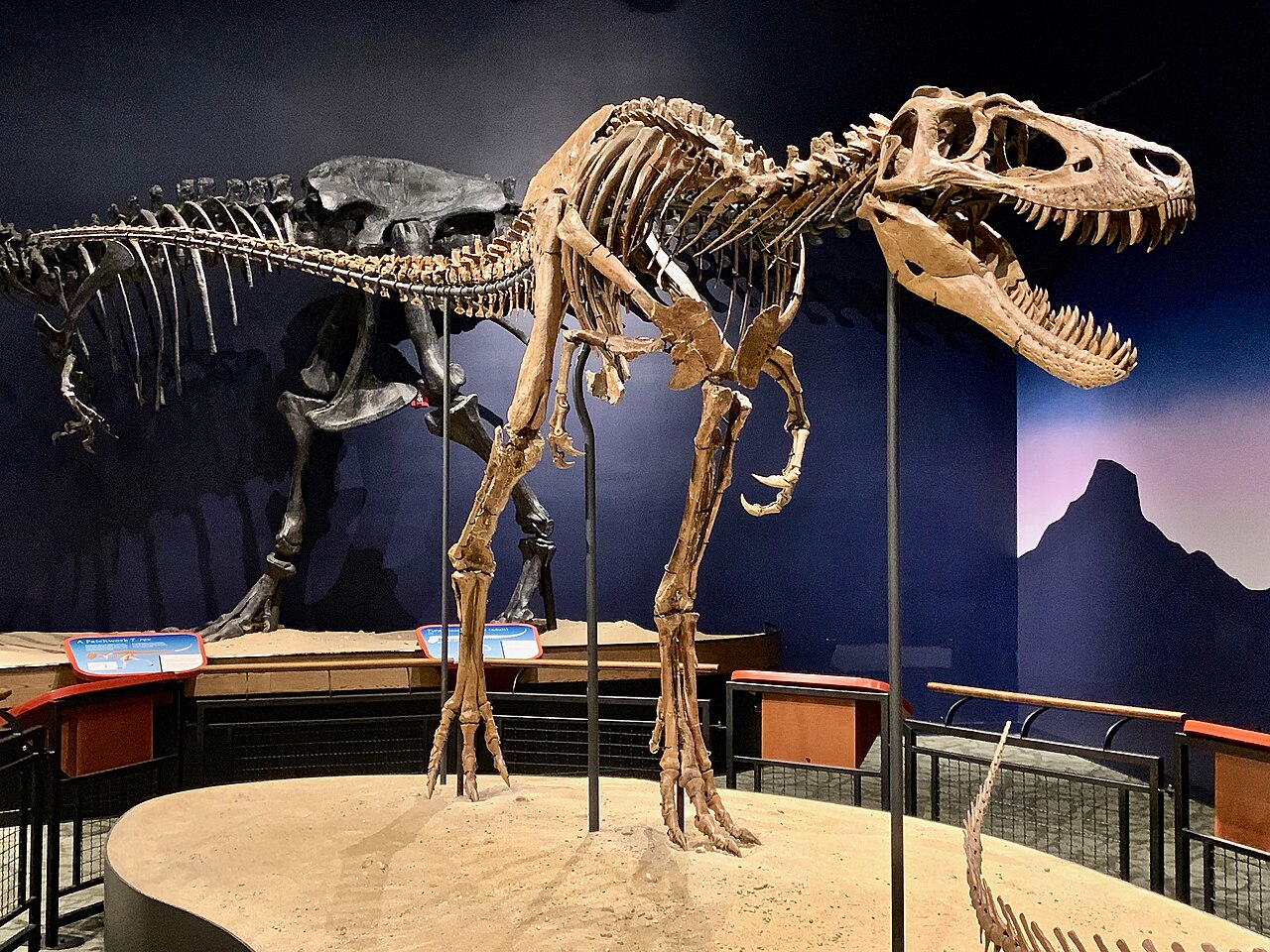
자료사진(기사 내용과 무관) · 원본 기사 사진 보기 → · Photo: Zissoudisctrucker / Wikimedia Commons
📰 Daily News
완전한 공룡 골격 뉴욕서 4730만 달러 낙찰
Complete dinosaur skeleton sells for $47.3 million in New York
AI가 레벨별로 작성한 세계 뉴스 · World news, written by AI at each level
Imagine finding a skeleton that walked the earth millions of years ago—and then being able to own it. That moment became real in New York when a remarkable dinosaur fossil sold to a private buyer for an extraordinary sum.
The fossil in question is a Nanotyrannus, a small meat-eating dinosaur that lived alongside larger predators during the age of dinosaurs. The skeleton is nearly complete, which makes it scientifically valuable and extremely rare. Most dinosaur remains we study are broken or missing important bones. This one is different. It is almost intact, which means researchers could learn so much from it.
But here is where things get complicated. The moment this fossil went to a private collector, many scientists became concerned. They worry that important discoveries about our planet's past might now stay hidden away in someone's private collection instead of being studied and shared with the world.
This debate is not new. For decades, museums and universities have argued that dinosaur fossils belong in the public sphere. When a fossil is in a museum, scientists can examine it carefully. Students can see it. The public can learn from it. When a private collector owns it, these opportunities may disappear. The fossil might sit in a climate-controlled room, seen only by the owner and a few guests.
However, private collectors argue that they have the right to purchase fossils just like any other valuable object. They point out that some private collections are actually quite well-maintained and that collectors sometimes collaborate with scientists. Additionally, without wealthy buyers, some important fossils might never be excavated in the first place, because excavation is expensive.
The sale of this Nanotyrannus skeleton shines a bright light on this ongoing tension. Scientists are now asking important questions: Should there be laws that keep exceptional fossils out of private hands? Should governments purchase remarkable finds for museums? Is there a fair way to balance the interests of science and the rights of private ownership?
For now, the skeleton belongs to its new owner. But its sale has given the scientific community something valuable to debate. That conversation might eventually shape how we protect and share discoveries about prehistoric life for future generations.
What do you think—should the world's most important fossils be protected by law and kept in public museums, or do you believe private collectors play an important role in paleontology too?
Inspired by reporting from BBC News.
📚 어휘
skeleton
all the bones of a body, held together as a frame
골격, 뼈대
fossil
the preserved remains of an ancient plant or animal found in rock
화석
intact
complete and not damaged or broken
온전한, 손상 없는
excavation
the careful digging and removal of something from the ground
발굴
paleontology
the scientific study of fossils and ancient life forms
고생물학
predator
an animal that hunts and eats other animals
포식자
sphere
a particular area of activity, interest, or influence
영역, 분야
tension
a state of stress or conflict between opposing ideas or groups
긴장, 갈등
다음 단계
1단계 · 무료 레벨 테스트
약 12분이면 내 영어 레벨을 확인할 수 있어요 — 무료, 회원가입 없이 가능해요.
레벨 테스트 하러 가기 →
2단계 · 무료 30분 수업
Uncle J와 진짜 수업을 무료로 한 번 체험해보세요.
무료 수업 신청하기 →
3단계 · 무료로 가입하고 시작하세요 ↓
전체 레슨을 보고 싶으세요?
Want the full lesson?
회화 연습, 역할극, 문법, 그리고 진짜 선생님이 안에 있어요.
Conversation practice, roleplay, grammar, and a real tutor are inside.