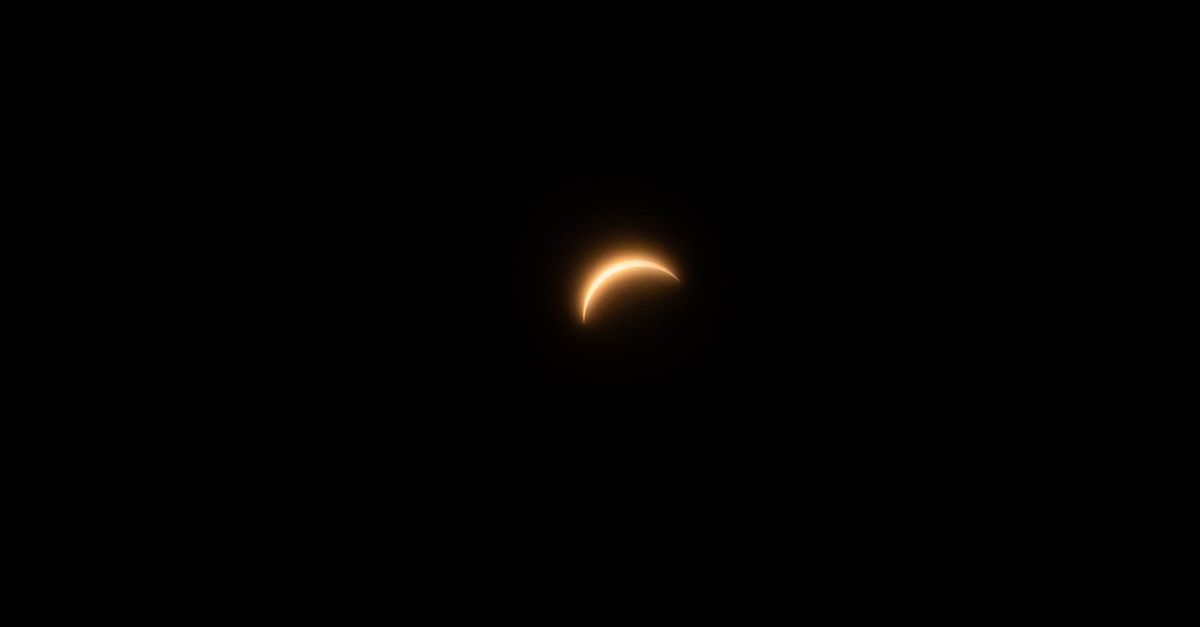
자료사진(기사 내용과 무관) · 원본 기사 사진 보기 → · Photo: Terra Stone / Pexels
📰 Daily News
다음주 아일랜드 상공에서 달이 태양 대부분을 가린다
Moon blocks most of sun over Ireland next week
AI가 레벨별로 작성한 세계 뉴스 · World news, written by AI at each level
Imagine stepping outside on an ordinary day and watching the Sun slowly disappear. Next week, people across Ireland will experience exactly this — a deep partial solar eclipse that will transform the midday sky.
During a solar eclipse, the Moon moves directly between Earth and the Sun. As it does, the Moon's shadow gradually covers the Sun's bright disk. In Ireland, the Moon will block a very large portion of sunlight, making the day darker and cooler. This isn't a total eclipse — a tiny sliver of the Sun will remain visible — but it will feel dramatic and unusual.
Timing matters for eclipse-watching. The event will unfold over several hours, with the deepest point occurring in the afternoon. The exact time and how much of the Sun disappears depend on where in Ireland you are standing. Northern parts of the island will experience a deeper eclipse than southern areas. If you want to observe this safely, you'll need proper eclipse glasses. These special lenses filter out harmful solar radiation so your eyes stay protected. Never look directly at the Sun without them — even during an eclipse.
But Ireland's sky show doesn't stop there. Just days later, the Perseid meteor shower will reach its peak. This annual event happens when Earth passes through a trail of cosmic dust left behind by a comet. Meteors are tiny rocks and dust particles that burn up as they enter Earth's atmosphere, creating those beautiful streaks of light we call "shooting stars." The Perseids are famous for being one of the brightest and most reliable meteor showers of the year. On peak nights, observers in dark locations can see dozens of meteors per hour.
What makes next week special is that both events arrive close together. It's like nature scheduled two major performances for the same season. Eclipse-watchers and meteor enthusiasts alike have reason to look up at the Irish sky. Whether you're curious about how celestial mechanics work or simply drawn to the beauty of space events, these phenomena remind us that our planet exists within a much larger, constantly moving system.
Have you ever seen a solar eclipse or a meteor shower before? If you could safely observe either event, which would fascinate you more — the quiet, controlled geometry of an eclipse, or the sudden, surprising flash of a shooting star?
Inspired by reporting from BBC News.
📚 어휘
eclipse
when one celestial object passes in front of another, blocking its light
한 천체가 다른 천체 앞을 지나가면서 빛을 가리는 현상
celestial
relating to the sky, space, or objects in space like stars and planets
하늘, 우주, 또는 별과 행성 같은 우주의 물체와 관련된
meteor
a piece of rock or dust from space that burns up as it enters Earth's atmosphere, creating a bright streak
우주에서 온 암석이나 먼지가 지구의 대기권에 진입하면서 타서 밝은 줄을 그리는 현상
radiation
energy or particles sent out from a source, especially harmful energy from the Sun
에너지나 입자가 근원에서 방출되는 것, 특히 태양에서 나오는 해로운 에너지
atmosphere
the layer of gases surrounding Earth
지구를 둘러싼 기체의 층
phenomenon
a remarkable or striking fact or event; something that can be observed in nature
주목할 만한 또는 인상적인 사실 또는 사건; 자연에서 관찰할 수 있는 것
comet
a large object made of ice and rock that travels through space and sometimes comes close to Earth
얼음과 바위로 이루어진 큰 천체로 우주를 이동하며 때때로 지구에 가까워집니다
sliver
a very thin, small piece of something
매우 얇고 작은 조각
다음 단계
1단계 · 무료 레벨 테스트
약 12분이면 내 영어 레벨을 확인할 수 있어요 — 무료, 회원가입 없이 가능해요.
레벨 테스트 하러 가기 →
2단계 · 무료 30분 수업
Uncle J와 진짜 수업을 무료로 한 번 체험해보세요.
무료 수업 신청하기 →
3단계 · 무료로 가입하고 시작하세요 ↓
전체 레슨을 보고 싶으세요?
Want the full lesson?
회화 연습, 역할극, 문법, 그리고 진짜 선생님이 안에 있어요.
Conversation practice, roleplay, grammar, and a real tutor are inside.