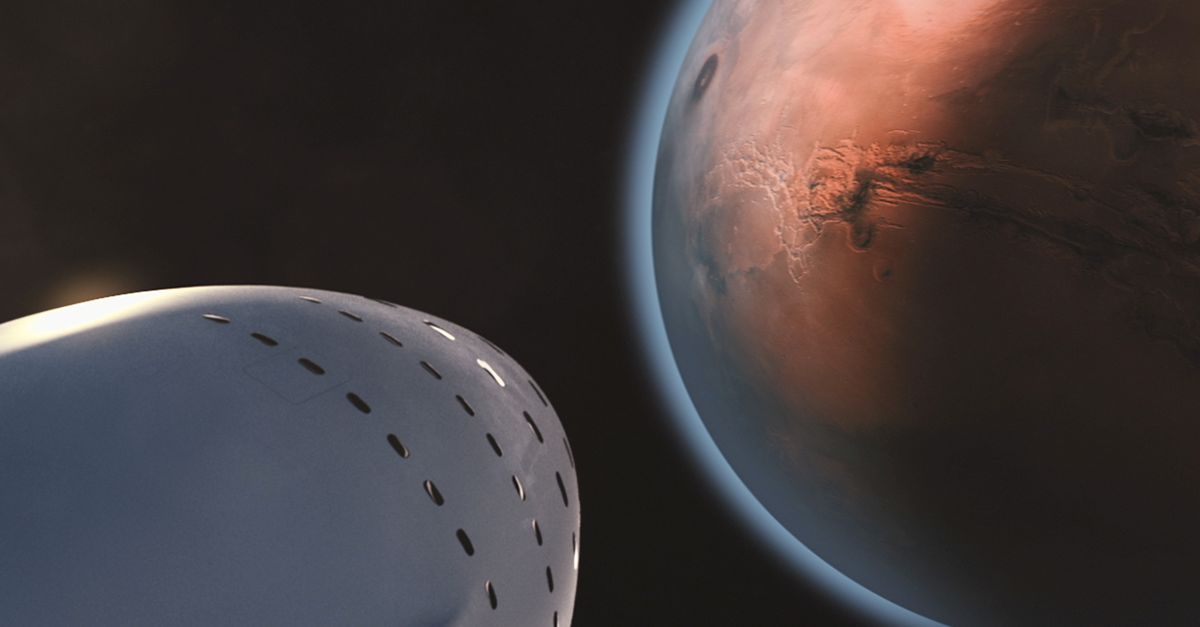
File photo — not from this news story. · See the original story's photos → · Photo: SpaceX / Pexels
📰 Daily News
Spacecraft launches to snatch dust from Mars's moon
AI가 레벨별로 작성한 세계 뉴스 · World news, written by AI at each level
Imagine you could hold a tiny piece of another world in your hand. Soon, scientists might make that dream real. A spacecraft is preparing to launch toward Mars on one of the most ambitious missions ever attempted—to collect just 10 grams of dust from a Martian moon and bring it home to Earth.
Mars has two small moons. Both are named after Roman gods of war. The larger one, Phobos, orbits very close to Mars—so close that it will eventually crash into the planet in millions of years. The smaller moon, Deimos, floats much farther away. Scientists believe this mission will collect samples from Phobos, though Deimos is also under consideration.
Why is 10 grams of dust so valuable? It sounds small—about the weight of a postage stamp. But this material holds secrets. Scientists want to study it under powerful microscopes in Earth laboratories. The dust particles might tell us how the moons formed, whether they came from asteroids or were born alongside Mars itself. Understanding these answers helps us grasp the whole story of our solar system.
The mission is complicated. The spacecraft must travel millions of miles through space. It must land safely on a small, distant moon. The gravity on Phobos is incredibly weak—so weak that an astronaut could jump right off into space if not careful. Collecting samples in this environment requires precision engineering and clever robots. After gathering the dust, the spacecraft must blast off again and travel back to Earth. The entire journey takes years.
Why take such a difficult journey for something so tiny? Because space exploration reveals patterns. Small discoveries from Mars moons help us predict what we might find on other worlds. This knowledge guides future missions to more distant planets and moons. It also helps us understand our own planet better—by comparing Earth's geology to that of other worlds. Every mission builds toward bigger questions about life, water, and whether humans will one day explore beyond Earth ourselves.
The challenge is real, and failure is possible. But history shows us that ambitious missions often lead to breakthrough discoveries. The dust from a distant moon might seem insignificant, but in a laboratory on Earth, it could unlock profound truths about how our universe works.
Inspired by reporting from BBC News.
📚 Vocabulary
ambitious
showing a strong desire to succeed or achieve something difficult and important
야심찬, 대담한
precision
the quality of being exact and accurate
정밀성, 정확성
orbit
to move around a larger body in space in a curved path
공전하다
geology
the science that studies rocks, soil, and the structure of Earth and other planets
지질학
retrieval
the act of getting or bringing something back
회수, 수거
insignificant
too small or unimportant to matter or be noticed
미미한, 사소한
reveal
to show or uncover something that was hidden or unknown
드러내다, 밝히다
profound
very deep, intense, or showing great knowledge or wisdom
심오한, 깊은
Your next step
Step 1 · Free level test
Find your English level in about 12 minutes — free, no signup required.
Take the level test →
Step 2 · Free 30-minute class
Try one real class with Uncle J, free.
Book my free class →
Step 3 · Sign up free to get started ↓
전체 레슨을 보고 싶으세요?
Want the full lesson?
회화 연습, 역할극, 문법, 그리고 진짜 선생님이 안에 있어요.
Conversation practice, roleplay, grammar, and a real tutor are inside.