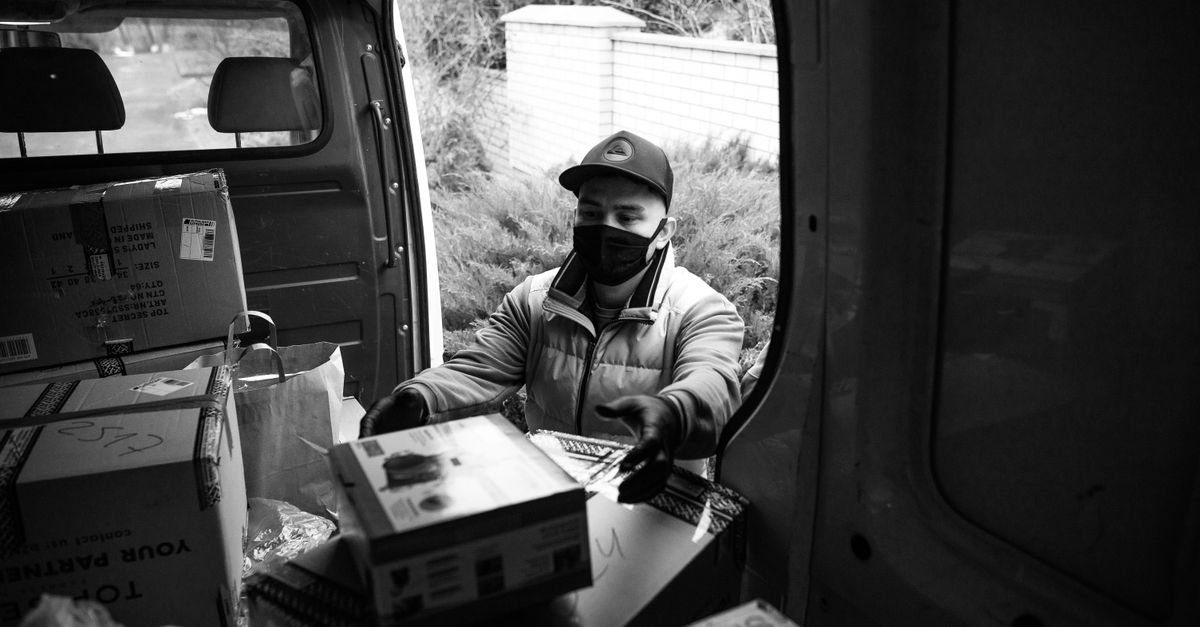
File photo — not from this news story. · See the original story's photos → · Photo: Pavel Danilyuk / Pexels
📰 Daily News
South Korea's overnight delivery boom harms workers' bodies
AI가 레벨별로 작성한 세계 뉴스 · World news, written by AI at each level
Imagine ordering something at 10 p.m. and having it arrive before breakfast. In South Korea, this is not unusual — it is normal. The country built an incredible delivery system. Packages move fast. The internet is quick. Everything happens overnight. But here is a surprising question: Who pays the real price for this convenience?
Delivery workers do. These men and women work through the night to keep the system running. They load heavy boxes. They drive long distances. They climb stairs in dark apartment buildings. And they do this again and again, every single night. For many of them, the job is destroying their bodies.
Workers describe their health problems in painful detail. One delivery person explained that the constant physical stress has damaged his back and shoulders. Another talked about how the irregular sleep schedule makes her feel sick all the time. They are young, but their bodies feel old. The work itself is fast and demanding. There is no time to rest. There is no time to recover. Sleep becomes impossible.
This system exists because South Korean customers demand speed. People want their items now, not tomorrow. Companies compete to offer the fastest delivery. Overnight delivery became a selling point. It became an expectation. Customers celebrated the convenience. But workers suffered in silence for years.
Now, the conversation is changing. More people are asking difficult questions. Is it fair to make workers sacrifice their health so that others can shop at midnight? Should companies slow down and prioritize worker safety? Some people believe the speed is not worth the human cost. Others argue that workers knew the job was hard when they applied.
South Korea is famous for moving fast — in technology, in business, in daily life. But this story shows that speed has a shadow. Behind every fast delivery is a tired person carrying heavy things through the night. The question is not whether South Korea can deliver packages overnight. The country has already proved it can. The real question is: Should it?
Inspired by reporting from BBC News.
📚 Vocabulary
ubiquitous
present or found everywhere; very common
어디든 있는; 매우 흔한
irregular
not following a regular pattern; uneven or unpredictable
규칙적이지 않은; 불규칙한
demand
a strong request for something; to ask for something firmly
강한 요청; 뭔가를 강하게 요구하다
prioritize
to treat something as more important than other things
다른 것보다 더 중요하게 다루다
sacrifice
to give up something valuable for a purpose; a loss or giving up
소중한 것을 포기하다; 손실
convenience
the quality of being easy or comfortable; something that makes life easier
편리함; 생활을 쉽게 만드는 것
exhaustion
extreme tiredness; the state of being completely worn out
극심한 피로; 완전히 지친 상태
selling point
a quality or feature that makes something attractive to buyers
구매자들을 매력하는 특징 또는 장점
Your next step
Step 1 · Free level test
Find your English level in about 12 minutes — free, no signup required.
Take the level test →
Step 2 · Free 30-minute class
Try one real class with Uncle J, free.
Book my free class →
Step 3 · Sign up free to get started ↓
전체 레슨을 보고 싶으세요?
Want the full lesson?
회화 연습, 역할극, 문법, 그리고 진짜 선생님이 안에 있어요.
Conversation practice, roleplay, grammar, and a real tutor are inside.