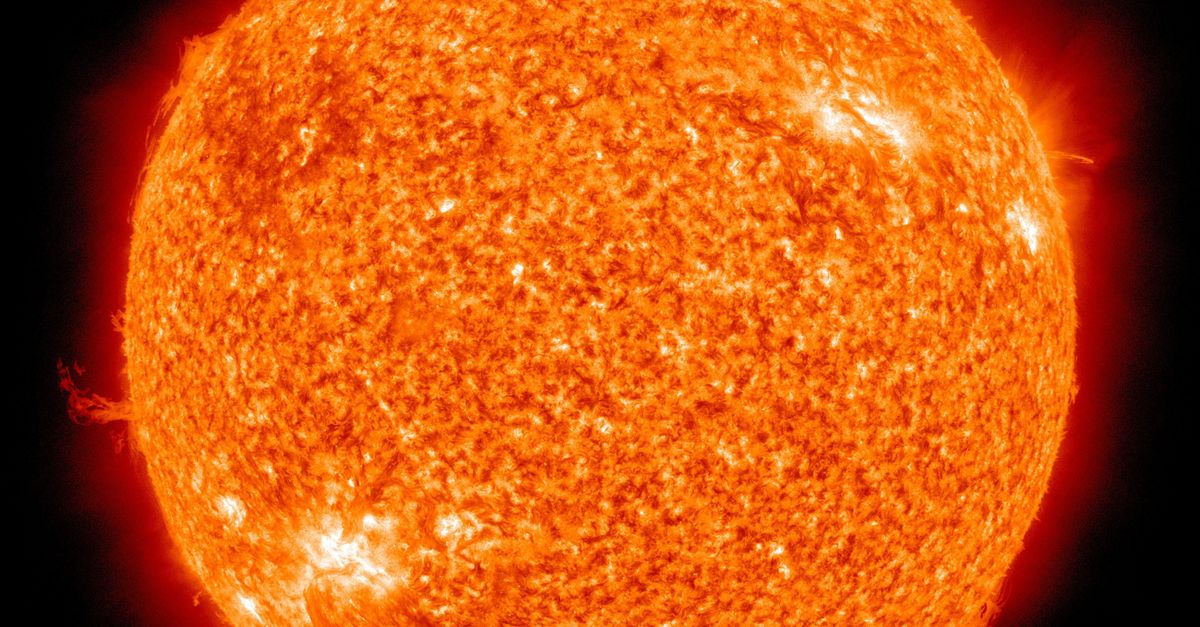
자료사진(기사 내용과 무관) · 원본 기사 사진 보기 → · Photo: Pixabay / Pexels
📰 Daily News
태양 폭발이 지구의 위성을 위협한다
Solar storms from the Sun threaten Earth's satellites
AI가 레벨별로 작성한 세계 뉴스 · World news, written by AI at each level
The Sun looks calm from Earth. But 93 million miles away, it is anything but quiet. The Sun constantly sends energy into space—sometimes gently, sometimes violently. This cosmic activity is called space weather, and it shapes our world in ways most people never notice.
Space weather begins when the Sun releases huge bursts of energy called solar flares or coronal mass ejections. These invisible waves travel toward Earth at enormous speeds. When they arrive, they interact with our planet's magnetic field and upper atmosphere. The result can be spectacular—brilliant auroras light up the night sky near the poles. But the consequences can also be serious.
Our modern life depends on technology that space weather can threaten. Satellites orbit above us, providing GPS signals, weather forecasts, and live television. Power grids distribute electricity to cities and hospitals. Radio signals carry emergency messages and aircraft communications. All of these systems are vulnerable. A severe space storm could knock out satellites for weeks or damage transformers in power grids. Repairs take time and cost billions of dollars. More importantly, people could lose access to emergency services, hospitals could lose power, and transportation could grind to a halt.
This is why space agencies and research teams now monitor the Sun constantly. Scientists use specialized satellites positioned between Earth and the Sun to watch for dangerous solar activity. These satellites act like early-warning systems—they detect storms before they reach us and send alerts to engineers on the ground. With a few hours' notice, power companies can protect their grids. Airlines can reroute flights. Satellite operators can safeguard their equipment. Preparation makes an enormous difference.
The challenge is that space weather is complex and unpredictable. Scientists have improved their forecasting abilities dramatically over the past two decades, but they still cannot predict every storm with certainty. An unexpected solar eruption could still surprise us. This is why international cooperation matters so much. Teams in the United States, Europe, Japan, and India share data in real time. They combine their knowledge to build better models and faster warnings. When a storm approaches, the entire world benefits from their shared work.
The fascinating part? We have actually been through this before. In 1859, a massive solar storm hit Earth—and caused chaos with telegraph systems, the high technology of that time. If such a storm happened today, the damage would be far worse. Our dependency on electricity and satellites has grown exponentially. But so has our ability to predict and prepare. The invisible weather of space reminds us that our planet and our technology are connected to the cosmos in profound ways. What precautions should cities and governments take to protect themselves against these cosmic storms?
Inspired by reporting from BBC News.
📚 어휘
coronal mass ejection
A huge burst of plasma and energy released from the Sun's outer layer into space
태양의 바깥층에서 우주로 방출되는 거대한 플라즈마와 에너지의 폭발
magnetic field
An invisible force around Earth that protects us from harmful radiation from space
우주의 해로운 방사선으로부터 우리를 보호하는 지구 주위의 보이지 않는 힘
vulnerable
Able to be hurt or damaged; exposed to risk
손상될 수 있는; 위험에 노출된
transformer
An electrical device that changes the voltage of electricity so it can be distributed safely
전기를 안전하게 배포하기 위해 전기의 전압을 변경하는 전기 장치
specialize
To focus on one particular area or type of work
특정 분야 또는 유형의 작업에 집중하다
exponentially
Growing or increasing very rapidly, at an accelerating rate
매우 빠르게, 가속화되는 속도로 증가하다
aurora
A natural light display in Earth's sky, mostly seen near the poles, caused by solar activity
태양 활동으로 인해 발생하는 지구 하늘의 자연광, 주로 극지에서 보임
forecasting
The act of predicting something that will happen in the future based on current data
현재 데이터를 기반으로 미래에 일어날 일을 예측하는 행위
다음 단계
1단계 · 무료 레벨 테스트
약 12분이면 내 영어 레벨을 확인할 수 있어요 — 무료, 회원가입 없이 가능해요.
레벨 테스트 하러 가기 →
2단계 · 무료 30분 수업
Uncle J와 진짜 수업을 무료로 한 번 체험해보세요.
무료 수업 신청하기 →
3단계 · 무료로 가입하고 시작하세요 ↓
전체 레슨을 보고 싶으세요?
Want the full lesson?
회화 연습, 역할극, 문법, 그리고 진짜 선생님이 안에 있어요.
Conversation practice, roleplay, grammar, and a real tutor are inside.