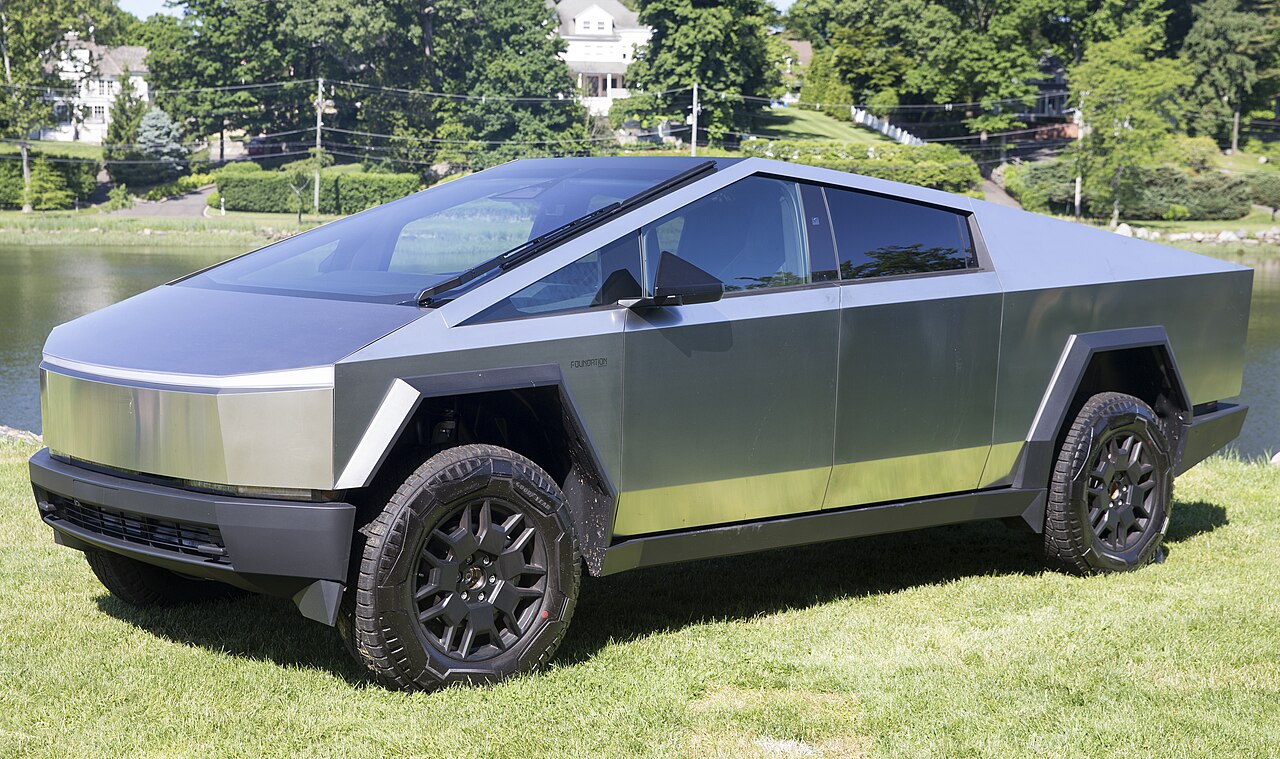
File photo — not from this news story. · See the original story's photos → · Photo: Mr.choppers / Wikimedia Commons
📰 Daily News
Tesla ditches Cybertruck dream for self-driving taxis
AI가 레벨별로 작성한 세계 뉴스 · World news, written by AI at each level
Imagine a taxi pulling up to your apartment building — but there is no driver inside. A few years from now, this might be normal. Right now, one of the world's biggest car companies is making a tough choice about its future.
Tesla, the electric vehicle manufacturer led by Elon Musk, has been famous for the Cybertruck — a sleek, angular truck with a stainless steel body. It looks like something from a science fiction movie. Many people waited years to buy one. The company started selling them in late 2023, and the truck became a symbol of Tesla's bold design choices.
But recently, Musk suggested that Tesla might shift its focus. Instead of pouring resources into making more Cybertrucks, the company could prioritize building autonomous taxis. These are vehicles that drive themselves without any human operator. Musk called these vehicles "Cybercabs."
Why would Tesla make this decision? The reason is simple: money and market opportunity. Self-driving taxis could become a huge business. Imagine if every city had hundreds of driverless taxis ready to pick you up instantly. You would not need to own a car at all. You would just call a taxi on your phone, and it would arrive in minutes. This model could earn Tesla enormous profits over time.
However, autonomous taxis are not ready for streets everywhere yet. The technology is still developing. Self-driving cars need to handle rain, snow, complex intersections, and unpredictable situations. They must be incredibly safe — much safer than human drivers in many cases. Engineers are still working on these challenges.
Meanwhile, Cybertruck owners and enthusiasts reacted with mixed feelings to Musk's hint. Some understand the business logic. Others felt disappointed because they love the Cybertruck's unique design and wanted to see more of them on roads. It shows a real tension in the car industry right now: companies must choose between continuing popular products and investing in experimental new technology.
This decision also reflects a larger shift in how people think about cars. For over a century, owning a vehicle meant freedom and independence. But in cities, many people now see cars as inconvenient — they are expensive, they pollute, and parking is a nightmare. Autonomous taxis could solve these problems. They would be cheaper than owning a car, cleaner than gas engines, and you would never worry about parking.
Tesla is not the only company exploring this future. Other manufacturers and tech companies are also building self-driving vehicles. The company that perfects autonomous taxis first will likely win enormous market share. That is why Musk is willing to slow the Cybertruck — at least for now.
So what does this mean for you? If you love the Cybertruck, do not worry — the truck is not disappearing immediately. But it may become harder to find one a few years from now. And if you live in a city, you might see your first autonomous taxi sooner than you think. The future of transportation is shifting, and it is happening faster than most people realize.
Inspired by reporting from BBC News.
📚 Vocabulary
autonomous
able to operate or make decisions without human control; self-governing
자율의, 자율주행의
manufacture
to make or produce goods, especially in large quantities using machines
제조하다
prioritize
to treat something as more important than other things; to give something first place in one's attention or plans
우선시하다
tension
a state of stress or strain; a conflict or disagreement between two things or ideas
긴장, 갈등
resource
a supply of something useful that can be used when needed; money, people, or equipment available for a project
자원
operator
a person who controls or runs a machine, vehicle, or piece of equipment
운영자, 운전자
inconvenient
causing difficulty, trouble, or annoyance; not suited to one's needs or comfort
불편한
market share
the percentage of total sales in a particular market that one company controls
시장 점유율
Your next step
Step 1 · Free level test
Find your English level in about 12 minutes — free, no signup required.
Take the level test →
Step 2 · Free 30-minute class
Try one real class with Uncle J, free.
Book my free class →
Step 3 · Sign up free to get started ↓
전체 레슨을 보고 싶으세요?
Want the full lesson?
회화 연습, 역할극, 문법, 그리고 진짜 선생님이 안에 있어요.
Conversation practice, roleplay, grammar, and a real tutor are inside.