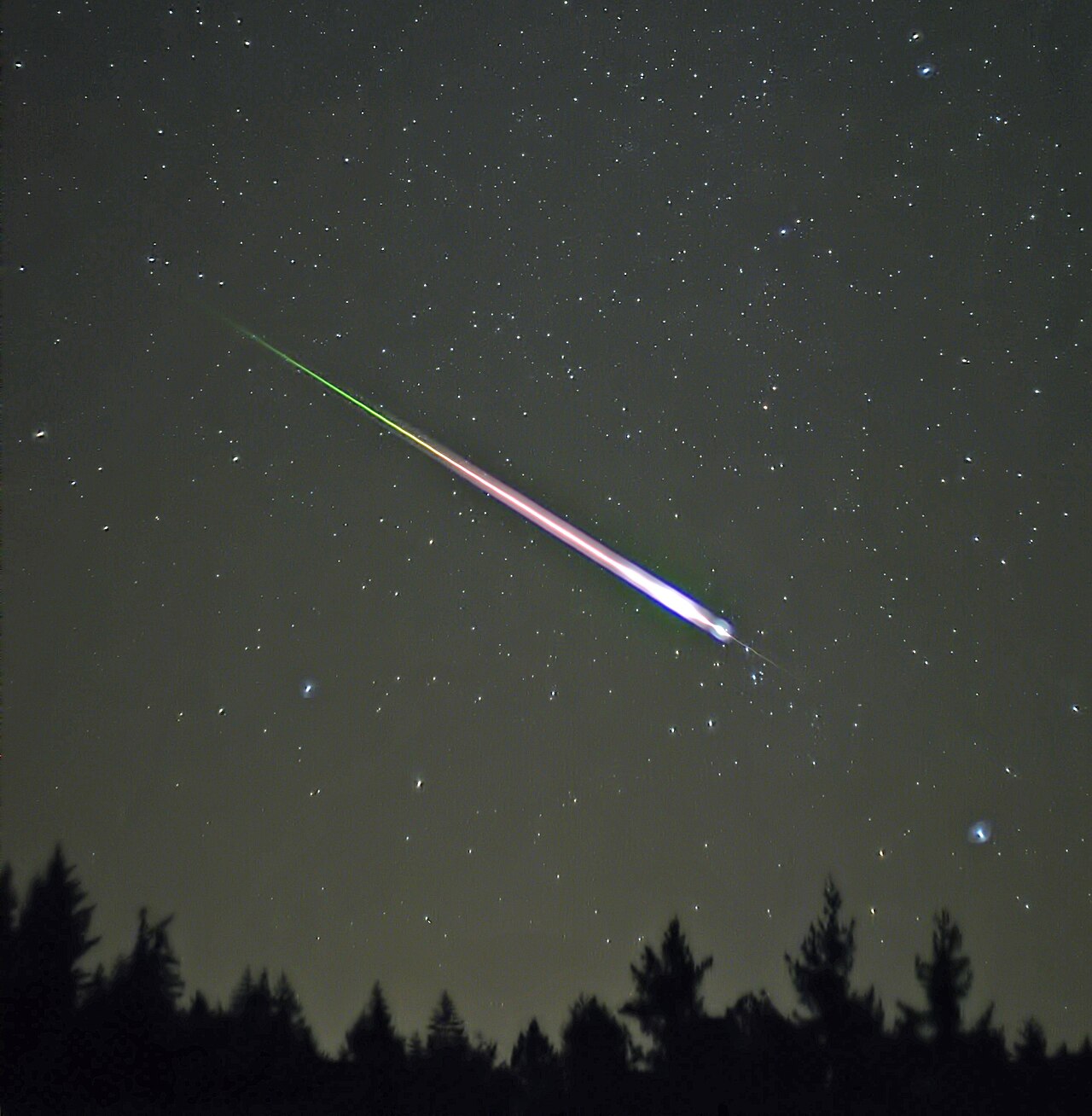
자료사진(기사 내용과 무관) · 원본 기사 사진 보기 → · Photo: Navicore / Wikimedia Commons
📰 Daily News
레오니드 유성 초속 70km로 질주
Leonid meteors streak across sky at 70 kilometers per second
AI가 레벨별로 작성한 세계 뉴스 · World news, written by AI at each level
Imagine lying on your back and watching the night sky suddenly come alive with streaks of light. This Tuesday night, the Leonid meteor shower will offer exactly that moment.
The Leonid meteor shower happens every November. It occurs when Earth passes through the trail of dust and ice left behind by a comet called Tempel-Tuttle. This comet takes 33 years to orbit the Sun. When our planet moves through its path, billions of tiny particles enter our atmosphere. They heat up from friction and burn, creating the bright lines we call meteors or shooting stars.
What makes Leonid meteors special is their speed and brightness. These meteors move much faster than most other meteor showers. They zoom across the sky at roughly 70 kilometers per second—faster than any commercial airplane. Because they travel so quickly, they create especially brilliant flashes. Many people describe them as "dazzling" or "electric." They often leave glowing trails that linger in your vision for a few seconds after they disappear.
Peaking this Tuesday night means the shower will be at its strongest then. You may see between 10 and 20 meteors per hour under ideal conditions. However, the number depends heavily on where you are. If you live in a big city with lots of artificial light, you might see only a handful. The secret is finding a location far from city lights—somewhere dark and open, like a countryside field or a hilltop.
Timing matters too. The best viewing window is usually after midnight and before sunrise. Bring warm clothes, lie flat on the ground or in a comfortable chair, and let your eyes adjust to the darkness for about 20 minutes. You do not need binoculars or a telescope. In fact, they make it harder to see meteors because they limit your field of vision. Your naked eyes are the perfect tool.
This year's Leonids arrive during a relatively calm period, which is good news for observers. The moon will not be too bright on Tuesday night, so it will not wash out the fainter meteors. That means your chances of seeing a memorable show are quite high.
Have you watched a meteor shower before? Whether you have or not, this Tuesday offers a chance to step outside and remember something simple: we live on a planet that moves through space, and sometimes the universe puts on a free show just for us.
Inspired by reporting from BBC News.
📚 어휘
meteor shower
a period when many meteors enter Earth's atmosphere and burn, creating streaks of light across the night sky
유성우
peak
to reach the highest or most intense point
절정에 달하다
friction
the force created when two surfaces rub against each other
마찰
artificial light
light created by humans, such as streetlights or lamps, not from the sun or moon
인공 조명
field of vision
the entire area that a person can see at one time
시야
orbit
to move in a circular path around a larger object
공전하다
ideal conditions
the perfect or best circumstances for something to happen
최적 조건
linger
to stay or remain longer than usual; to not disappear quickly
남아 있다, 머물다
다음 단계
1단계 · 무료 레벨 테스트
약 12분이면 내 영어 레벨을 확인할 수 있어요 — 무료, 회원가입 없이 가능해요.
레벨 테스트 하러 가기 →
2단계 · 무료 30분 수업
Uncle J와 진짜 수업을 무료로 한 번 체험해보세요.
무료 수업 신청하기 →
3단계 · 무료로 가입하고 시작하세요 ↓
전체 레슨을 보고 싶으세요?
Want the full lesson?
회화 연습, 역할극, 문법, 그리고 진짜 선생님이 안에 있어요.
Conversation practice, roleplay, grammar, and a real tutor are inside.