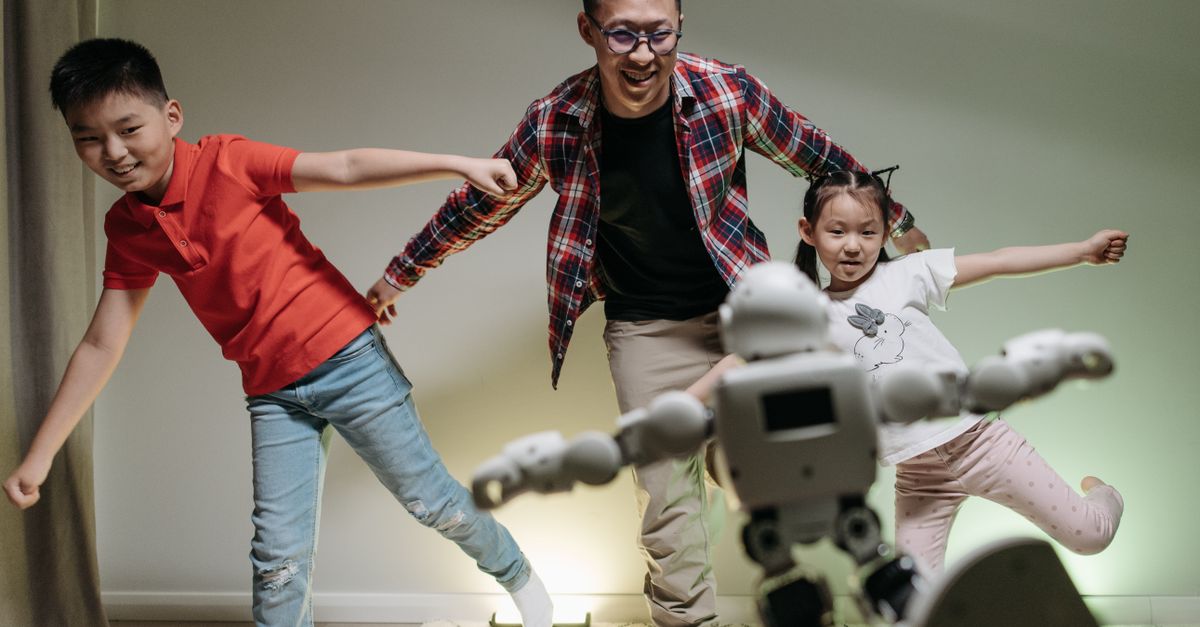
File photo — not from this news story. · See the original story's photos → · Photo: Pavel Danilyuk / Pexels
📰 Daily News
South Korea opens massive theme park run entirely by robots
AI가 레벨별로 작성한 세계 뉴스 · World news, written by AI at each level
What if the workers at your favorite theme park never got tired, never called in sick, and never complained about long hours? That future might be closer than you think. A massive new venue in South Korea is changing what a theme park can be—and robots are doing most of the work.
Galaxy Robot Park opened as a bold experiment in entertainment. The space covers 16,500 square meters, which is roughly the size of two and a half soccer fields. But instead of traditional rides and games, the park is filled with humanoid robots—machines built to look and move like humans. These aren't simple machines. They can dance, sing, and respond to visitors in real time.
One of the park's biggest attractions is watching robots perform K-pop dances. Visitors gather to see machines move in perfect rhythm to hit Korean songs. The robots don't get out of sync. They don't forget the steps. They simply execute every movement with flawless precision. For many guests, it's shocking to see technology perform with such accuracy and energy. Some visitors find it amazing. Others find it a little unsettling.
But why would a theme park choose robots over human performers? The answer is both practical and ambitious. Robots can work twenty-four hours a day without fatigue. They never need a vacation or a sick day. They can be programmed to do new routines instantly. A human dancer might need weeks to learn a new choreography. A robot can be updated in minutes. This makes the park more flexible and efficient than traditional venues.
However, Galaxy Robot Park isn't just about saving time and money. The designers wanted to create something genuinely new—an experience that humans couldn't deliver on their own. The park represents a shift in how we think about entertainment. It asks a question many of us have wondered: Can technology entertain us in ways that are just as meaningful as live human performance?
Of course, there's a trade-off. Some people go to theme parks specifically to see real people perform. They value the human energy, the spontaneity, the feeling of connection with another person on stage. A robot, no matter how advanced, doesn't have emotions or genuine presence. It follows a program. It doesn't take risks or innovate in the moment.
Still, this park in South Korea is a sign of what's coming. Other entertainment venues around the world are watching closely. Many are asking whether robots could complement human performers rather than replace them. Imagine a concert where robots handle complex visual effects and choreography while humans provide the emotional core. Imagine theme park attractions where technology and humanity work together instead of in competition.
The real question isn't whether robots will take over entertainment. It's how we'll choose to use them. Will parks use robots to cut costs and reduce human workers? Or will they use robots to create new possibilities that humans and machines do together? Galaxy Robot Park suggests that the conversation is just beginning.
What draws you to a live performance—is it the skill you're watching, or is it knowing there's a real person behind it? That might be the most interesting question this robot park has raised.
Inspired by reporting from BBC News.
📚 Vocabulary
humanoid
shaped or designed to look like a human; resembling a person in form
인간의 형태를 닮은; 사람처럼 생긴
precision
the quality of being exact and accurate; careful attention to detail
정확함; 세심함
venue
a place where an event or performance happens; a location
행사나 공연이 열리는 장소
fatigue
extreme tiredness; the state of being very tired
극심한 피로; 매우 피곤한 상태
choreography
the arrangement of dance movements; the steps and patterns planned for a dance
춤의 안무; 춤의 동작과 패턴
spontaneity
the quality of being sudden and unplanned; acting without preparation
즉흥성; 계획 없이 행동하는 특성
complement
to go well with something; to make something better by adding to it
함께 어울리다; 어떤 것을 더 좋게 만들다
core
the central or most important part of something
무엇의 중심 또는 가장 중요한 부분
Your next step
Step 1 · Free level test
Find your English level in about 12 minutes — free, no signup required.
Take the level test →
Step 2 · Free 30-minute class
Try one real class with Uncle J, free.
Book my free class →
Step 3 · Sign up free to get started ↓
전체 레슨을 보고 싶으세요?
Want the full lesson?
회화 연습, 역할극, 문법, 그리고 진짜 선생님이 안에 있어요.
Conversation practice, roleplay, grammar, and a real tutor are inside.