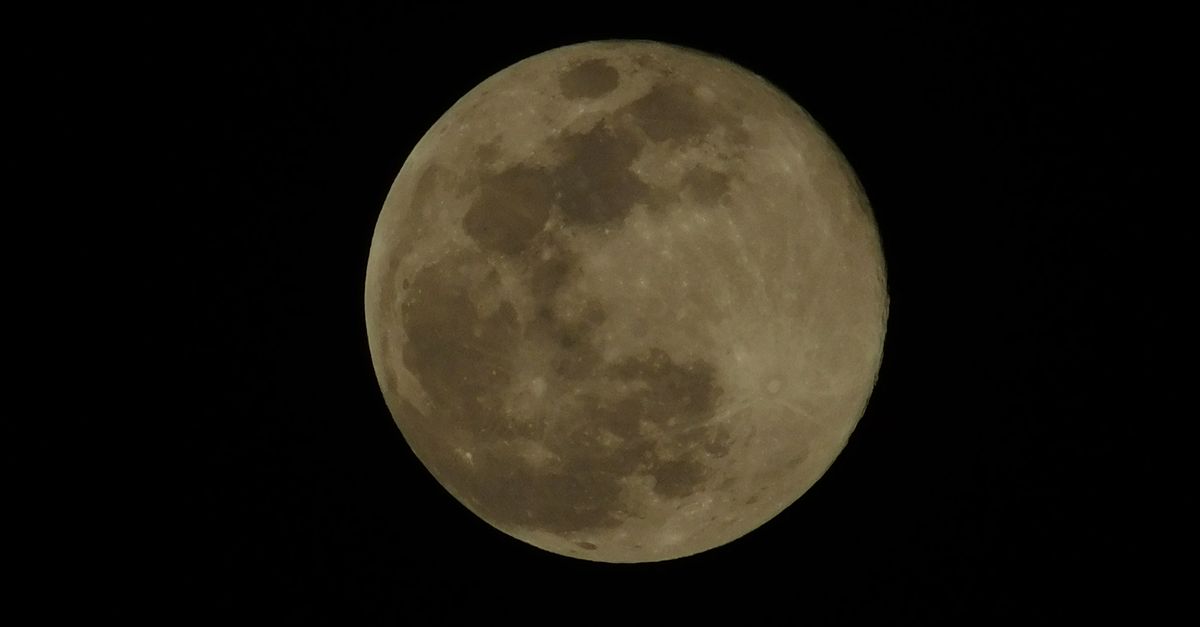
자료사진(기사 내용과 무관) · 원본 기사 사진 보기 → · Photo: Samar L. / Pexels
📰 Daily News
7월 '사슴뿔 달'이 지구 근처에서 거대해진다
July's Buck Moon grows massive as Earth approaches
AI가 레벨별로 작성한 세계 뉴스 · World news, written by AI at each level
Have you ever noticed that the moon looks different on different nights? Some evenings it appears enormous and golden. Other nights, it seems smaller and pale. In July, something remarkable happens in the sky—and if you know what to look for, it becomes even more beautiful.
July's full moon has a special name: the Buck Moon. This name comes from Native American tradition. During this month, male deer grow their antlers rapidly. Native peoples watched nature carefully and named each full moon after what they saw around them. The Buck Moon reminds us that the moon connects to the seasons and animal life on Earth.
But here is the real reason July's moon looks so striking. The moon's orbit around Earth is not a perfect circle. Instead, it follows an elliptical path—imagine a stretched circle. This means the moon sometimes travels very close to us, and sometimes very far away. In July, the full moon often reaches its closest point to Earth. Scientists call this the perigee. When the moon is at perigee, it appears brighter and larger than normal. This effect is dramatic enough that many people notice it, even without a telescope.
The technical term for this bright, close moon is a supermoon. Supermoons happen several times each year, but they are always impressive. The moon can appear up to fourteen percent larger when it is at perigee instead of apogee—its farthest point. To the human eye, this difference is real and visible. Photographs from these nights often show a truly magnificent sight.
Why does July often bring a supermoon? The answer involves the timing of Earth's orbit around the sun and the moon's orbit around Earth. These cycles do not always match perfectly. July is simply a month when these cycles often align in a way that brings the full moon close to us. However, not every July brings a supermoon—the exact timing varies from year to year.
If you want to see the Buck Moon yourself, find a location with minimal light pollution. A park outside the city works well. The best viewing time is after sunset, when the moon rises above the horizon. At that moment, it often appears even larger because of an optical illusion—our brains compare it to trees and buildings on the ground. As the moon climbs higher in the sky, it shrinks in apparent size, but it remains bright and beautiful.
The Buck Moon is more than just a bright object in the sky. It connects us to Native American wisdom, teaches us about orbital mechanics, and reminds us to pause and look up. In our busy lives, we often forget to notice the world above us.
Inspired by reporting from BBC News.
📚 어휘
elliptical
shaped like a stretched circle or oval; not perfectly round
완벽한 원이 아니라 늘어난 원형 또는 타원형의 모양
perigee
the point in an orbit where an object is closest to the body it orbits
궤도에서 물체가 공전하는 천체에 가장 가까운 지점
supermoon
a full moon that occurs when the moon is at its closest point to Earth
달이 지구에 가장 가깝게 접근할 때 일어나는 보름달
optical illusion
a trick of vision that makes something appear different from reality
시각이 속아서 실제와 다르게 보이는 현상
apogee
the point in an orbit where an object is farthest from the body it orbits
궤도에서 물체가 공전하는 천체에서 가장 먼 지점
align
to arrange in a line or to match up with something
일렬로 정렬하거나 무언가와 맞추다
light pollution
excessive artificial light that makes it difficult to see stars and celestial objects
별과 천체를 보기 어렵게 하는 과도한 인공 빛
celestial
relating to the sky, stars, or objects in space
하늘, 별, 또는 우주의 물체와 관련된
다음 단계
1단계 · 무료 레벨 테스트
약 12분이면 내 영어 레벨을 확인할 수 있어요 — 무료, 회원가입 없이 가능해요.
레벨 테스트 하러 가기 →
2단계 · 무료 30분 수업
Uncle J와 진짜 수업을 무료로 한 번 체험해보세요.
무료 수업 신청하기 →
3단계 · 무료로 가입하고 시작하세요 ↓
전체 레슨을 보고 싶으세요?
Want the full lesson?
회화 연습, 역할극, 문법, 그리고 진짜 선생님이 안에 있어요.
Conversation practice, roleplay, grammar, and a real tutor are inside.