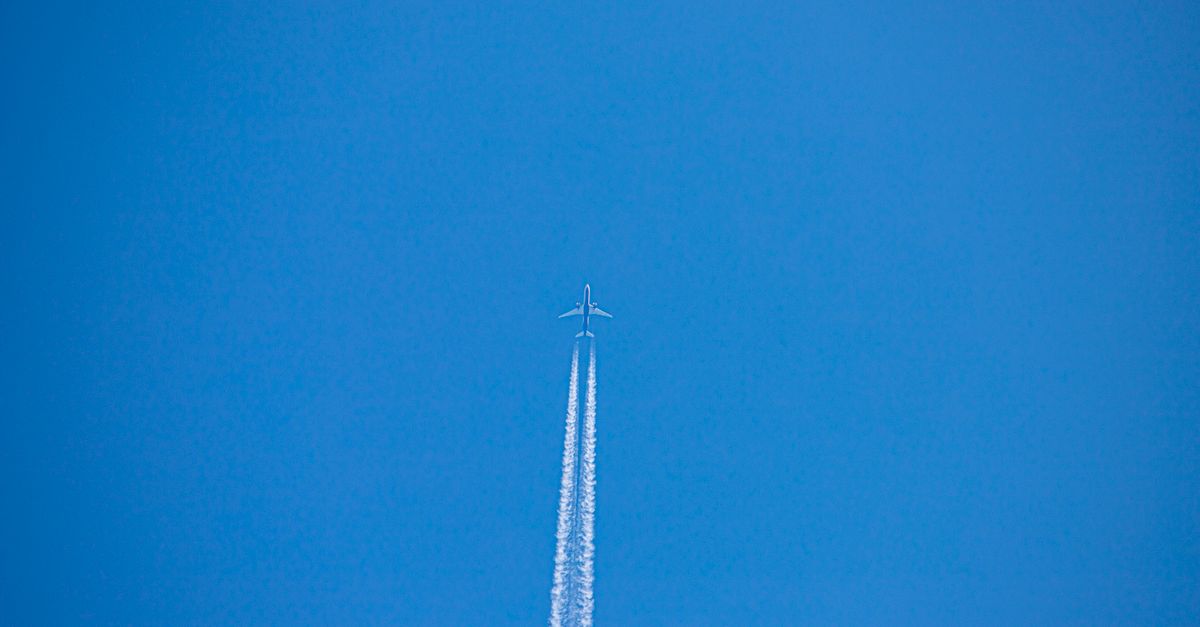
자료사진(기사 내용과 무관) · 원본 기사 사진 보기 → · Photo: Andreas Berget / Pexels
📰 Daily News
AI가 비행기에 지구 데우는 '하늘 자국' 피하는 법 가르친다
AI teaches planes to dodge heat-trapping sky trails
AI가 레벨별로 작성한 세계 뉴스 · World news, written by AI at each level
Next time you look up at the sky, notice those long white lines behind airplanes. They look like chalk drawings on a board—beautiful to watch, but scientists say they are actually warming our planet.
These white trails are called condensation trails, or "contrails." They form when hot, humid air from plane engines meets cold air high above Earth. Water vapor turns into ice crystals, creating that familiar white line. The problem is not the trail itself—it is what happens next. These trails trap heat in our atmosphere, similar to how a greenhouse traps warmth. Over many hours, they can warm the Earth almost as much as the carbon dioxide that planes release.
A UK company is now testing a clever solution: artificial intelligence. The system works like a smart co-pilot. It gathers information about weather patterns, air temperature, and moisture levels at different flying heights. Then it suggests small changes to flight paths. A pilot might climb a few hundred meters higher or descend a bit lower to avoid the atmospheric conditions where contrails form most easily. These small adjustments do not add much time or fuel to a flight, but they could prevent contrails from forming.
Did you know that even tiny adjustments matter? Research shows that many contrails form in only narrow layers of the atmosphere. So moving a plane just slightly—sometimes only 2,000 feet up or down—can make a huge difference. The AI technology is designed to find these invisible "sweet spots" where planes can fly without creating harmful trails.
This trial is important because flying is growing fast around the world. More planes mean more contrails, and more warming. Airlines are eager to find solutions that help the environment without slowing down or costing too much money. AI offers something rare: a tool that may work right now, without waiting for brand-new aircraft or fuels.
The technology is not perfect yet. Weather changes constantly, and pilots still need to prioritize safety and schedule. But early results show promise. If this trial succeeds, the system could spread to other airlines and countries. It is a small example of how technology can help us address climate change in practical, everyday ways—one flight at a time.
What surprises you most about how airplane contrails affect the climate? Have you thought about the hidden environmental costs of flying?
Inspired by reporting from BBC News.
📚 어휘
condensation trail
a white line of ice crystals that forms behind an airplane flying high in the sky
비행기 뒤에 형성되는 얼음 결정의 하얀 줄
trap (verb)
to catch or hold something so it cannot escape; to prevent something from moving away
무언가를 잡아두거나 붙잡아 빠져나갈 수 없게 하다
artificial intelligence
computer technology that can learn and make decisions like a human brain
인간의 뇌처럼 배우고 결정을 내릴 수 있는 컴퓨터 기술
moisture
small amounts of water present in air or on surfaces
공기나 표면에 있는 적은 양의 물
atmospheric
relating to the layer of air surrounding Earth
지구를 둘러싼 공기층과 관련된
prioritize
to decide that something is more important than other things
어떤 것이 다른 것보다 더 중요하다고 결정하다
spread
to extend or move to more places or people; to become more widespread
더 많은 장소나 사람들로 확장되거나 이동하다
practical
relating to real situations and actual use, not just theory
이론이 아니라 실제 상황과 실제 사용과 관련된
다음 단계
1단계 · 무료 레벨 테스트
약 12분이면 내 영어 레벨을 확인할 수 있어요 — 무료, 회원가입 없이 가능해요.
레벨 테스트 하러 가기 →
2단계 · 무료 30분 수업
Uncle J와 진짜 수업을 무료로 한 번 체험해보세요.
무료 수업 신청하기 →
3단계 · 무료로 가입하고 시작하세요 ↓
전체 레슨을 보고 싶으세요?
Want the full lesson?
회화 연습, 역할극, 문법, 그리고 진짜 선생님이 안에 있어요.
Conversation practice, roleplay, grammar, and a real tutor are inside.